
Herbal Supplement News
Grayanotoxin: The Compound Behind Mad Honey
Grayanotoxins are natural compounds made by rhododendron and a few related plants in the heath family. They are what make mad honey different from regular honey. They work by holding sodium channel...
Read more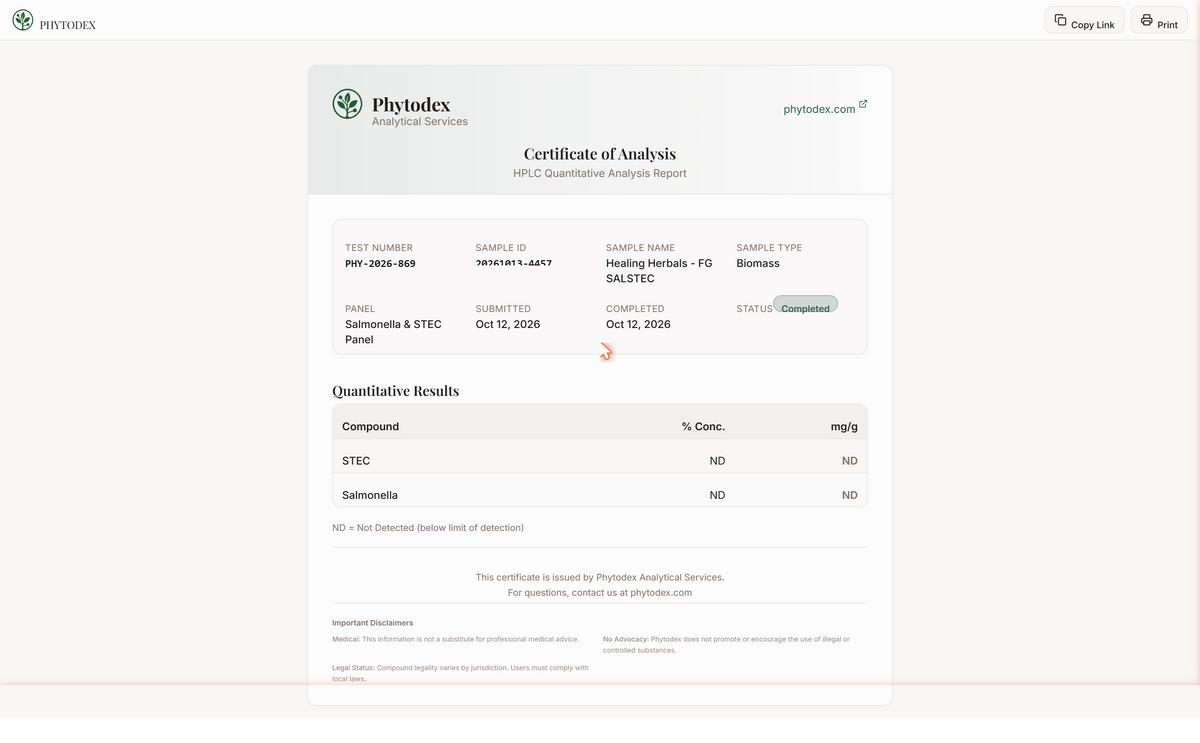
Lab Results: Field Grown Kanna Leaf Salmonella and STEC, Report PHY-2026-869 (Not Detected)
Phytodex report PHY-2026-869 screened our field grown kanna leaf for Salmonella and STEC and reported both as not detected. Here is how a detected or not detected screen reads and how to match it t...
Read moreDid Massachusetts Repeal Legal Weed? Question 8 Results (November 2026)
Massachusetts voters rejected Question 8 and kept legal cannabis sales, and Idaho voters rejected HJR 4. Plus Oregon's local psilocybin votes, Compass's FDA timing, new kratom bans and the November...
Read moreAmanita Muscaria Gummies vs Extract: What to Know
TL;DR: Amanita muscaria gummies are the most searched amanita product, and also the one regulators look at hardest. In December 2024 the FDA said amanita muscaria is not authorized as an ingredient...
Read moreIs Kratom Being Banned in Georgia? What the Attorney General Wants (October 2026)
Georgia's attorney general wants kratom products presumed illegal for retail sale unless the state approves them, though no bill has been filed. Also this week: Hillsborough County's 7-OH ordinance...
Read moreMad Honey Effects: What People Report and Why
People who try mad honey in small amounts often describe warmth, a light or floaty head, relaxation and a tingle in the throat. Those effects come from grayanotoxins, plant compounds that act on ne...
Read more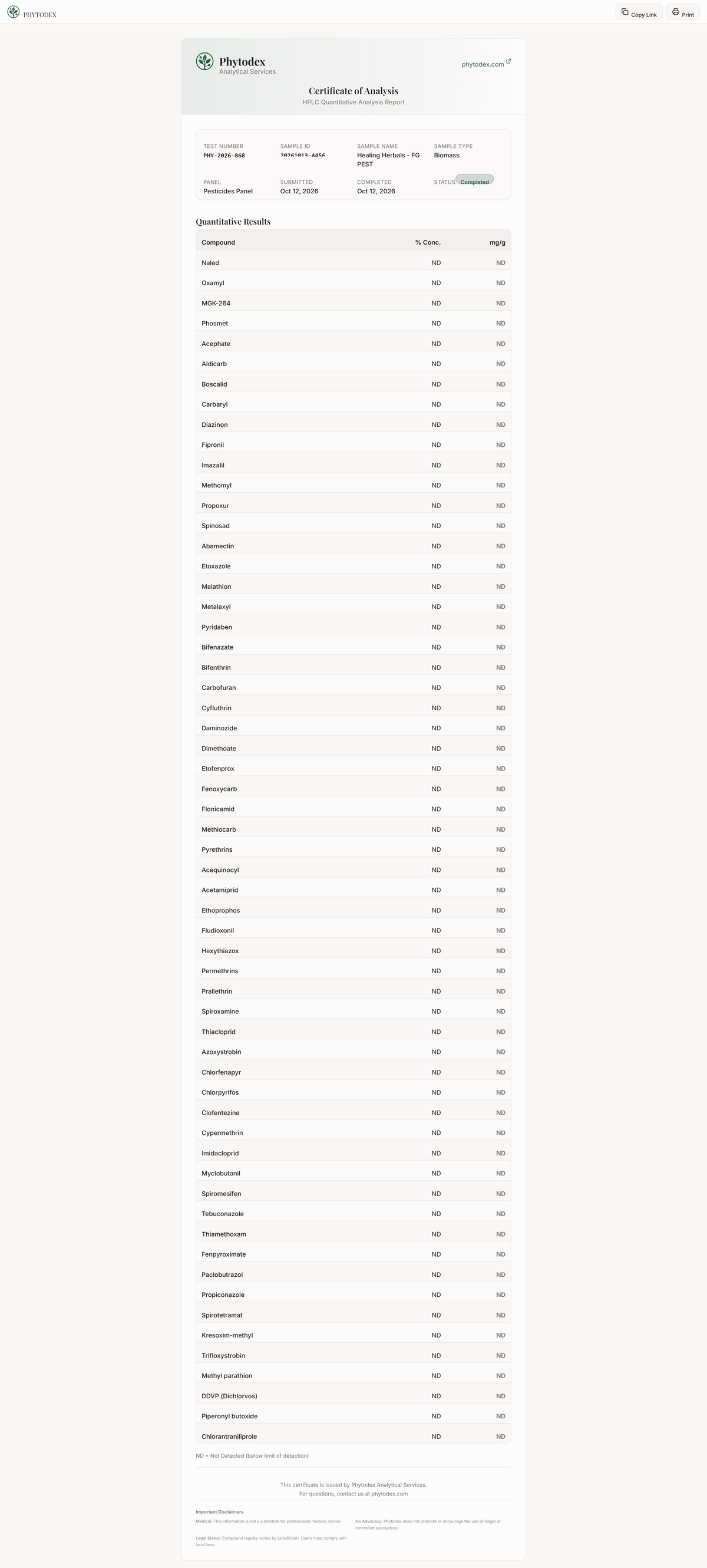
Lab Results: Field Grown Kanna Leaf Pesticides, Report PHY-2026-868 (59 of 59 Not Detected)
Phytodex report PHY-2026-868 screened our field grown kanna leaf against a 59 compound pesticide panel and reported all 59 as not detected. Here is what the panel covers, what ND means, and how to ...
Read moreAmanita Regalis vs Muscaria: The Brown Fly Agaric Explained
Amanita regalis is the brown fly agaric: a close relative of amanita muscaria with a yellowish-brown cap instead of a red one, the same ibotenic acid and muscimol chemistry, and a much narrower ran...
Read moreWhat Changes for Hemp on November 12? The Synthetic Cannabinoid Cutoff (October 2026)
The first piece of the federal hemp rewrite takes effect November 12, 2026, covering cannabinoids the plant cannot produce, and the rest waits until December 11. Also this week: Square's hemp cutof...
Read moreMad Honey From Nepal: Cliff Harvest and Honey Hunters
Himalayan mad honey comes from the world's largest honeybee, Apis laboriosa, which builds its combs on high cliff faces in Nepal. Gurung honey hunters harvest it twice a year on handmade rope ladde...
Read moreDamiana Liqueur and Margaritas: A Home Infusion
Damiana liqueur is a Baja tradition. Here is a simple home steep with dried damiana leaf, a syrup to sweeten it, and a damiana margarita to finish.
Read moreHow to Tell Good Dried Amanita Caps from Bad: Grade, Color and Lab Testing
Good dried amanita caps are firm, fully dry, deep red to orange on top with a pale underside, and come with a batch lab test showing muscimol and ibotenic acid content. Bad caps are brown, soft, mo...
Read moreMicrodosing Amanita Muscaria: What the Baba Masha Survey Actually Found
The Baba Masha survey is the largest collection of amanita muscaria microdosing reports that exists: over 3,000 respondents answering a 107-item questionnaire about their experiences with small, su...
Read moreAmanita Muscaria for Sleep: How Muscimol Works on GABA
Muscimol, the main active compound in amanita muscaria, is a direct GABA-A receptor agonist. GABA is the brain's primary inhibitory signal, so activating those receptors slows things down, which is...
Read moreIs 7-OH Banned Now? The DEA's New 1 mg per Gram Threshold (October 2026)
The DEA published a new 7-OH notice on October 14 with a 1 mg per gram threshold, and the order cannot issue before November 13. Also this week: the FDA's ibogaine trial request for information, th...
Read moreWhat Is Damiana? Meet the Turnera diffusa Plant
Damiana is Turnera diffusa, a sweet-smelling shrub from Texas, Mexico and the Caribbean. Here is the botany, the range and the compounds in the leaf.
Read moreWhat Is Mad Honey? Rhododendron Honey Explained
Mad honey is honey made by bees that feed on certain rhododendron flowers. The nectar of those plants carries natural compounds called grayanotoxins. They give the honey a reddish tone, a bitter, t...
Read more
Matcha vs. Kava: Which One Suits You?
Matcha and Kava may both be plant-based beverages, but their stories are very different. From matcha's vibrant green tea leaves to Kava's traditional South Pacific roots, learn how they compare in ...
Read more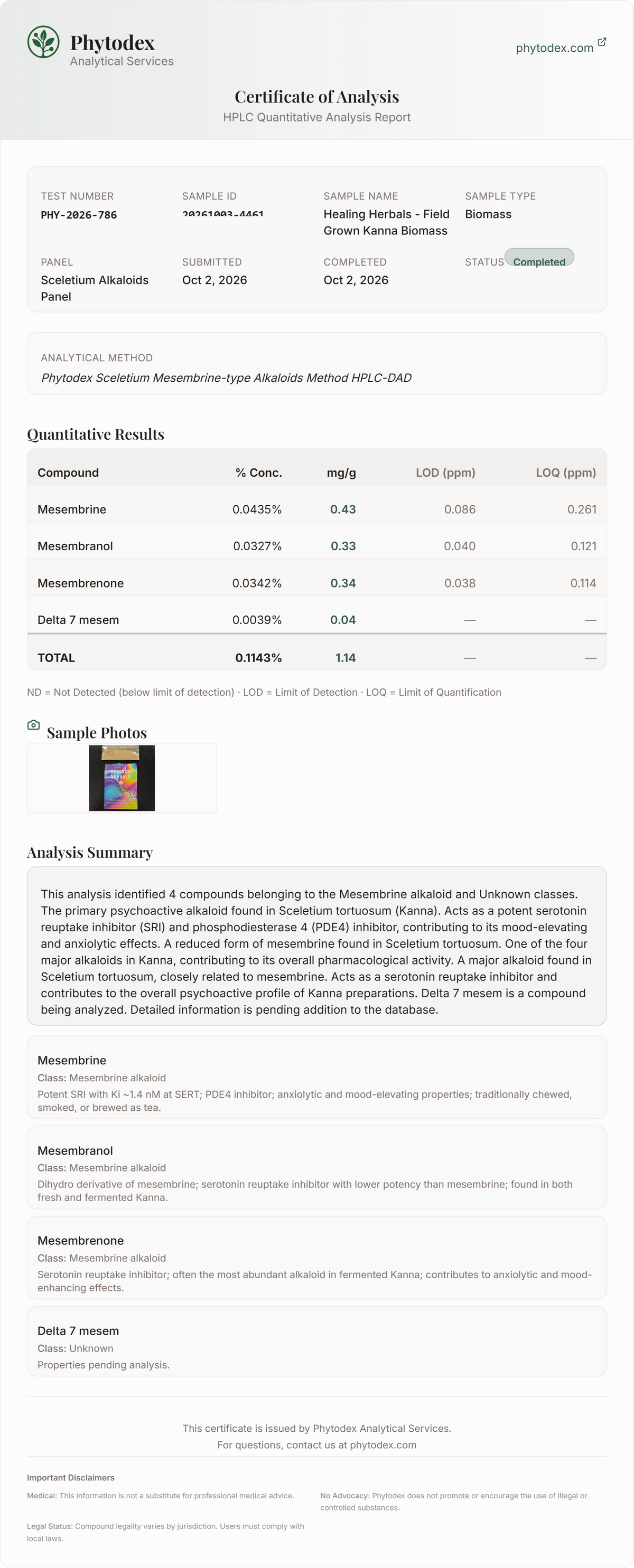
Lab Results: Field Grown Kanna Leaf, Report PHY-2026-786 (1.14 mg/g Total Alkaloids)
Third post in the Lab Results series, and the first one on raw plant material instead of an extract. This is our field grown kanna leaf, sold as loose leaf. The report is the newest one on our page...
Read more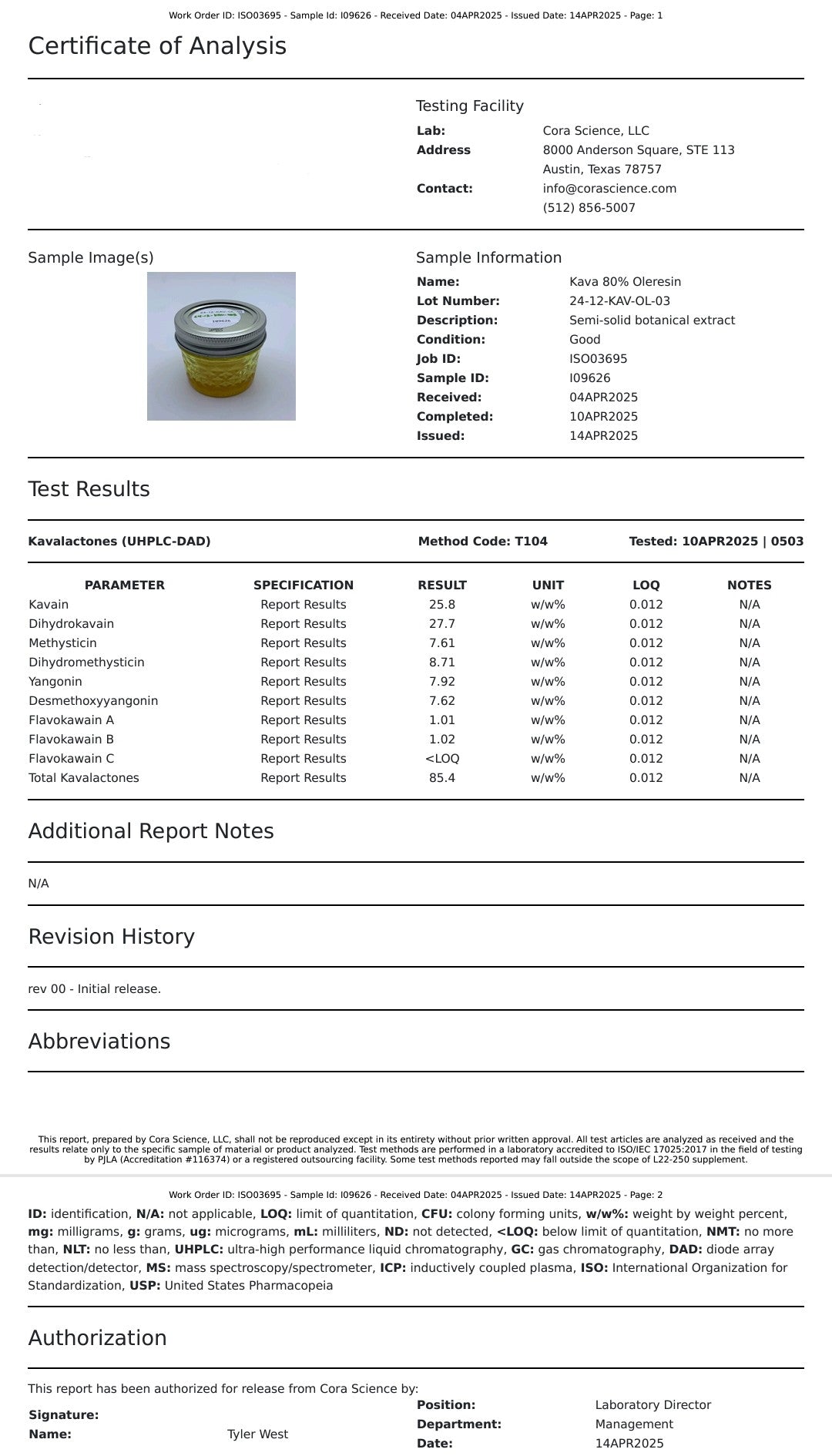
Lab Results: Kava Resin 85% Kavalactone, Lot 24-12-KAV-OL-03 (85.4% Total Kavalactones)
Cora Science reported 85.4% total kavalactones on lot 24-12-KAV-OL-03 of our kava resin, issued April 14, 2025. Here is what an 85% figure on a resin actually describes and how to match the lot.
Read moreAmanita Muscaria vs Amanita Pantherina: Potency, Effects and Which to Choose
Amanita pantherina is generally considered stronger than amanita muscaria per gram, often by a factor of two or more, because it tends to carry more muscimol and ibotenic acid. Muscaria is the bett...
Read more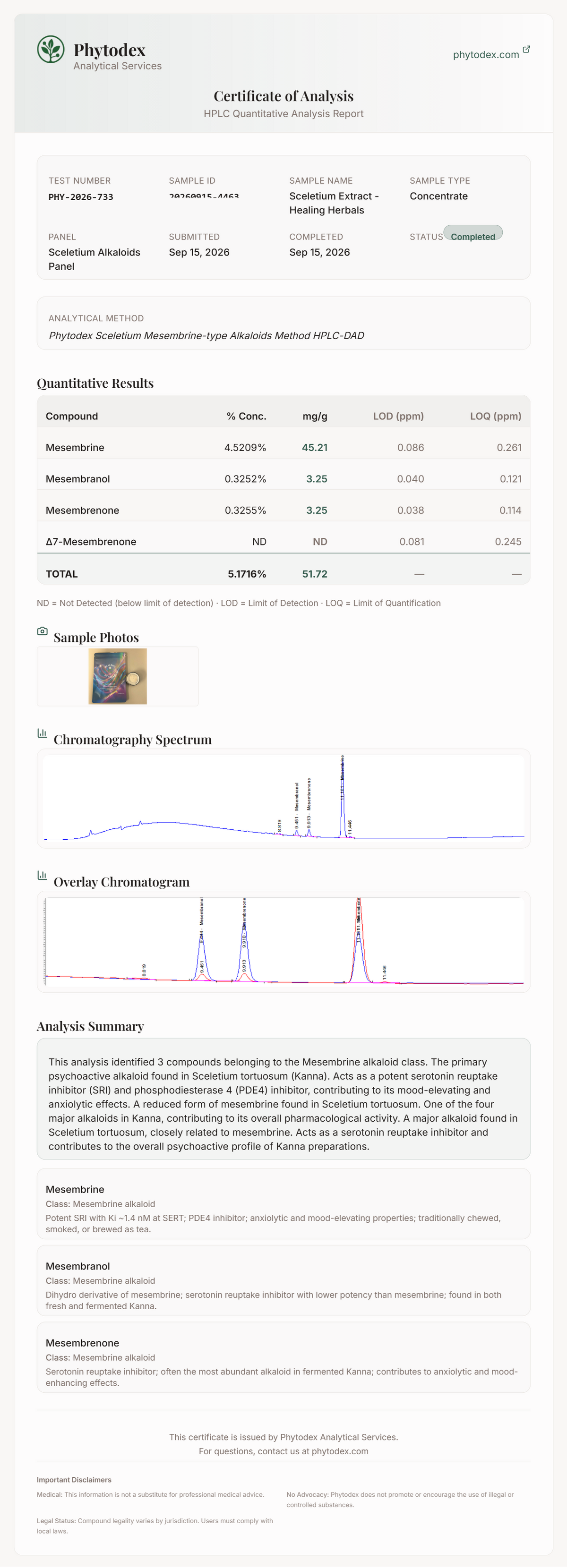
Lab Results: MT5 BLOOM Kanna Extract, Report PHY-2026-733 (5.17% Total Alkaloids)
Second post in the Lab Results series. This one covers MT5 BLOOM, a kanna extract, and it is a good report for learning how the individual alkaloid lines add up to a total, because the card on our ...
Read moreAmanita Gummies vs Dried Caps vs Extract: Which Form Is Right for You
Dried caps are the best starting point for most people, a standardized extract is the best choice for anyone who wants precise dosing, and gas station gummies are the one form we tell people to avo...
Read more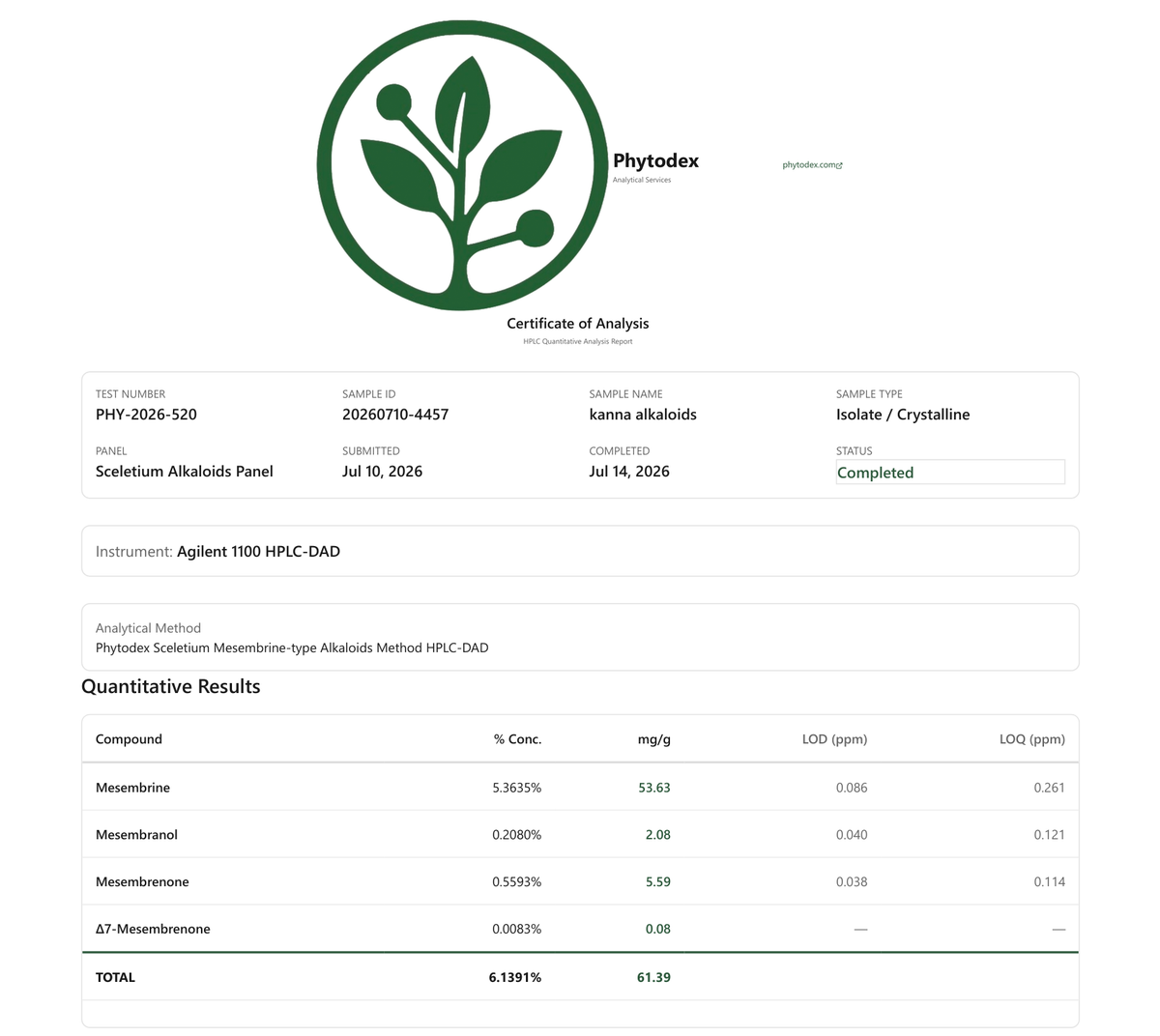
Lab Results: Glow MZQ Kanna Extract, Report PHY-2026-520 (6.14% Total Alkaloids)
This is the first post in our Lab Results series. One report per post, in plain language, so you can see exactly what a lab measured and how to check it against the bag you bought. We start with Gl...
Read more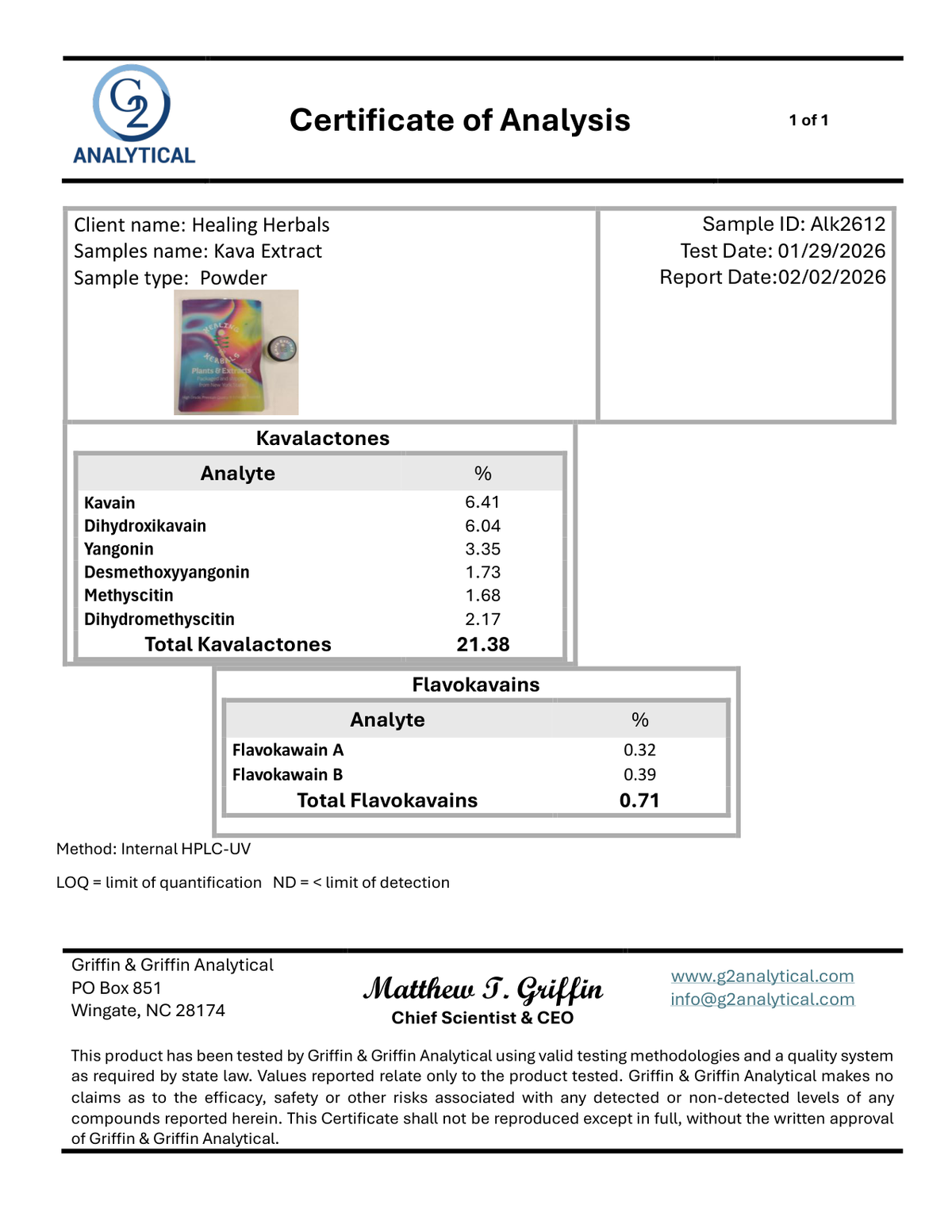
Lab Results: High Potency Kava Extract Powder, Alk2612 (21.38% Total Kavalactones)
G2 Analytical tested our High Potency Kava Extract Powder under sample Alk2612 on January 29, 2026 and reported 21.38% total kavalactones and 0.71% flavokavains. Here is what each of those numbers ...
Read moreIs Kratom Banned in Pennsylvania? What HB 2657 Actually Does (October 2026)
Pennsylvania's House passed HB 2657 on October 5, sending a kratom registration, 21-plus and 0.5% 7-OH bill to the state Senate. The DEA scheduled three 7-OH analogues in August but still has not p...
Read moreIs Amanita Muscaria Legal in Your State? 2026 State-by-State Guide
Amanita muscaria is legal to possess and sell in 49 US states as of 2026. Louisiana is the one state with a specific ban. Muscimol and ibotenic acid are not federally scheduled. The wrinkle is that...
Read moreHow to Decarboxylate Amanita Muscaria at Home (Time, Temp, pH)
Decarboxylating amanita muscaria means using heat, time and acidity to convert ibotenic acid into muscimol. The reliable home method is a gentle simmer at 80 to 90 C for two to three hours in water...
Read moreHerbal and Psychedelic News: Week of September 30, 2026
The DEA opened a comment period on placing five tryptamines in Schedule I, and Oregon scrapped a fee increase for its psilocybin licensees. The 7-OH temporary scheduling order filed in July still h...
Read moreKanna for People Coming Off Kratom: What People Try and What Studies Looked At
Kanna is not a kratom substitute in any chemical sense, and no study has tested it in people stopping kratom. This post reports what the kratom survey data and NIDA say about withdrawal, what kanna...
Read moreIs Kanna Addictive? Dependence, Tolerance and What Users Report
No published case of kanna dependence, no described withdrawal syndrome, a three month placebo-controlled trial with a clean safety read, and a fast tolerance that resets within days. Here is what ...
Read moreKanna Nasal Spray vs Oral Kanna: Onset, Duration and Which to Pick
Nasal kanna comes on in 5 to 10 minutes and fades inside 2 hours. Oral takes 20 to 45 minutes and runs 2 to 4. The route decides more than the extract does. A head-to-head table and what customers ...
Read moreWhy Kanna Is Called the Social Herb
The Khoisan chewed it together for 300 years and modern users describe easier conversation and more warmth. Where the social herb name comes from.
Read moreHow to Read a Kanna COA (Certificate of Analysis)
A kanna COA has five lines that matter: lot number, total alkaloids, the mesembrine and mesembrenone split, heavy metals and micro. This post reads one line by line, using our IGNITE 17% and Glow M...
Read moreGrowing Kanna at Home: Seeds, Cuttings and Why Potency Varies
Cuttings root in weeks, seeds take months, and a healthy plant can still be a weak one. How to grow kanna on a windowsill and why alkaloid content swings 18 fold.
Read moreKanna vs Kava: Different Plants, Different Effects
Kanna is a South African succulent working on serotonin; kava is a Pacific root working on GABA. One is dosed in milligrams, the other in grams, and they feel nothing alike. A comparison table and ...
Read moreHow Kanna Is Fermented: The Traditional Method Step by Step
Crush, seal, sun for about 8 days, stir, dry. That is the traditional kougoed method, and a 2019 UPLC-MS study shows why it changes the plant: mesembrine rises and mesembrenone falls. Here is the p...
Read moreKanna and Cannabis: What People Report When They Combine Them
No study has looked at kanna plus cannabis. Here is what users actually report, good and bad, and how the ones with the fewest bad nights do it.
Read moreKanna and Alcohol: What Happens When You Mix Them
Kanna and alcohol act on different systems and pull in opposite directions. Here is what guests at our alcohol-free bar report when they mix them, what the studies do and do not cover, and why we s...
Read moreKanna and Caffeine: Taking Kanna With Coffee
Kanna has no caffeine, so people stack it with coffee constantly. What they report, how to time the two, and where the jittery reports come from.
Read moreHow to Pick a Kanna Vendor: Potency, Lab Results and Sourcing
What total alkaloids means, why a per-lot COA matters, mesembrine vs mesembrenone, farm-direct sourcing, formats, and a 7-point checklist for any vendor.
Read moreYes to both. Smoking fermented leaf is one of the oldest uses; vaping is the modern version. What each feels like, how long, and what not to do.
Read moreWhat Is the Difference Between 5% and 20% Kanna Extract?
The percentage is total alkaloids by weight. A 20% extract is four times as concentrated as 5%, so you use a quarter as much. Here is how to pick.
Read moreSome people do, most regulars run 3 to 5 days a week with days off. What the one published 3-month trial found, and how users manage tolerance.
Read moreHow Long Does Instant Kava Last? Effects and Shelf Life
How long does instant kava last, both ways: how long a session runs from onset to fade, and how long a bag keeps unopened, opened, and in the freezer.
Read moreCan You Make Instant Kava at Home? Real Yield and Cost
How to make instant kava at home with a dehydrator, with honest numbers: 60 g of root in, about 20 g out, 8 hours of drying, and what it costs per gram compared to a tested bag.
Read moreDoes Instant Kava Work? Reverse Tolerance and the Weak First Shell
Kava reverse tolerance explained: why the first few shells feel like nothing, what is going on, and a 7 day ramp that gets most new drinkers to a real session.
Read moreHow to Mix Instant Kava So It Actually Tastes Good
How to make instant kava that tastes decent: the cold water rule, the shaker method, five mixers that work, and the mistakes that make it taste worse than it has to.
Read moreDay Kava vs Night Kava: Heady and Heavy Chemotypes Explained
Heady vs heavy kava, explained through chemotypes: what the six-digit code means, why some kava keeps you social and some puts you on the couch, and how to pick a day or night instant.
Read moreWhat Kavalactone Percentage Means: Reading 6% vs 11% Instant Kava
Kavalactone percentage explained in plain terms: what the number on an instant kava label measures, how to turn it into milligrams per dose, and when a 6% is the smarter pick over an 11%.
Read more