
Kanna vs. Other Supplements: Key Differences
TL;DR: Kanna (Sceletium tortuosum) stands apart from other mood supplements because of its alkaloids, mainly mesembrine, which act on the serotonin system. It also has its own South African history, a smaller but growing research base, and it's legal in most places, which makes it easy to get.
People come into the shop all the time holding a bottle of ashwagandha or rhodiola and asking how kanna is any different. Fair question. They all get lumped together as "mood" or "stress" herbs, but they're built very differently. Knowing how kanna (Sceletium tortuosum) differs from other natural supplements helps you pick the right one for what you actually want. Here's how we explain it.
The active components are different
Kanna's alkaloids are what set it apart, especially mesembrine. You'll also see mesembrenone and mesembrenol on lab reports. These compounds interact with the serotonin system, and mesembrine is best known as a serotonin reuptake inhibitor. That's a different mechanism from most other supplements people compare it to.
Ashwagandha, for example, gets its reputation from withanolides, and it's usually described as working through the body's stress response over weeks. Rhodiola has its own compounds, rosavins and salidroside. Kava works through kavalactones and GABA. So even when these herbs get marketed for similar feelings, the chemistry underneath is not the same.
How it feels for mood and focus
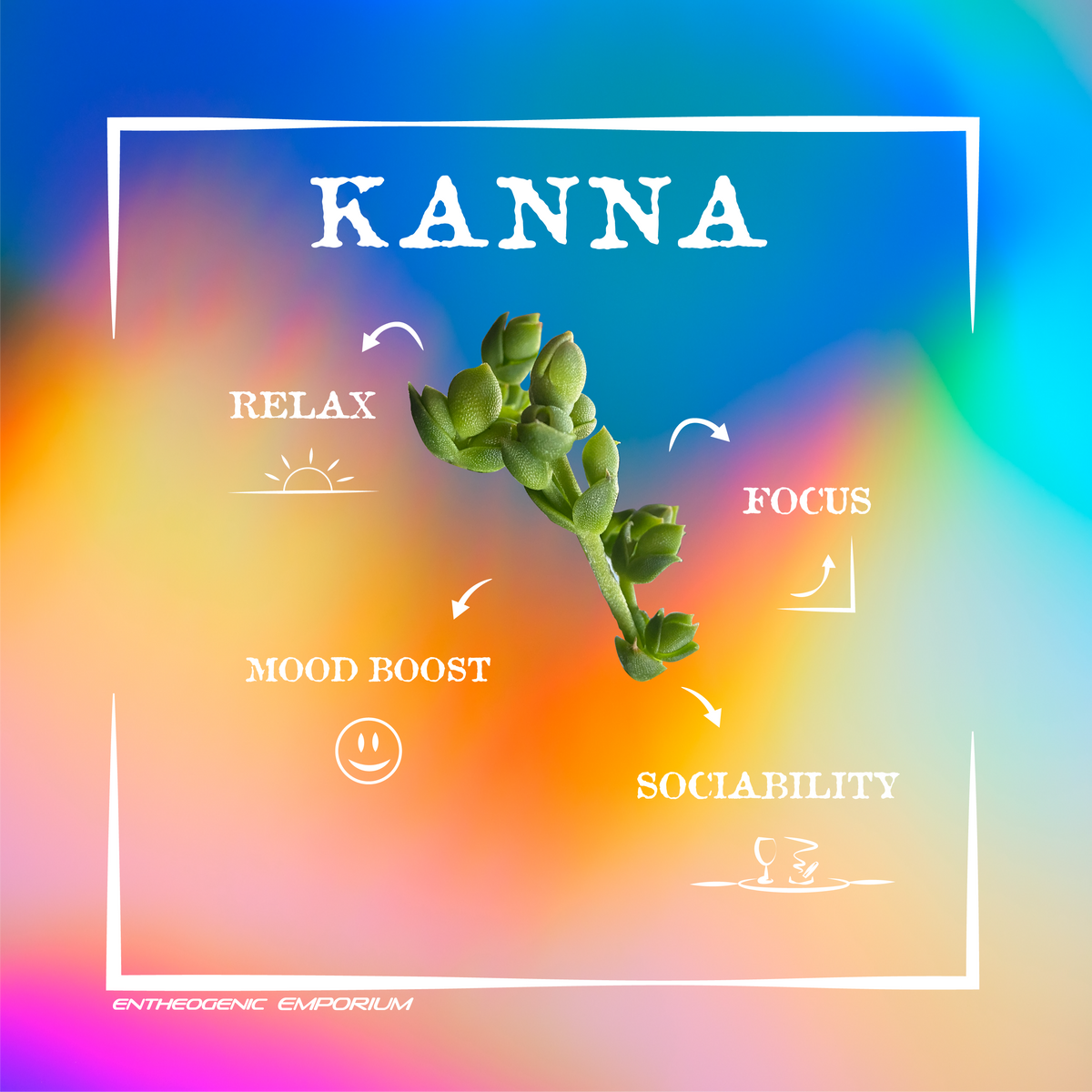
A lot of supplements claim to lift mood or take the edge off stress. Kanna's direct serotonin activity gives it a profile of its own. The big thing people notice is speed. With a good extract, most people feel a shift in mood and an easing of tension fairly quickly, often within the first hour, where adaptogens like ashwagandha tend to build slowly with daily use.
At the bar we describe kanna as clear and social rather than sleepy. It doesn't knock you down the way a heavy kava does. That's why a lot of our regulars use it during the day and save kava for the evening.
A different history and tradition
Kanna has a deep cultural history with the indigenous San and Khoikhoi peoples of South Africa, who chewed it, smoked it, took it as snuff and brewed it. It was used for thirst and hunger on long trips, and in social and spiritual settings. That's a very different story from herbs like ashwagandha, which comes out of Indian Ayurvedic tradition, or rhodiola, which has roots in Scandinavian, Russian and Siberian folk use.
That history matters, because it tells you how people actually used the plant for generations, and in kanna's case that was often in small amounts, in company, to feel at ease.
Where the research stands
The research on kanna is still growing. There are some small human studies and a good amount of lab work on the alkaloids, but it's nowhere near the pile of studies on something like ashwagandha or St. John's wort. That affects how well we understand how well it works and how safe it is long term, and we'd rather tell you that straight than oversell it.
It also means you should be careful combining kanna with prescription antidepressants or anything else that acts on serotonin. Talk to your doctor first.
Legal status and access
Some supplements sit in a gray area legally depending on where you live. Kanna is generally legal in many countries, which makes it easy to get. In the US it's legal in most states, with Louisiana as the main exception, so check your local rules before you order.
Common questions
Can I take kanna with ashwagandha?
Plenty of people do, usually kanna in the day and ashwagandha at night. Add one at a time so you know what each one is doing.
Is kanna an adaptogen?
It usually isn't classed as one. It acts more directly and faster than the classic adaptogens.
Which is stronger, kanna or kava?
They're just different. Kanna leans clear and uplifting, kava leans relaxed and heavy in the body.
So to sum it up, kanna's alkaloid profile, how it feels, its South African roots, where the research stands and its legal status all set it apart from other natural supplements. Browse our kanna collection if you want to try it, and start with a small amount.

Written by Herbal Healings
%20stands%20apart%20from%20other%20mood%20supplements%20because%20of%20its%20alkaloids,%20mainly%20mesembrine,%20which%20act%20on%20the%20serotonin%20system.%20It%20also%20has%20its%20own%20South%20African%20history...)
Leave a comment
This site is protected by hCaptcha and the hCaptcha Privacy Policy and Terms of Service apply.