
What is Kanna?
TL;DR: Kanna is Sceletium tortuosum, a South African succulent the Khoisan chewed and fermented long before it had a Latin name. Its effects come from a small group of alkaloids, mainly mesembrine, mesembrenone and delta-7-mesembrenone, and the ratio between them is why two "kanna extracts" can feel totally different. It acts on serotonin, so check with a doctor first if you take an SSRI, an MAOI or anything psychiatric.
We get this question more than any other, usually from someone who saw kanna mentioned online and has no idea whether it's a tea, a drug, or a cactus. It's none of those, really. Here's the short, honest version from people who handle it every day.
The plant itself
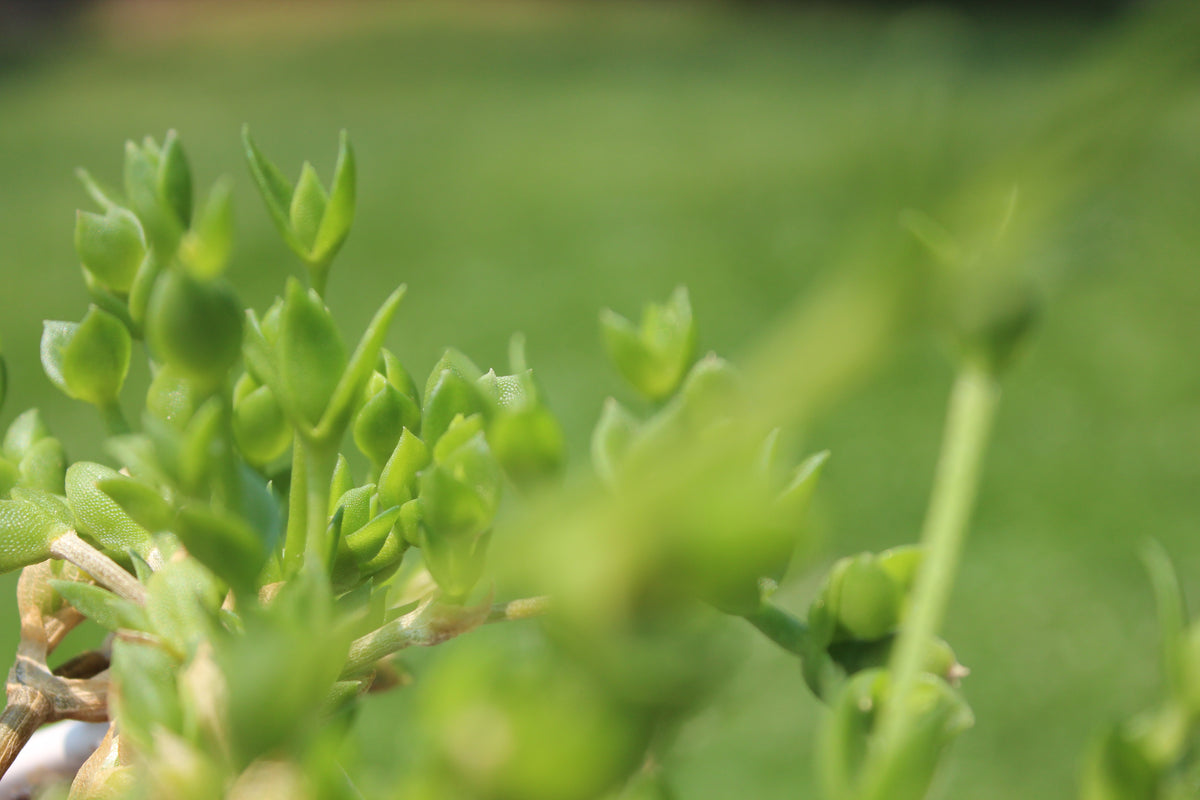
Kanna is Sceletium tortuosum, a low-growing succulent from the dry interior of South Africa. It hugs the ground, it's tough, and it grows in places most plants give up on. South Africa's national biodiversity institute keeps a botanical record for the plant if you want the range maps and the history.
The Khoisan chewed and fermented it long before it had a Latin name. That fermentation step matters. It's still part of how the good material gets made today, and it's one of the things we look for when we source. Raw, unfermented plant just isn't the same product.
The alkaloids that make it work
What makes kanna interesting chemically is a small family of alkaloids, mainly mesembrine, mesembrenone and delta-7-mesembrenone. The ratio between those three is what separates one batch from another. It's why two products that both say "kanna extract" on the label can feel like completely different things.
In our experience, the higher-mesembrine stuff tends to read as calmer and rounder, while mesembrenone-heavy extracts come across brighter and more social. That's a generalization, not a rule, and people react differently. But it's the first thing we ask about when someone says a kanna "didn't work" for them. Usually they just had the wrong profile.
If you want the research side, a 2021 review in the Journal of Ethnopharmacology is the most complete summary so far. The US Department of Defense also published a plain-language writeup aimed at people deciding whether to take it. Both are worth ten minutes.
The forms you'll run into
Traditionally it was fermented plant material, chewed or brewed. That still exists as loose leaf, and it's the mildest way in. It's also where we tell most first-timers to start.
Everything else is a concentration step on top of that: tinctures, resins, and standardized lab extracts sold under codes like MT55, MZO, XK6 and VU3. Those codes aren't marketing names. They refer to specific alkaloid profiles, which is why we publish the percentages on every extract we carry. If a seller can't tell you what's in their extract, that tells you something.
If you're trying to work out which one you actually want, we broke them all down side by side in the difference between kanna extracts. And if you care where the raw material comes from before it gets concentrated, that's covered in our kanna sourcing.
The one safety point we always repeat
Kanna acts on the serotonin system. So it's worth a real conversation with a doctor first if you take anything psychiatric, particularly an SSRI or an MAOI. That's not a warning to skim past. It's the single most important thing to know about this plant, and we'd say it to our own family.
Beyond that, go low and slow. Start with a small amount on a day you don't have plans, see how you feel, and build from there. Most of the bad experiences we hear about come from people who took a big dose of a strong extract on day one.
Common questions
Is kanna a psychedelic?
No. People describe it as calming and mood-lifting, not visual or trippy. It's closer to a good cup of kava than anything psychedelic.
What's the gentlest way to try it?
Loose leaf or tea. It's the traditional form and the lowest in alkaloids, so you get a feel for it without a big jump.
Why do extract labels have codes like MT55?
They point to specific alkaloid profiles. Same plant, different ratios, different feel.
Questions about which kanna fits you? Send us a message. We're happy to talk it through.
These statements have not been evaluated by the Food and Drug Administration. This product is not intended to diagnose, treat, cure, or prevent any disease.

Written by Herbal Healings

Leave a comment
This site is protected by hCaptcha and the hCaptcha Privacy Policy and Terms of Service apply.