Wild Lettuce: Traditional Use, Compounds and Forms
TL;DR: Wild lettuce is Lactuca virosa, a wild roadside relative of salad lettuce with a history running from ancient Egypt and Greece through Avicenna to the Victorian pharmacopeia. Its milky sap carries lactucin and lactucopicrin, the compounds tied to its traditional use as a mild evening herb. Today it's sold as tincture, capsules and dried leaf, and anyone allergic to daisy-family plants or on medication should check with a doctor first.
Wild lettuce is one of those herbs that surprises people. They hear "lettuce" and picture a salad. Then they see the tall, prickly, bitter plant on the side of a highway and figure we're joking. We're not. It's got one of the longer paper trails of any herb we sell.
What wild lettuce actually is
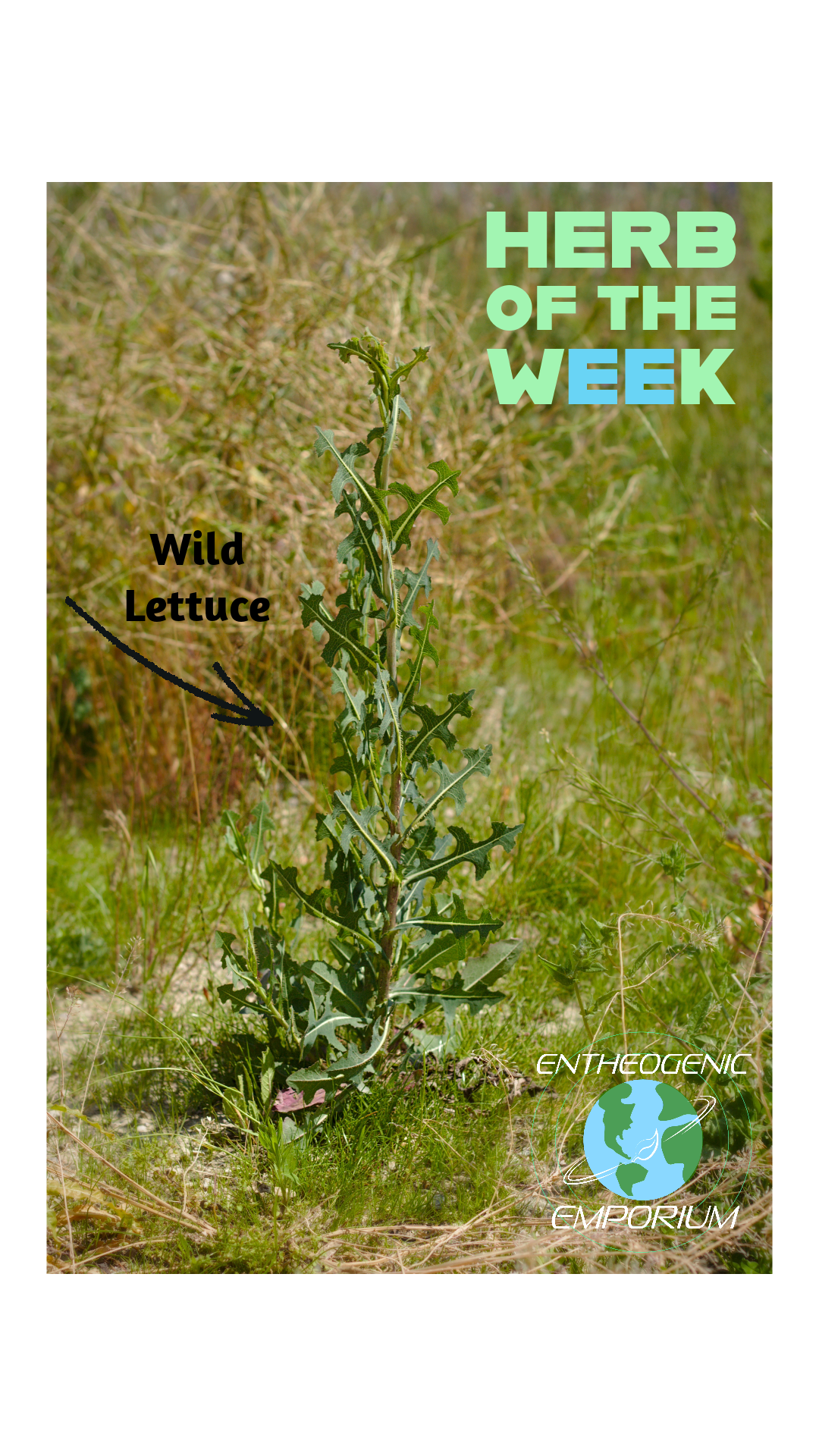
Wild lettuce, Lactuca virosa, is a biennial plant in the Asteraceae family, the same family as daisies and sunflowers. You'll find it along roadsides and on the edges of fields across parts of Europe and North America. Despite the name, it's not the lettuce you eat. It's a wild relative, and it tastes nothing like romaine. Very bitter.
Being a biennial, it spends its first year as a low rosette of leaves and shoots up tall in the second year before flowering. That second-year plant is the one most people notice.
A long history of use
People have been using wild lettuce since ancient Greece and Egypt. The Romans knew it as "lactuca silvestris," and the Egyptians used it as an offering to the god Min.
The Persian scholar Avicenna wrote about it in the 11th century as a sedative and for aches. In the 19th century it became part of the Victorian pharmacopeia, where it was valued as a mild sedative and used as a weaker stand-in for opium. Worth being clear here: it's much, much less potent, and it's not an opiate. The comparison is historical, and it's stuck to the plant ever since.
The compounds in the sap
Cut a stem or leaf and wild lettuce bleeds a milky white sap. That sap is where the interest is. The main compounds are lactucin and lactucopicrin, which are sesquiterpene lactones. They're the compounds traditionally linked to the plant's calming, sedative reputation.
Historically, the sap was collected and dried into a sticky brown material sometimes called lactucarium. That's still the basic idea behind concentrated wild lettuce products today. The whole leaf has the same compounds, just in lower amounts.
How people use it now
In modern herbalism, people reach for wild lettuce in the evening, mostly around winding down, restlessness and getting to sleep. Those are traditional and reported uses. It hasn't been through the kind of clinical trials that would let anyone make medical claims, and we won't make them.
It comes in a few forms: tinctures, capsules, and dried leaf for tea. Tea is the gentlest and the most bitter. A little honey helps a lot. Tinctures are easier to dose and faster to take. Capsules skip the taste completely, which is why a lot of our customers end up there.
Safety and good sense
Wild lettuce is generally considered safe for most adults, but use it responsibly. If you're allergic to plants in the Asteraceae family, like ragweed, chamomile or marigold, be careful. Start with a small amount and see how you react.
It's also smart to check with a healthcare provider before starting any new herb, especially if you take medication or have a health condition. Because it's traditionally used as a sedative, we'd avoid pairing it with alcohol or other sedating products, and don't drive until you know how it hits you.
Common questions
Is wild lettuce the same as garden lettuce?
No. Same genus, different species. Wild lettuce is bitter and not something you'd put in a salad.
What's the best form for a beginner?
A tincture or capsule. Easy to measure, and you skip the bitterness.
Is it an opiate?
No. It was historically compared to opium as a much milder option, but it contains no opiates.
Wild lettuce has a long history as a folk evening herb, and it's still valued in herbal circles for its calming character. Questions on forms or dosing, just ask us.

Written by Herbal Healings

Leave a comment
This site is protected by hCaptcha and the hCaptcha Privacy Policy and Terms of Service apply.