
Amanita Pantherina Caps High Muscimol
Premium Amanita Pantherina Caps High Muscimol
Product Description: These Amanita Pantherina Caps High Muscimol are grown in Ukraine and are processed to preserve their natural compounds. Amanita pantherina has a long history of ethnobotanical significance and is closely related to Amanita muscaria.
Historical Snippet: Historical records indicate that certain Amanita species, including pantherina, have been referenced in ethnomycological studies and cultural traditions, contributing to ongoing academic interest in the genus.
Key Features:
- Derived from carefully selected Amanita pantherina mushroom caps
- Consistent quality for research, topical, and aromatherapy use
- Maintains natural botanical integrity
Note: This product is NOT available in Louisiana.
FDA Disclaimer: The information provided has not been reviewed or approved by the FDA. This product is not for human consumption and is not intended to diagnose, treat, cure, or prevent any disease.
At a glance
- Whole dried caps of Amanita pantherina, grown in Ukraine
- High muscimol, processed to preserve the natural compounds
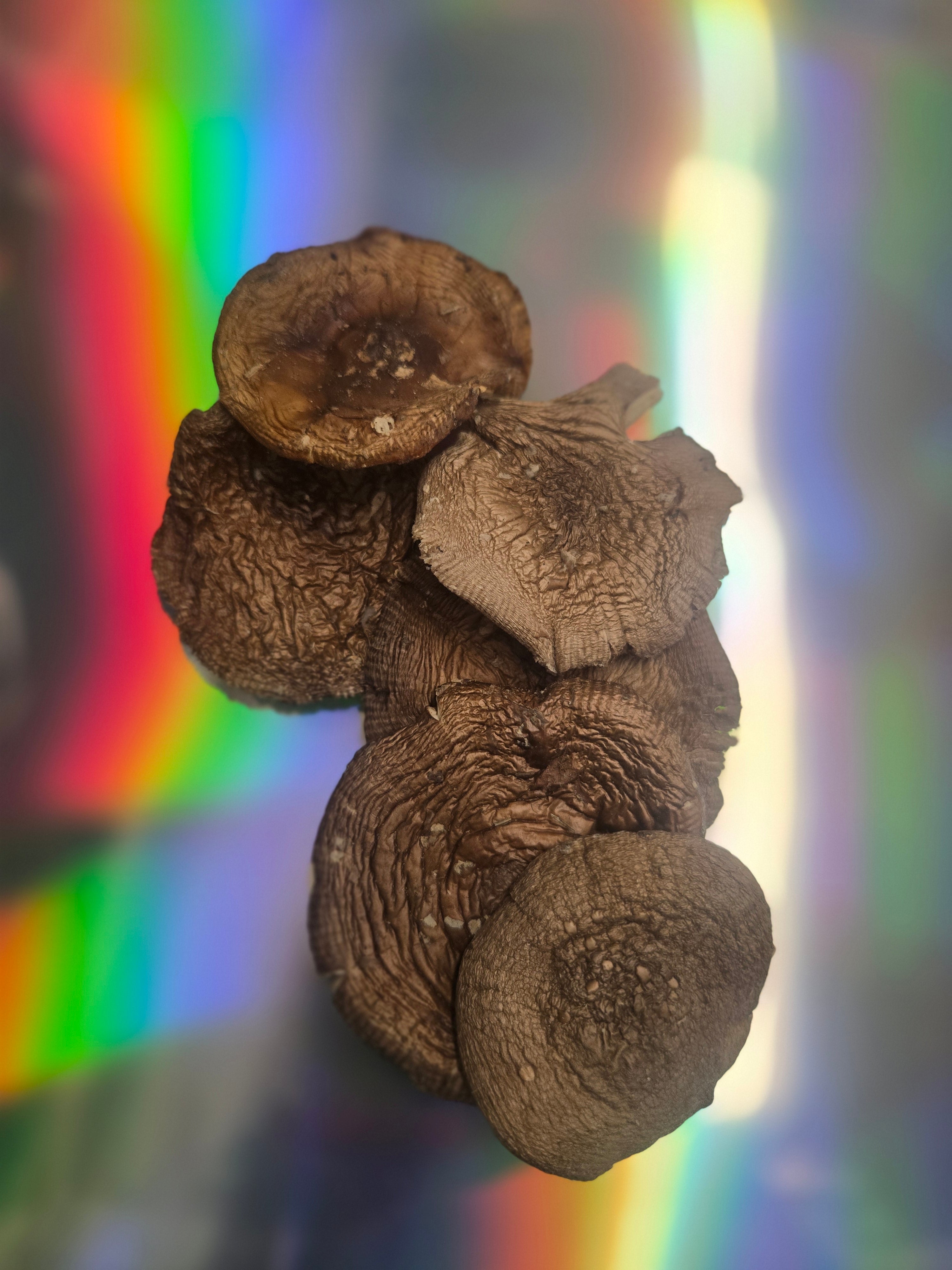
- Brown cap with white warts, not the red of its better known relative
- Research, topical and aromatherapy use
- Not for human consumption
- Not available in Louisiana. Adults 21 and over
The species. Amanita pantherina, the panther cap, is the close relative of the fly agaric and the same genus and section. It grows with broadleaf and conifer hosts across Europe and Asia and it is the brown-capped member of the pair: a tan to deep brown dome with white warts and a distinct ring, where Amanita muscaria carries the familiar red. Both appear across the ethnomycological literature, and the genus as a whole remains a live subject of academic interest.
Compounds.
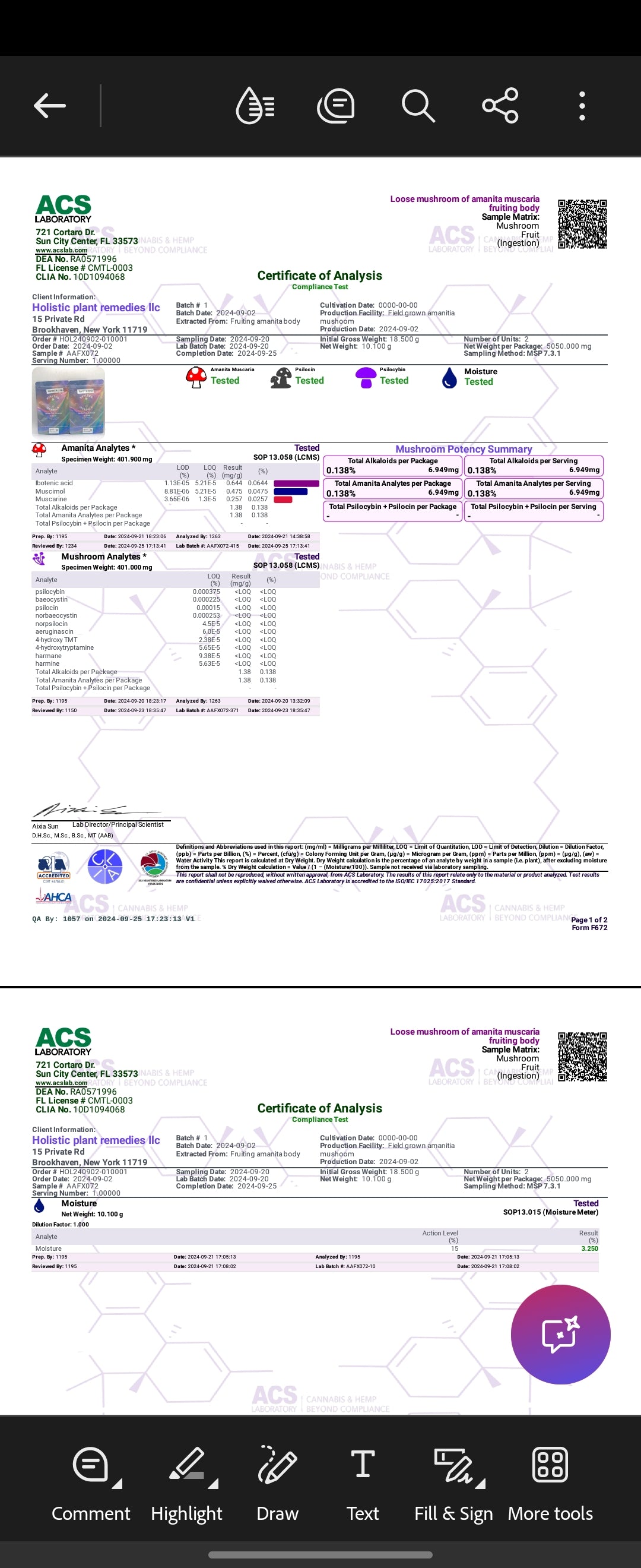
- Muscimol: the principal compound this material is selected for
- Ibotenic acid: the precursor, which shifts toward muscimol as the material is dried and aged
- Muscarine: trace amounts only in this section of the genus, despite the name
How it differs from muscaria. Same genus, same compound family, different species and a noticeably different specimen. Pantherina is generally described in the literature as carrying a higher proportion of the active isoxazoles by weight than muscaria, which is why it is sold and handled separately rather than as a substitute. Visually the two are easy to tell apart once you have both in front of you.
Storage. Dried caps are brittle. Keep them in a rigid sealed container, dark and dry, with a desiccant packet if your room runs humid. Light dulls the colour over months and moisture is what turns whole caps into fragments.
Related products. The extract form of this species is Amanita Pantherina Extract. For the red-capped relative see Amanita Muscaria Mushroom Caps (A-Grade), and for another species in the group see Amanita Regalis (A-Grade). All of it is in the Amanita Muscaria Product Collection.
Common questions
- How is pantherina different from muscaria? Different species in the same genus. Pantherina is brown-capped with white warts and is generally reported to carry a higher proportion of the active isoxazoles by weight.
- Where is it grown? Ukraine.
- Are the caps whole? Yes, these are selected whole caps, though dried mushroom is brittle and some edge breakage in transit is normal.
- Why is it not sold for consumption? The species has no approved food or supplement status in the United States, so we sell it for research, topical and aromatherapy use only.
- Why can you not ship to Louisiana? Louisiana state law restricts this material specifically.
Disclaimer. The information provided has not been reviewed or approved by the FDA. These statements have not been evaluated by the Food and Drug Administration. This product is not for human consumption and is not intended to diagnose, treat, cure, or prevent any disease. Not available in Louisiana. For adults 21 and over. Keep out of reach of children and pets.
Choose options