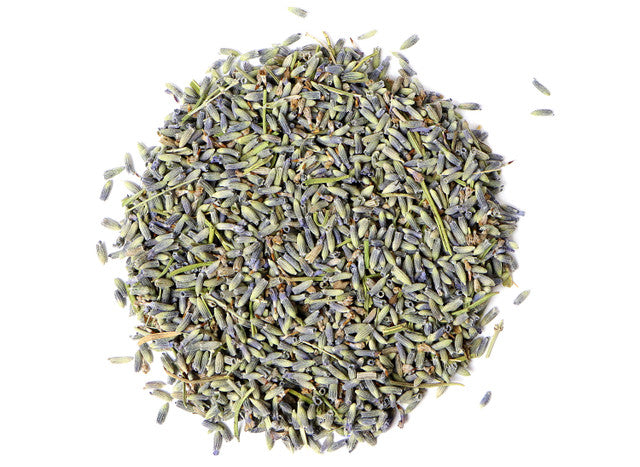
Lavandin Flowers
Lavandin Flowers are special cut dried flowers of Lavandula x intermedia, the lavender hybrid grown across Provence for its intensive aroma and high oil content. The buds are larger and far more fragrant than true lavender, which is why crafters reach for them for sachets, bath products, potpourri and home beauty recipes. Offered in 4oz, 1LB and 10lb sizes.
At a glance
- Special cut dried Lavandula x intermedia, the high-oil Provence lavender hybrid
- Larger, far more fragrant buds than true lavender
- Oil carries linalool and linalyl acetate, with more camphor and 1,8-cineole
- A craft flower first and a tea flower second
- For sachets, bath products, potpourri and beauty recipes; in 4oz, 1LB and 10lb sizes
The herb. Lavandin is a natural cross between true lavender, Lavandula angustifolia, and spike lavender, Lavandula latifolia. The hybrid yields several times more oil per plant than either parent, which is why the purple fields most people picture in Provence are lavandin. Its oil carries linalool and linalyl acetate like true lavender, but with more camphor and 1,8-cineole from the spike parent, which makes it a craft flower first and a tea flower second.
How to use. For a sachet, fill a small muslin bag with a few tablespoons and tuck it into a drawer. For a bath, a handful in a cloth bag under the tap scents the whole tub. If you do sip it, keep it light: a scant teaspoon per 8 oz of hot water, steeped no more than 5 minutes, since longer brings out the camphor. Crafters also blend it with rose or cedar shavings for potpourri.
What to expect. A bright, clean, calming fragrance that is both settling and refreshing, ideal for a peaceful atmosphere at home. It is not the lavender to choose for cooking. For a softer, sweeter lavender for the cup, see Lavender Flower (Organic) or English Lavender Flower.
Safety. Most people tolerate lavandin well. Its higher camphor content can irritate sensitive skin or bring a headache, and a strong cup can upset the stomach; use less or stop. Patch-test any homemade skin care recipe first, and keep infusions away from eyes. If you drink it, it may add to sedative medications; consult a healthcare professional before use if you are pregnant, nursing or on medication.
Storage. Lavandin Flowers (Lavandula x intermedia). Store sealed in a cool, dark, dry place; the high oil content holds its scent for a year or more.
Common questions
- What is the difference between lavandin and lavender flowers? Lavandin is a hybrid with more oil and a sharper, camphor-forward scent, best for crafts, while true lavender is sweeter and better for tea.
- Can you drink lavandin flowers as tea? You can, lightly and briefly steeped, but the camphor makes it harsher than true lavender.
Disclaimer. These statements have not been evaluated by the Food and Drug Administration. This product is not intended to diagnose, treat, cure, or prevent any disease. Lavandin is a traditional botanical, and traditional use does not establish that it will produce any particular result. Consult your healthcare provider before use if you take any medication or have a medical condition. Use at your own risk and keep out of reach of children. Formulated by Healing Herbals, run by a practicing herbalist of 13+ years.
Choose options