Safflower
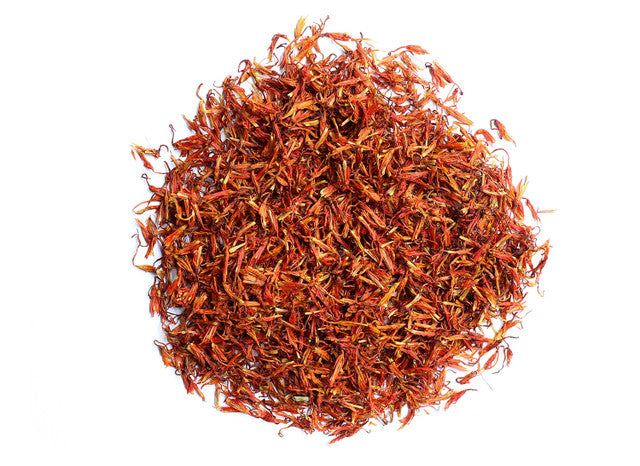
Safflower is whole dried petals of Carthamus tinctorius, harvested with care and dried to keep their warm orange-red color and delicate taste. Stir it into rice, broths and soups for gentle flavor and color, steep it as a mild tea, or add it to herbal blends. Offered in 4oz, 1LB and 10lb sizes.
At a glance
- 100% safflower petals, nothing else
- Warm orange-red color and a delicate, slightly bitter taste
- For rice, broths, soups, mild tea and herbal blends
- No caffeine, a color and flavor herb rather than an active one
- Offered in 4oz, 1LB and 10lb sizes
The herb. Safflower is a thistle-like annual in the daisy family, Asteraceae, native to the arid regions of the Middle East and cultivated for its dye more than four thousand years ago; safflower-dyed linen has been found in Egyptian tombs. In Chinese herbal practice the petals are called hong hua, the red flower, and in Mexican kitchens they have long stood in for saffron. The petals carry the pigments carthamin and safflower yellow, along with flavonoids, polysaccharides and a trace of volatile oil.
What's in it. 100% safflower petals, nothing else. Carthamin and safflower yellow tint rice, broth or tea a warm gold, the flavonoids give the mild, slightly bitter flavor, and there is no caffeine. Safflower adds color far more than aroma.
Dosage, first time. For tea, steep 1 to 2 teaspoons of petals per 8 oz of hot water for 5 to 10 minutes and strain; the cup turns golden and tastes light and grassy. In the kitchen, a pinch or two in a pot of rice is enough for color.
Regular use. Safflower is used as a food, so a daily cup or a regular pinch in cooking is normal. Keep it in a spice jar next to turmeric for pilafs and soups, or blend it with other flowers for a colorful loose tea.
What to expect. A gentle, warm-colored cup or dish with a delicate flavor that never dominates. It is a color and flavor herb, not an active one. If you want true saffron's aroma rather than safflower's color, see our Saffron Super Negin Stigmas.
Side effects. Safflower petals are gentle for most people. Anyone allergic to ragweed, marigold or other daisy-family plants can react to safflower, and a very strong cup may sit lightly on the stomach. Use less or stop if you notice either.
Interactions and cautions.
- May add to the effect of blood-thinning medications, so check with your prescriber if you take one
- Stop use before surgery
- Traditionally avoided during pregnancy; consult a healthcare professional before regular use if you are pregnant, nursing or on medication
Ingredients and storage. 100% Safflower (Carthamus tinctorius). Store sealed away from light, which fades the color, and away from heat and moisture.
Common questions
- Is safflower the same as saffron? No, safflower is a daisy-family petal that gives color with a mild taste, while saffron is the crocus stigma prized for its aroma.
- How much safflower do I use to color rice? A pinch or two per pot of rice, added with the water, gives a warm golden color.
- Can safflower petals be made into tea? Yes, steep 1 to 2 teaspoons per 8 oz of hot water for 5 to 10 minutes for a light, golden, caffeine-free cup.
Disclaimer. These statements have not been evaluated by the Food and Drug Administration. This product is not intended to diagnose, treat, cure, or prevent any disease. Safflower is a traditional botanical, and traditional use does not establish that it will produce any particular result. Consult your healthcare provider before use if you take any medication or have a medical condition. Use at your own risk and keep out of reach of children. Formulated by Healing Herbals, run by a practicing herbalist of 13+ years.
Choose options