Don’t Buy Blue Lotus Until You Understand These 3 Forms
TL;DR: Blue lotus comes as whole flowers, extracts and resin. Flowers are slow and ritual, extracts are precise and convenient, and resin sits in between, so pick by how you'll use it.
Introduction: One Plant, Three Very Different Experiences
At first glance, Blue Lotus seems simple a single botanical with a long, storied past. But step into the modern herbal marketplace, and that simplicity dissolves quickly. Suddenly, you’re faced with dried flowers, concentrated extracts, and dense resins, each promising a slightly different interpretation of the same plant.
So which one actually aligns with your intention?
Understanding the distinction isn’t just about potency or price. It’s about texture, preparation, and the overall sensory ritual. And in the case of Blue Lotus, those differences are more pronounced than most expect.
Whole Flowers: The Ritualist’s Choice

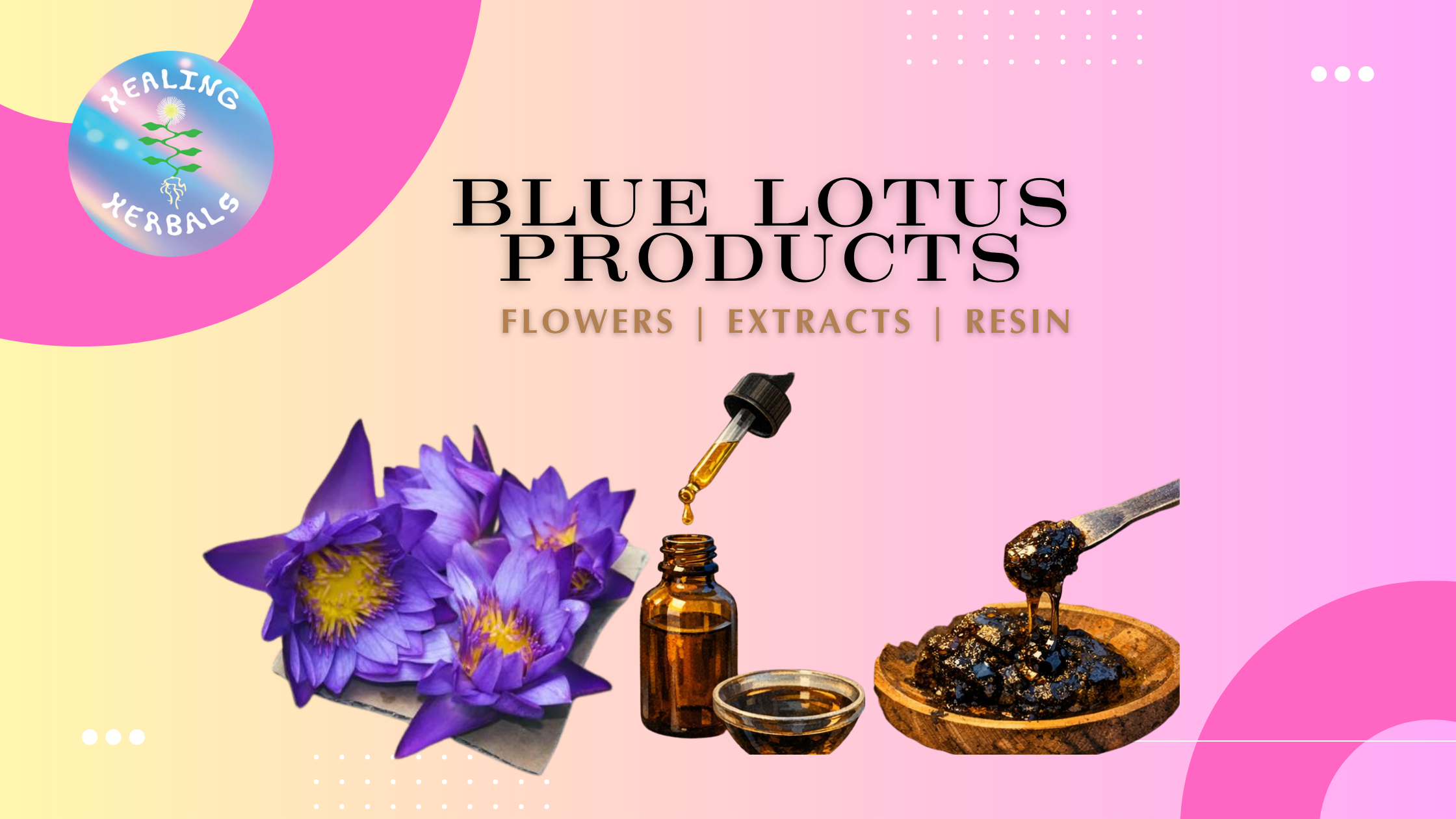
EGYPTIAN BLUE LOTUS BY HEALING HERBALS
Whole Blue Lotus flowers remain the closest link to traditional preparation methods. Their loose, airy structure invites slow brewing whether steeped in hot water or infused into wine, as seen in ancient Egyptian contexts.
What sets flowers apart:
- Full-spectrum plant material
- Gentle, layered aroma
- Requires time and preparation
There’s an inherent pace to working with whole flowers. You don’t rush them. The unfolding petals, the gradual release of color, it’s a process that rewards patience.
This format appeals to those who value ritual over convenience.
Extracts: Precision and Modern Efficiency

Blue lotus liquid & powder extracts by Healing Herbals
Blue Lotus extracts represent a shift toward refinement. Instead of working with raw plant matter, you’re engaging with a concentrated form often standardized for consistency.
Why extracts have gained traction:
- Easy to measure and dose
- Minimal preparation required
- More compact and shelf-stable
Extracts remove much of the unpredictability associated with whole botanicals. What you lose in ritual, you gain in control and repeatability.
For many, this makes extracts the ideal entry point into Blue Lotus especially in fast-paced, modern routines.
Resin: The Forgotten Middle Ground
 Resin sits somewhere between raw and refined a dense, sticky concentrate that retains much of the plant’s original complexity.
It’s less common, often overlooked, and arguably the most misunderstood format.
What makes resin unique:
- Thick, tar-like consistency
- Rich aromatic profile
- Requires gentle warming or dissolving
Unlike extracts, resin doesn’t feel “processed.” And unlike flowers, it’s already condensed. This creates a hybrid experience both tactile and concentrated.
For those willing to work with it, resin offers a deeper connection to the plant’s character.
Choosing the Right Format: It’s Not About “Better”
There’s no universal “best” Blue Lotus product, only the one that aligns with your preferences.
- If you value ceremony and tradition, flowers are unmatched
- If you prioritize efficiency and consistency, extracts deliver
- If you’re drawn to texture and depth, resin stands apart
Interestingly, this same conversation extends beyond Blue Lotus itself. As explored in our companion article on Entheogenic Emporium, the format you choose often shapes the entire botanical experience.
And in more social environments like those discussed in our feature on Roots Kava Bar preparation style can influence how a plant fits into shared settings.
Final Thoughts: The Format Is Part of the Experience
Blue Lotus isn’t just a plant. it’s a spectrum of possibilities.
From the slow unfurling of petals to the immediacy of extracts and the richness of resin, each format tells a different story. The key is not choosing the “strongest” or “best,” but understanding how each form reshapes your interaction with the plant itself.
MORE HEALING HERBALS BLOGS ABOUT BLUE LOTUS
Blue Lotus Myths Debunked: What Nymphaea Caerulea Really Is (and Isn’t)
blue, red, white lotus varieties & there differences

Written by Herbal Healings


Leave a comment
This site is protected by hCaptcha and the hCaptcha Privacy Policy and Terms of Service apply.