

What Happens in Your Brain When You Take Kanna?
TL;DR: Kanna (Sceletium tortuosum) contains several alkaloids, including mesembrine, mesembrenone, mesembrenol and tortuosamine, that work together rather than as a single compound. Research suggests they may interact with serotonin transporters and certain cellular signaling enzymes. The science is still being studied, so be careful with quick online claims about kanna.
Some plants gain attention slowly. Others seem to explode into the conversation overnight. Kanna is somewhere in between.

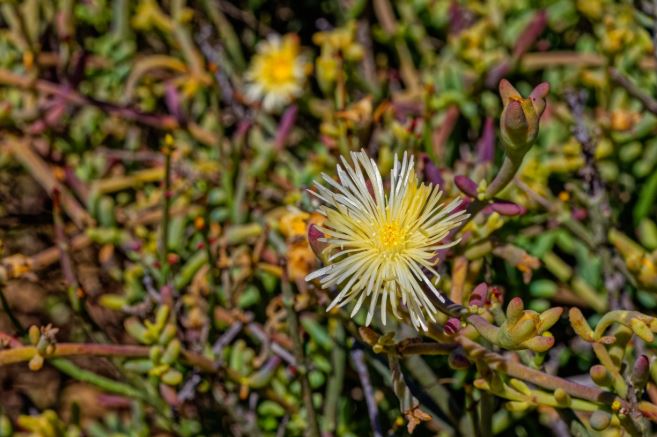
For centuries, Sceletium tortuosum quietly grew across the dry regions of South Africa, where the indigenous Khoisan people developed traditional ways of preparing and using it. Today, the plant has resurfaced in modern botanical circles, wellness discussions, and online forums. Yet much of the information floating around the internet oversimplifies what Kanna actually does.
For readers interested in the deeper cultural and ethnobotanical background of the plant, you can explore more about ethnobotanical Kanna traditions.
You’ll often see it described in quick headlines or compared to completely different substances. But the reality is far more nuanced.
From a botanical and biochemical perspective, Kanna works through a complex interaction of plant alkaloids and neural signaling systems. Instead of forcing dramatic changes in the brain, the compounds within the plant appear to influence how certain neurotransmitter pathways behave particularly those related to serotonin and intracellular signaling.
Understanding how Kanna works requires looking closely at the chemistry inside the plant and how those molecules interact with the brain.
The Alkaloids That Give Kanna Its Activity
Like many ethnobotanical plants, Kanna contains a group of naturally occurring compounds known as alkaloids. These molecules are responsible for most of the plant’s neurological interactions.

Researchers have identified several key alkaloids in Sceletium tortuosum, including:
- Mesembrine
- Mesembrenone
- Mesembrenol
- Tortuosamine
Among these, mesembrine typically receives the most attention because it is often the most abundant compound found in many Kanna extract preparations available today.
However, it’s important to understand that Kanna does not function like a single-compound substance. Plants rarely work that way. Instead, Kanna behaves more like a chemical ecosystem, where multiple alkaloids interact together and contribute to the plant’s overall neurological profile.
This layered chemistry is common in traditional botanical preparations. The effects of the plant usually arise from several subtle interactions occurring simultaneously, rather than one dominant compound doing all the work.
The Connection Between Kanna and Serotonin
One of the most studied aspects of Kanna involves its relationship with serotonin signaling in the brain.
Serotonin is a neurotransmitter that helps regulate communication between neurons. After it is released into a synapse the small gap between nerve cells it sends a signal and is eventually recycled through a process known as reuptake.
Specialized proteins called serotonin transporters handle this recycling process.
Research suggests that some of Kanna’s alkaloids interact with these transporters. Instead of introducing serotonin into the brain, the compounds appear to slow down how quickly serotonin is reabsorbed.
In practical terms, this means serotonin may remain active in the synapse for a slightly longer period before being recycled.
This kind of interaction is not unusual among plant compounds. Many botanicals contain molecules that appear to influence neurotransmitter pathways in subtle ways. Researchers studying botanical compounds that interact with neural signaling systems continue exploring how these plant molecules affect communication within the brain.
A Second Pathway: PDE4 Enzyme Interaction
Kanna’s chemistry does not stop at serotonin pathways. Researchers have also observed activity involving an enzyme known as phosphodiesterase-4, often abbreviated as PDE4.
PDE4 plays a role in controlling levels of a signaling molecule called cyclic AMP (cAMP). This molecule acts as an internal messenger within cells, helping neurons respond to incoming signals.
Certain Kanna alkaloids, particularly mesembrenone, appear to interact with PDE4 by slowing its activity.
When PDE4 activity decreases:
- cAMP signaling can remain active slightly longer
- Cellular communication pathways may stay engaged for extended periods
- Neural signaling processes can be subtly influenced
This additional mechanism suggests that Kanna operates through more than one biochemical pathway, which helps explain why researchers often describe it as a multi-target botanical.
Why Kanna Works Through Multiple Systems
Unlike pharmaceutical compounds that are designed to target a single receptor, plants typically operate through polypharmacology a term used when a substance interacts with multiple biological systems at once.
In Kanna’s case, the plant’s alkaloids appear to influence:
- Serotonin transporter activity
- PDE4 enzyme behavior
- Possibly additional neural receptors that researchers are still studying
Because these interactions occur at relatively moderate levels, the plant’s effects are often described as modulatory rather than overpowering.
This type of subtle influence aligns with how many traditional plants function. Instead of creating dramatic chemical shifts, they tend to adjust existing signaling patterns within the brain.
Traditional Preparation May Change the Chemistry
Another interesting aspect of Kanna involves how the plant is prepared.
Historically, Kanna was not simply harvested and dried. Traditional preparation methods often included fermentation. The plant material would be crushed and left to ferment for several days before drying in the sun.
Fermentation can change plant chemistry in several ways:
- Enzymes break down certain compounds
- Alkaloid ratios can shift
- Bitter or harsh plant components may be reduced
Ethnobotanists believe these preparation methods likely influenced the chemical balance of the plant. Readers curious about ethnobotanical preparation methods used for traditional plants can explore additional research on this topic.
Modern extracts sometimes skip fermentation entirely, which means contemporary products may not always reflect the same chemical profile used in historical preparations.
Why There Is Still So Much to Learn About Kanna
Despite its long history of traditional use, Kanna remains relatively underexplored in modern scientific research.
Several factors contribute to this:
- The plant grows primarily in southern Africa
- Funding for ethnobotanical studies is limited
- Alkaloid concentrations can vary widely between plants
Most research so far has focused on isolated compounds or standardized extracts, rather than the full spectrum of traditional preparations.
As interest in botanical neuroscience continues to grow, researchers are beginning to explore how these compounds interact within the broader context of plant chemistry.
A Subtle Botanical With Complex Chemistry
Kanna offers a fascinating glimpse into how plants interact with the brain.
Rather than relying on one powerful compound, the plant appears to work through a network of alkaloids that influence several signaling pathways at once. These include interactions with serotonin transporters and enzymes involved in cellular communication.
The result is not a single dramatic mechanism but a layered conversation between plant chemistry and the brain’s intricate signaling networks.
As curiosity about traditional plants grows, these botanical systems are gaining attention not only from researchers but also from communities exploring plant traditions in modern settings, including botanical lounges and kava bars where plant culture continues to evolve.
And in the case of Kanna, that conversation is still being studied.
Frequently Asked Questions About Kanna and Brain Chemistry
What is Kanna?
Kanna, scientifically known as Sceletium tortuosum, is a succulent plant native to South Africa that has been traditionally prepared and used by indigenous communities for centuries.
How does Kanna interact with the brain?
Research suggests that compounds found in Kanna may interact with serotonin transporters and certain cellular signaling enzymes, influencing how neural communication pathways function.
What compounds are found in Kanna?
Kanna contains several alkaloids, including mesembrine, mesembrenone, and mesembrenol, which are believed to contribute to the plant’s interaction with neurological systems.
Is Kanna still being researched?
Yes. While Kanna has a long ethnobotanical history, modern research continues to study its alkaloids, biochemical pathways, and how different preparations influence its activity.
KNOW MORE ABOUT KANNA HERE:
How to Start Using Kanna Extract: A Beginner’s Blueprint
Understanding Kanna Priming and Delayed Effects
Common Misconceptions About Kanna Debunked: Extracts, Alkaloids & Internet Myths

Written by Herbal Healings

%20contains%20several%20alkaloids,%20including%20mesembrine,%20mesembrenone,%20mesembrenol%20and%20tortuosamine,%20that%20work%20together%20rather%20than%20as%20a%20single%20compound.%20Research%20sugges...)
Leave a comment
This site is protected by hCaptcha and the hCaptcha Privacy Policy and Terms of Service apply.