
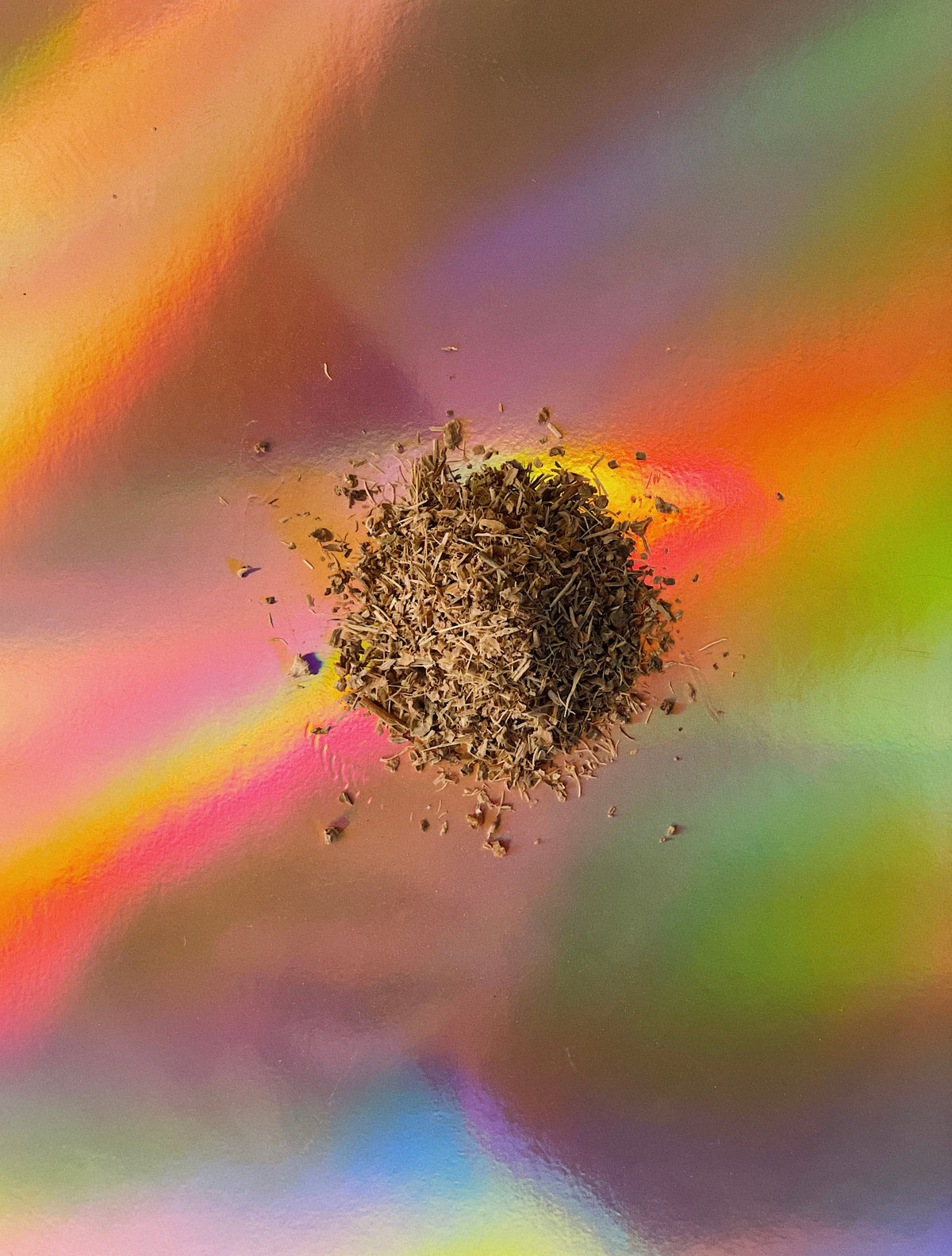
How to use kanna loose leaf
TL;DR: Kanna loose leaf can be used three main ways: packed in the lip (1 to 3 grams), brewed as tea (2 to 7 grams, steeped 15 to 30 minutes just under boiling), or smoked. The tea tastes a lot like black tea and takes well to a little sweetener or being chilled and mixed into juice or lemonade. Start at the low end of any range and see how it sits with you.
Loose leaf is the oldest way to use kanna (Sceletium tortuosum) and still one of our favorites. It's the plant more or less as the Khoisan used it: fermented, dried and ready to go. It's also the gentlest form, which is why we point most newcomers here before they touch an extract. Here's how we actually use it.
Why start with loose leaf
Kanna is best known for its mood-lifting character. Extracts concentrate that, sometimes a lot. Loose leaf gives you the whole plant at a lower strength, so it's easier to learn how you respond without overshooting. It's also flexible. The same bag can go in your lip, in a mug, or in a bowl.
You can grab ours here: Kanna Loose Leaf. The rest of our kanna lineup is in the collection if you want to compare.
Sublingual: packing it in the lip
For something quick and simple, use it sublingually. Take 1 to 3 grams and pack it in your lip, the same way people use loose tobacco. Absorption through the mouth is fast, and it's about the most convenient way to use the leaf when you're out.
A tip from behind the counter: start with a gram. Leave it in for 15 minutes or so, then decide if you want more. The taste is earthy and a bit salty, and it takes a session or two to get used to.
Brewing kanna tea
Tea is where most people end up. Use 2 to 7 grams, which is about 1 to 2 tablespoons. Put it in an open tea bag, a French press, a bombilla, or a ball steeper, whatever you've got.
Brew for 15 to 30 minutes at a medium to hot temperature, just under boiling. Don't hit it with a hard boil. The longer steep is what pulls the good stuff out of the leaf, so don't rush it like a two-minute black tea.
What you get tastes a lot like black tea, comforting and a little aromatic. We usually drink it in the afternoon when the shop quiets down.
Making the tea taste better
Add a natural sweetener if you like, honey works well. For a cold version, let the tea cool and mix it into another drink, like orange juice or lemonade. That's our go-to in summer. The citrus covers the earthiness and makes it much easier to drink a full glass.
You can also brew a bigger batch, keep it in the fridge for a couple of days, and pour a glass when you want one. Just keep track of how much leaf went into the whole jug so you know roughly what's in each glass.
Smoking kanna leaf
Some people smoke the leaf. It's a traditional method and another way to experience the plant. It comes on faster than tea and fades faster too. If you go this way, use a small amount, and don't mix it into a big blend until you know how it hits you alone.
One more storage note, since it applies to every method here. Keep the bag sealed, cool and out of the sun. Kanna leaf that sits open on a warm windowsill loses strength and picks up moisture, and then it clumps. A jar in a cupboard is all you need.
Common questions
How much kanna loose leaf should I use for tea?
2 to 7 grams, about 1 to 2 tablespoons. Start near 2 grams your first time.
How long should I steep it?
15 to 30 minutes, just under boiling.
Can I use kanna with other supplements?
Be careful. Kanna acts on serotonin, so skip it if you're on an SSRI or MAOI unless your doctor says otherwise.
Whether you've used kanna for years or you're brand new, loose leaf is an easy, flexible way to use it. Follow us on Instagram @healingherbals.store for more, and reach out anytime with questions.

Written by Herbal Healings
,%20brewed%20as%20tea%20(2%20to%207%20grams,%20steeped%2015%20to%2030%20minutes%20just%20under%20boiling),%20or%20smoked.%20The%20tea%20tastes%20a%20lot%20lik...)
Leave a comment
This site is protected by hCaptcha and the hCaptcha Privacy Policy and Terms of Service apply.