
The Kratom Regulatory Landscape in 2026
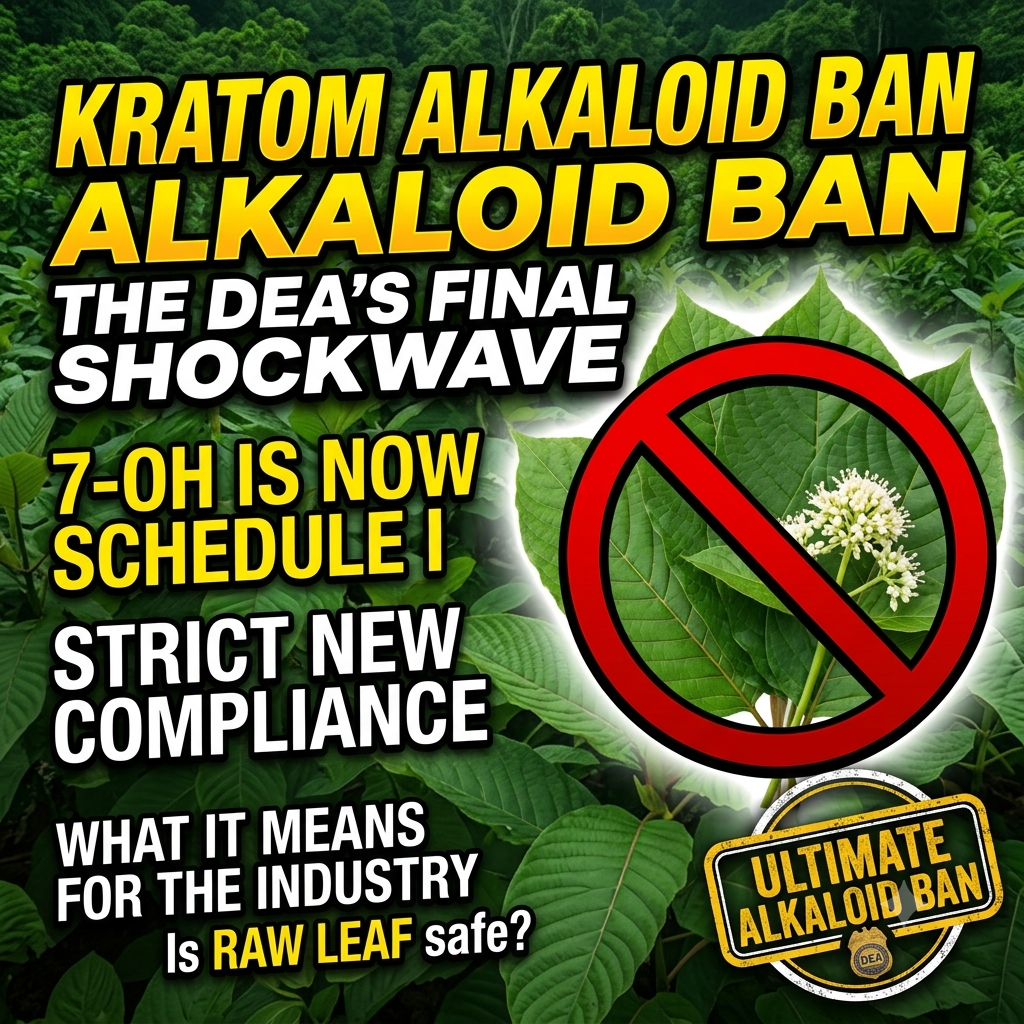
TL;DR: The FDA has long treated raw kratom as an unapproved ingredient, so states have set their own rules: a handful ban it outright, while more than thirty follow the Kratom Consumer Protection Act with age limits, heavy-metal testing and labeling standards. The big new change is the DEA's notice of intent to temporarily place 7-OH and a few related lab-made alkaloids in Schedule I. Natural whole-leaf kratom is explicitly not the target, and it stays legal in KCPA states.
We get kratom questions at the counter every single week, and lately they've all been some version of "is kratom getting banned?" Short answer: the concentrated extracts and semi-synthetic isolates are in the crosshairs, and the plain leaf isn't. Here's where things stand in 2026, what the federal action actually covers, and what it means if you buy or sell kratom.
How we got here: the FDA and the states
Historically, the FDA has kept a firm stance that raw botanical kratom is an unapproved new dietary ingredient and an unsafe food additive, and it has warned consumers against using it because of safety and dependency concerns.
Without a blanket federal ban under the Controlled Substances Act, individual states took matters into their own hands. A handful of states, including Alabama, Indiana, and most recently Connecticut and Tennessee, enacted total prohibitions on all kratom materials.
Meanwhile, more than thirty states adopted the Kratom Consumer Protection Act (KCPA) framework. Those states chose to keep the natural leaf legal for adults while enforcing age restrictions, strict heavy-metal testing and labeling standards. (1)
So the map has been a patchwork for years. Where you live has mattered more than anything happening in Washington.
The new federal move: 7-OH and Schedule I
The newest and most significant development focuses directly on the commercial boom in highly concentrated extracts and semi-synthetic isolates. The DEA filed an official Notice of Intent to temporarily place 7-hydroxymitragynine (7-OH), one of kratom's primary and highly potent alkaloids, into Schedule I of the Controlled Substances Act, alongside substances like heroin and LSD.
Backed by scientific evaluations from the FDA and HHS, federal regulators are targeting what they call "deceptive" commercial products, such as pressed 7-OH tablets, shots and isolates, that they say present an imminent hazard to public safety because of their high, often chemically altered potency. (2)
Along with 7-OH, the action also covers products built around these alkaloids:
- Mitragynine pseudoindoxyl (MP)
- Dihydro-7-hydroxymitragynine (MGM-15)
- The 9-fluoro derivative of 7-hydroxymitragynine (MGM-16)
What stays legal: whole-leaf kratom
This is the part that matters most for the broader botanical community. The DEA and HHS have explicitly clarified that this enforcement action isn't designed to criminalize or eliminate natural, whole-leaf botanical kratom (Mitragyna speciosa).
Raw plant powders, traditional teas and standard full-spectrum leaf products naturally contain only minor trace amounts of 7-OH, well below the federal threshold. They remain unscheduled and legally accessible in states covered by the KCPA. (3)
In plain terms, the line is being drawn between the plant as it grows and products that have been concentrated or chemically pushed far past anything the leaf produces on its own.
What this means for shoppers
If you buy kratom, a few practical habits go a long way right now:
- Know your state's rules. Federal action doesn't override a state ban. If your state prohibits kratom entirely, none of this changes that.
- Read the label. Anything sold as a 7-OH tablet, shot or isolate is exactly what regulators are going after. Steer clear.
- Ask for the lab panel. A good vendor should be able to show third-party testing for heavy metals and the alkaloid profile of what they sell.
- Be wary of "enhanced" claims. If a product brags about being many times stronger than regular kratom, that's a red flag, not a selling point.
What this means for vendors
For ethical vendors and retail brands, the path forward means a hard pivot toward transparency, completely dropping synthetic isolates, and mandatory third-party lab panel testing that documents natural-spectrum alkaloid ratios before products ever hit the shelves. (4) That's the standard we hold ourselves to, and honestly it's the only way this category keeps its good name.
Common questions
Is kratom being banned federally?
Not the leaf. The DEA action targets 7-OH and a few related alkaloids in concentrated or semi-synthetic products. Whole-leaf kratom isn't the target.
Can I still buy kratom powder or tea?
In states that follow the KCPA framework, yes. In states with a total ban, like Alabama, Indiana, Connecticut and Tennessee, no.
Why go after 7-OH specifically?
Regulators point to products with high, often chemically altered potency, far beyond the trace amounts found naturally in the leaf.
Stick with whole-leaf products, buy from vendors who show their lab work, and keep an eye on your own state's laws.
(1) Kratom 101: What You Need to Know | ASTHO
(2) (4) DEA to Temporarily Schedule 7-OH and Related Substances to Protect Public Safety
(3) HHS, FDA Commend DEA Action Against Dangerous Enhanced 7-OH Products | HHS.gov

Written by Herbal Healings


Leave a comment
This site is protected by hCaptcha and the hCaptcha Privacy Policy and Terms of Service apply.