

1.5% Total Alkaloid Kanna Extract
1.5% Total Alkaloid Kanna Extract is a standardized Sceletium tortuosum / expansum extract powder with an unusually high mesembrine ratio and a construction we believe is a first: instead of the mannitol base that most kanna extract powders sit on, this extract is put back onto a kanna fiber substrate, making it kanna on kanna, plant carrying plant. The alkaloid content is low by extract standards, which makes it a forgiving, easy-to-measure entry into standardized kanna, and a 5mg/10mg measuring spoon is included with every purchase. It is offered from .5 gram and 1 gram trial sizes through 5, 10, 20, 40, 75, 125 and 250 grams, a pound and a kilo. Our kanna is grown through benefit-sharing partnerships with the South African San Council, the traditional custodians of Sceletium knowledge.
At a glance
- Standardized to ±2.5% total alkaloids for this batch, sold as the 1.5% extract
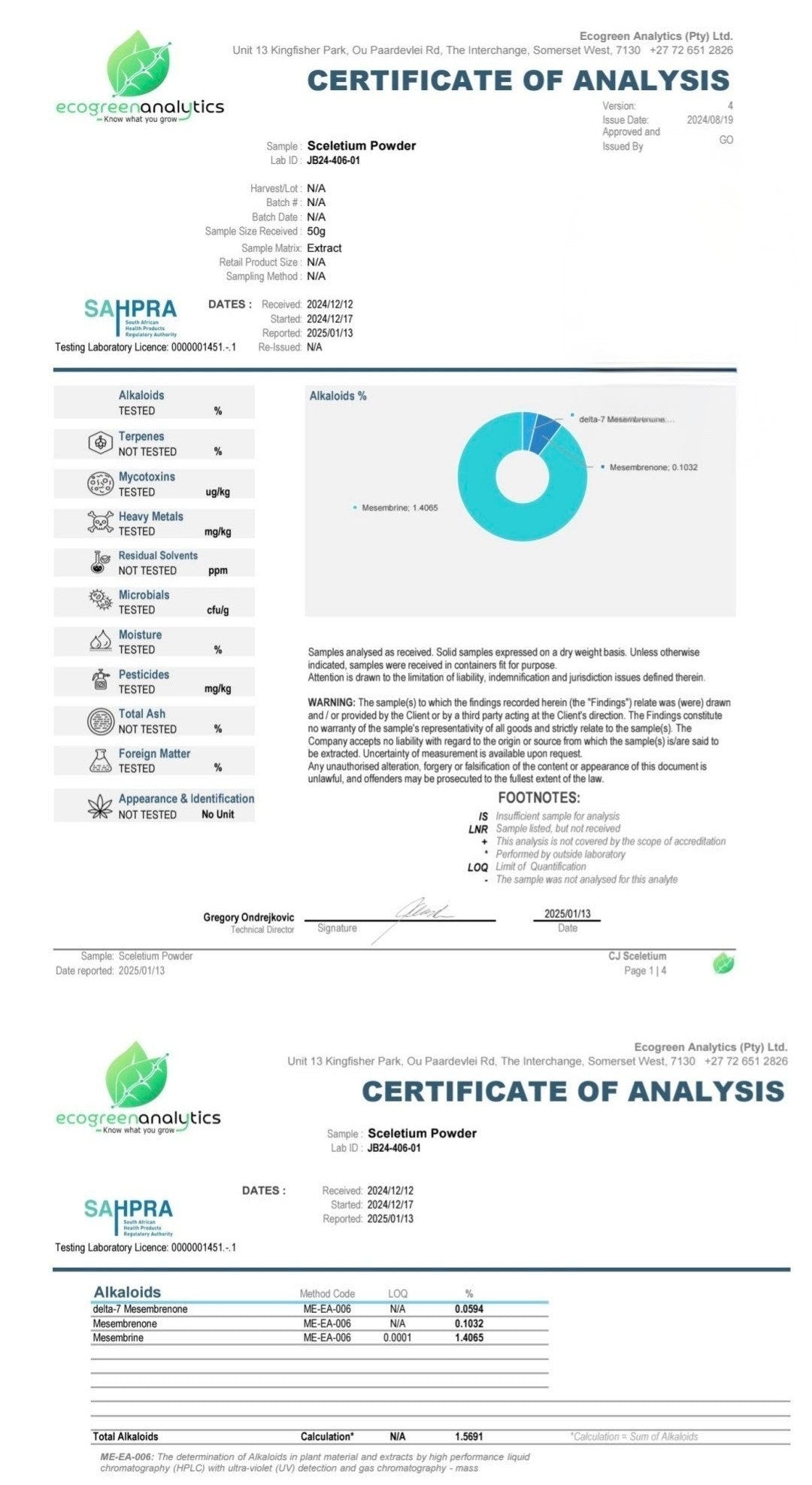
- Profile: 90% mesembrine, no more than 6.5% mesembrenone, no more than 3.5% delta-7-mesembrenone
- Carried on a kanna fiber substrate, no mannitol
- Serving 5mg to 10mg with the included 5mg/10mg spoon, start at 5mg
- Solubility partial, best taken as a powder
- Sizes from .5 and 1 gram trials up to a pound and a kilo
The herb. Kanna is a low succulent of the Aizoaceae family from the Karoo region of South Africa, chewed and fermented by the San and Khoikhoi peoples for generations and named after their word for the eland antelope. Sceletium tortuosum and its close relative Sceletium expansum both carry the plant's alkaloid family, mesembrine, mesembrenone, delta-7-mesembrenone and mesembranol, and the balance among those alkaloids, more than the total, is what decides whether an extract feels bright or heavy.
Active content. The current listing gives total alkaloids as ±2.5% for this batch, and the product is sold as the 1.5% extract; either way it is the lightest standardized powder we carry. The primary alkaloid profile is 90% mesembrine, no more than 6.5% mesembrenone and no more than 3.5% delta-7-mesembrenone. Mesembrine at 90% makes this a bright, uplifting, clear-headed extract; the small mesembrenone and delta-7-mesembrenone share adds a touch of calm, body-focused softening without turning it heavy. Solubility is listed as partial, which is why it is best taken as a powder rather than dissolved fully in water. The kanna fiber base means even the carrier contributes a whisper of whole-plant character.
Dosage, first time. The stated serving is 5mg to 10mg. Use the included spoon: the small end measures 5mg and the large end 10mg, so begin with the small end. Place it under the tongue, or stir it into a warm drink or juice, and wait. Sublingual use comes on within the first half hour and builds from there. Wait two hours before considering the 10mg end so you judge the whole effect rather than the first wave.
Regular use. Once you know your response, stay within the 5mg to 10mg range and pick the end of the spoon that suits the moment: 5mg for a light daytime lift, 10mg when you want more presence. Kanna's feel shifts with food, rest and tolerance, so keep the serving consistent instead of climbing, and do not exceed 10mg per serving.
What to expect. Users describe this extract as bright, lifted and clear: an easy, sociable energy, sharper focus and the edge taken off, without heaviness or a sedated feel. It suits a morning, a workday, a workout, or anyone stepping up from leaf to a standardized powder for the first time. It is not an evening wind-down format and not a high-potency one. For a stronger mesembrine-forward step up see our Kanna Extract IX VIBEZ 2.5% total alkaloids, and for the flagship high-mesembrine powder see our MZQ 5.5% Standardized Extract.
Side effects. Even a light extract is dose-dependent. Going past the stated serving can bring mild nausea, a headache, a jittery feeling or a dip in appetite, and a mesembrine-heavy profile can feel restless if you take it late in the day. If any of that shows up, drop back to the 5mg end or skip the next serving, drink water and let it clear; the effects pass as the kanna leaves your system.
Interactions and cautions.
- Do not combine kanna with SSRIs, SNRIs, MAOIs or other serotonergic medications, including triptans, tramadol and St. John's Wort, because of the risk of serotonin syndrome
- Do not use with alcohol
- Not for use if pregnant or nursing, or if you have a heart condition
- For adults 21+ only, and keep out of reach of children
Ingredients and storage. Standardized kanna extract (Sceletium tortuosum / expansum) on a kanna fiber substrate; no mannitol. Keep the jar sealed in a cool, dry, dark place, and keep the measuring spoon dry so the powder does not clump on it.
Common questions
- How much of the 1.5% kanna extract should I take? The stated serving is 5mg to 10mg, measured with the included 5mg/10mg spoon.
- What does kanna on kanna fiber mean? The extract is carried on ground kanna plant fiber instead of the usual mannitol powder base, so the carrier itself is kanna.
- Does the 1.5% kanna extract dissolve in water? Only partially, so it is better taken under the tongue or stirred into a drink and swallowed with the powder.
Disclaimer. These statements have not been evaluated by the Food and Drug Administration. This product is not intended to diagnose, treat, cure, or prevent any disease. Kanna is a traditional botanical, and traditional use does not establish that it will produce any particular result. Consult your healthcare provider before use if you take any medication or have a medical condition. Use at your own risk and keep out of reach of children. Formulated by Healing Herbals, run by a practicing herbalist of 13+ years.
Choose options
What is Kanna?
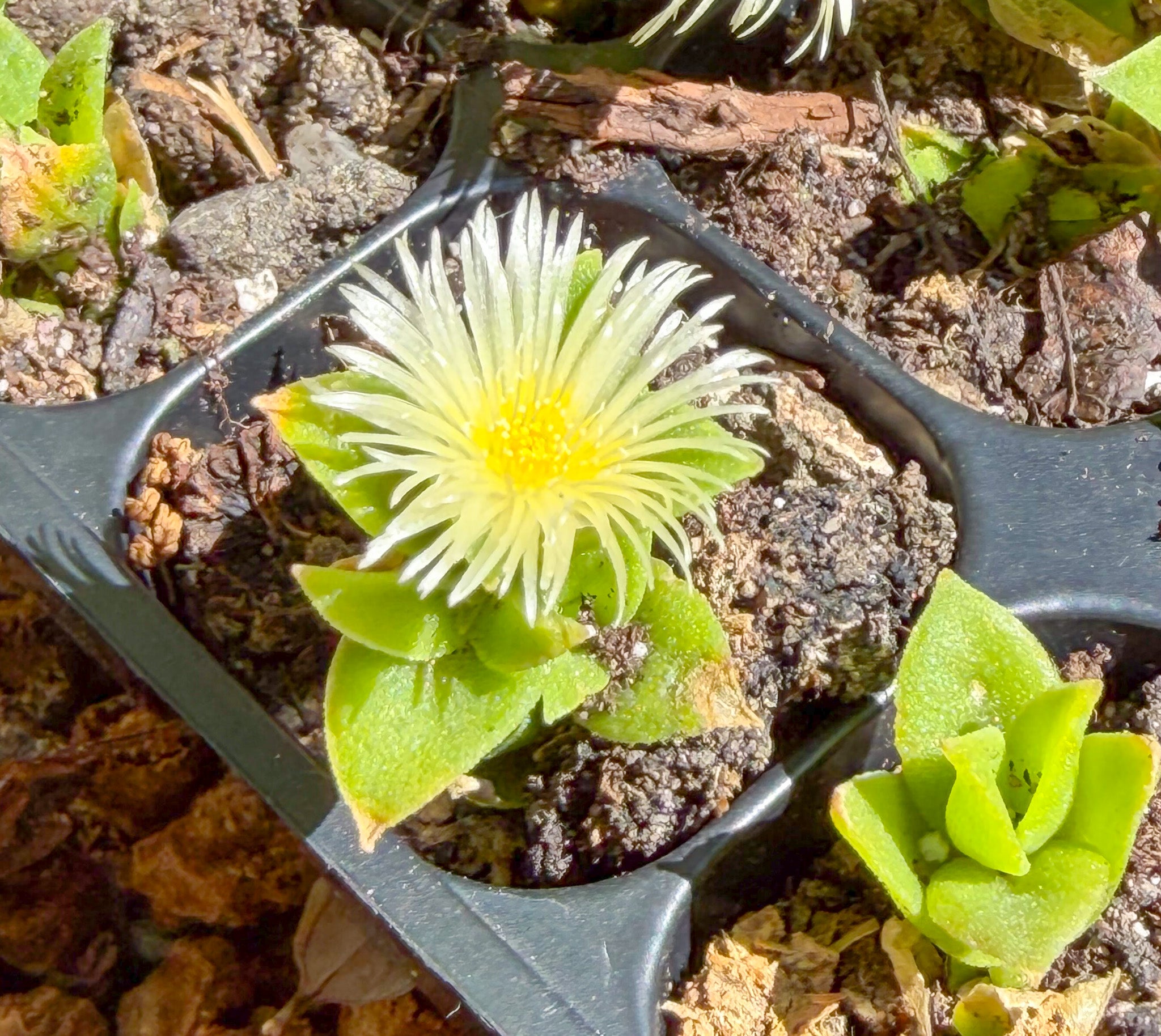
Kanna (Sceletium tortuosum) is an indigenous South African succulent plant with a rich ethnobotanical history as a natural mood booster and cognitive enhancer. Renowned for its unique ability to promote both deep relaxation and sharp mental clarity simultaneously, this potent botanical groundcover is fast becoming the go-to herbal alternative for modern stress management and flow-state support. Kanna works by directly interacting with the central nervous system through its rich profile of active, naturally occurring mesembrine alkaloids.
KANNA EXTRACT - A revolution
Kanna Extract is a new revolutionary type of botanical extract only possible with choice genetics and isolated alkaloids, standardized for a consistent extract. Highly refined- perfect for mixing, formulation or just enjoying in a cup of tea.
For centuries, indigenous communities like the San and Khoikhoi relied on this resilient succulent to sustain them through long, taxing journeys, using it to stave off physical fatigue and elevate their spirits. Today, this ancient botanical has transitioned from traditional campfires to modern wellness routines, prized for its unique ability to harmonize the mind.
At the heart of Kanna's appeal is its ability to foster a sense of calm without the accompanying heavy fog of drowsiness. By gently interacting with the brain's chemistry to support serotonin levels, the natural compounds found within the kanna plant acts as a natural buffer against modern stressors, helping to quiet a racing mind. Kanna invites a grounded, earthly state of emotional balance, making it a popular choice for those looking to connect further with themselves and their community.
Beyond sheer relaxation, Kanna offers a surprising paradox: it simultaneously sharpens mental clarity and hones concentration. Rather than sedating the user, it provides a clean, jitter-free surge of cognitive energy that helps keep distractions at bay during demanding tasks. This dual nature makes it an intriguing, plant-based ally for anyone seeking to navigate their day with both a calm heart and a highly focused mind.