Butterfly Pea Flower Tea Recipe
TL;DR: Butterfly pea flower is the blue flower behind those color-changing teas and lemonades, and it carries antioxidant pigments that researchers have been looking at in early studies. The easy recipe: 2 cups of boiling water, 6 tsp of butterfly pea flower extract, the juice of one lemon, honey or sugar, and ice. Add the lemon last and watch it turn from blue to purple.
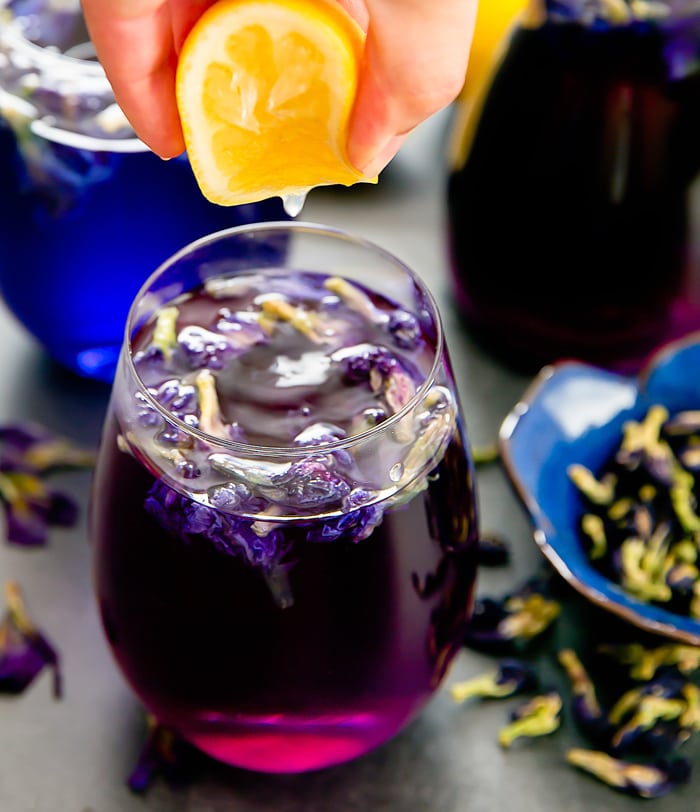
Butterfly pea flower shows up in cocktails, cosmetics and herbal tea blends, and people know it for one thing first: that brilliant blue. We keep it on the shelf at the shop and it's one of the few botanicals that gets a "whoa" from kids and adults at the same time. Pour the tea, squeeze in some lemon, and the whole glass shifts color in front of you.
It's also gotten attention from researchers in recent years for its antioxidant content. Below we'll cover what's in the flower, what the early studies have looked at, and our go-to lemonade recipe.
What butterfly pea flower is
Butterfly pea (Clitoria ternatea) is a climbing vine with deep blue flowers. The dried flowers steep into a tea that's pretty mild on its own, a little earthy, a little like a light green tea. Most people don't drink it for the flavor. They drink it for the color and for how easy it is to blend with other things.
The blue comes from anthocyanin pigments. Those pigments react to acid, which is why lemon or lime flips the color to violet or pink. Same tea, different pH.
The antioxidants researchers are looking at
Some studies have looked at whether butterfly pea flower may play a role in skin and hair health, weight management and blood sugar levels. That research is early, a lot of it is lab or animal work, and we'd never tell you a cup of tea is going to fix anything. But it's interesting, and here's what the plant contains:
- Kaempferol. This compound has been studied a lot. Test-tube studies have looked at how it behaves around cancer cells, which is a long way from saying a tea does anything in a person.
- p-Coumaric acid. Some research has looked at p-coumaric acid for possible anti-inflammatory, antimicrobial and antiviral activity.
- Delphinidin-3,5-glucoside. One study looked at this antioxidant for its effect on immune function and on colorectal cancer cells in the lab.
Read all of that as "scientists are curious," not "this is proven." That's the honest version.
Butterfly pea flower lemonade recipe
This is the one we make most. It takes five minutes and it's a hit at parties.
- 2 cups boiling hot water
- 6 tsp butterfly pea flower extract
- Fresh lemon juice from 1 medium lemon
- Honey or sugar to taste
- Ice
Stir the extract into the hot water until it's fully dissolved and deep blue. Sweeten while it's still hot so the honey or sugar melts in. Let it cool a bit, then pour it over a full glass of ice. Squeeze the lemon in last, right in front of whoever you're serving. That's the fun part.
Tips from behind the counter
If you're using whole dried flowers instead of extract, figure on a small handful (about 8 to 10 flowers) per cup and steep them 5 to 7 minutes. Longer steeps get darker but they don't get much stronger in flavor.
Want layers? Fill a glass with ice and lemonade first, then slowly pour the blue tea over the back of a spoon. It floats on top for a minute and gives you a two-tone drink.
It also works well with other botanicals. We like it with a little lemongrass, or with chamomile for an evening cup. Keep dried flowers in a sealed jar away from light, because the color fades if they sit in the sun.
Common questions
What does butterfly pea flower taste like?
Mild and slightly earthy. Most of the flavor in the lemonade comes from the lemon and whatever sweetener you use.
Why does it change color?
The anthocyanin pigments react to acid. Lemon, lime or even a splash of hibiscus tea drops the pH and turns it purple or pink.
Can I make it ahead?
Yes. Brew the blue base and keep it in the fridge for 2 to 3 days. Just hold off on the lemon until you serve it, or you'll lose the color show.
Grab some flowers, make a pitcher, and let the lemon do its thing.

Written by Herbal Healings


Leave a comment
This site is protected by hCaptcha and the hCaptcha Privacy Policy and Terms of Service apply.