What Kanna Is and Where the Comparisons Come From
TL;DR: Kanna (Sceletium tortuosum) keeps coming up as a lighter, more flexible option for people curious about plants alongside or after prescriptions. It isn't a replacement for medication, and anyone on antidepressants should talk to a qualified healthcare professional first.
For a lot of people, stress and emotional pressure aren’t rare moments anymore they’re part of daily life. And while prescription antidepressants and anxiety medications can be helpful and necessary for many, they don’t always feel like the right long-term fit for everyone.
That’s often where curiosity starts.
Not because someone is rejecting medicine, but because they’re looking for something that feels lighter, more flexible, or easier to step in and out of. Over the last few years, one plant that keeps coming up in those conversations is Kanna.
Kanna, also known as Sceletium tortuosum, is a succulent plant native to South Africa. Long before modern wellness trends, it was used traditionally in social and cultural settings where calm focus and emotional balance mattered. Today, it’s showing up again this time in carefully prepared extracts, powders, and capsules, including Kanna available at Healing Herbals.
Why People Start Looking Beyond Prescription Options
Antidepressants and anxiety medications serve an important role, and for many people they’re life-changing. But others eventually reach a point where they start asking different questions.
Some describe feeling emotionally muted.
Others talk about how hard it can be to stop or adjust certain medications.
Some simply don’t want something that feels permanent when their stress feels situational.
None of this means prescriptions are “bad.” It just explains why people begin exploring additional options that feel more personal and easier to control.
That’s often how Kanna enters the picture.
Medications People Commonly Mention When Talking About Kanna
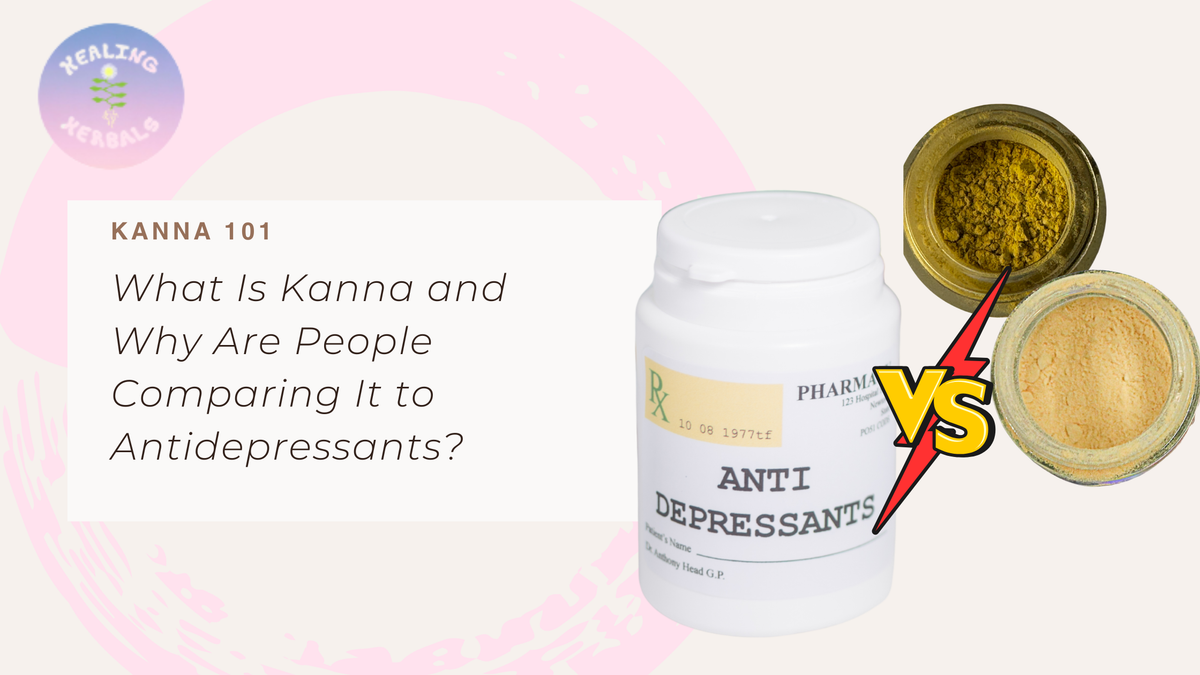
It’s worth saying clearly: Kanna isn’t a medication, and it isn’t approved to treat or replace any medical condition. Still, in real conversations online forums, reviews, and personal stories people often reference certain types of antidepressants when explaining why they became interested in it.
These comparisons are about experience, not equivalence.
SSRIs
SSRIs are commonly prescribed for long-term mood support. When people mention them alongside Kanna, it’s usually in the context of wanting something that doesn’t require weeks to adjust to or a daily, ongoing commitment.
Some describe looking for:
· Something they can use occasionally instead of every day
· A way to take the edge off stress without feeling emotionally flat
· A plant-based option they can step away from easily
Again, this reflects personal motivation not medical claims.
SNRIs
SNRIs are often associated with both mood and stress regulation. In discussions around Kanna, they tend to come up when people say they wanted something that felt less intense or less stimulating.
People sometimes describe wanting:
· Support that fits better into normal daily rhythms
· A more gradual, adjustable experience
· A botanical they can evaluate slowly
These are individual perspectives, not guarantees.
Milder Anti-Anxiety Medications
Kanna is also sometimes mentioned alongside lighter anxiety prescriptions, especially when people talk about situational stress.
In these cases, Kanna is often described as something used:
· On particularly stressful days
· Before social situations
· During creative or reflective time
How it feels if it feels like anything at all varies from person to person.
A Word on Caution and Responsible Use
Even though Kanna is a plant, it isn’t something to treat casually. Plants can be subtle, but they’re still active, and people respond to them differently.
Most experienced users suggest approaching Kanna slowly and paying attention to how your body reacts. Starting small is commonly recommended, especially for anyone new to it.
A few widely mentioned points of caution include:
· Not combining Kanna with prescription antidepressants or anxiety medications without speaking to a qualified healthcare professional
· Avoiding daily or constant use, especially at the beginning
· Being mindful of timing, particularly during workdays or late at night
Many people find Kanna works best when it’s used intentionally rather than pushed or overused. For a lot of users, less really is more.
How Kanna Fits Into Real Life
Most people who use Kanna don’t treat it as a solution on its own. Instead, it’s often part of a bigger picture that includes things like:
· Better sleep habits
· Less caffeine or alcohol
· Stress-management practices
· Creative or grounding routines
Seen this way, Kanna becomes one tool among many, not something to rely on blindly.
Final Thoughts
The renewed interest in Kanna isn’t about replacing modern medicine. It reflects a broader desire for choice, flexibility, and transparency. People want to understand what they’re using and why and they want options that fit their lives, not the other way around. Curiosity, when paired with caution, goes a long way.
MORE KANNA BLOGS FROM HEALING HERBALS
Why Do Different Kanna Extracts Feel Different?
What Clinical Research Reveals About Kanna’s Botanical Activity
Kanna in Kombucha & Beer: The Secret to Earthy Elegance

Written by Herbal Healings

%20keeps%20coming%20up%20as%20a%20lighter,%20more%20flexible%20option%20for%20people%20curious%20about%20plants%20alongside%20or%20after%20prescriptions.%20It%20isn't%20a%20replacement%20for%20medication,%20and%20an...)
Leave a comment
This site is protected by hCaptcha and the hCaptcha Privacy Policy and Terms of Service apply.