
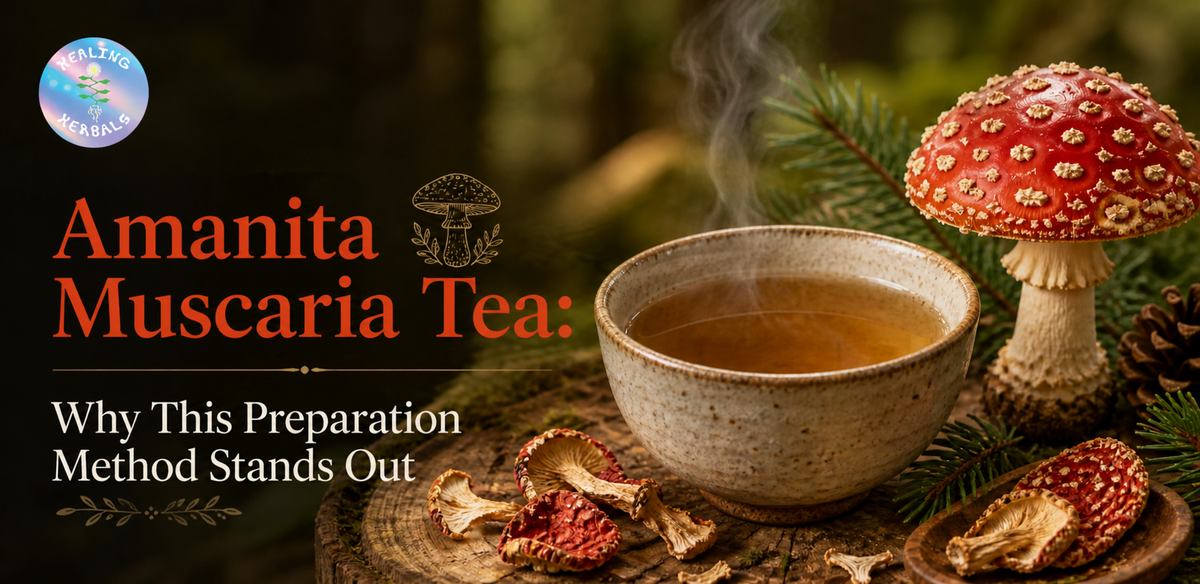
What’s the tea? Amanita Muscaria Tea: Why This Preparation Method Stands Out
TL;DR: Tea is the preparation experienced Amanita muscaria users tend to prefer because controlled heat and time process the material, steeping or simmering evens out piece-to-piece variation, and you can adjust temperature, simmer time, water and serving size. The slower process also builds in a pause that makes the whole thing more deliberate. It isn't complicated once you understand it.
Introduction: A Method That’s Stood the Test of Time
There’s a reason certain preparation styles endure while others fade into obscurity. When it comes to Amanita muscaria, tea isn’t just a preference, it’s a method shaped by generations of careful use, subtle refinement, and practical understanding.

Among seasoned botanical enthusiasts, tea preparation has quietly become the go-to approach. Not because it’s trendy, but because it offers a more controlled, intentional way to engage with this distinctive mushroom. The process itself measured, deliberate, almost ritualistic plays a role in why it continues to be favored today.
Understanding Amanita Muscaria as a Botanical
Amanita muscaria, often recognized by its vivid red cap and white speckling, holds a long-standing place in ethnobotanical history. Unlike many modern botanicals that arrive pre-formulated, this mushroom invites a more hands-on approach.
Its composition is notably sensitive to preparation. Raw or improperly handled material can feel inconsistent or unpredictable, which is why experienced users rarely approach it without some form of processing.
Tea, in this context, becomes less about convenience and more about refinement.
Why Tea Preparation Is Often Preferred
1. A More Refined Approach to Preparation
Turning Amanita muscaria into tea allows for a level of transformation that simple consumption methods don’t offer. The process typically involves controlled heat and time two variables that can influence how the material expresses itself.
Rather than interacting with the mushroom in its raw state, tea preparation introduces a step that many consider essential for a more deliberate experience.
2. Improved Consistency Across Batches
One of the most cited reasons for choosing tea is consistency. Whole caps or dried fragments can vary in potency from piece to piece. By steeping or simmering the material in water, those variables are distributed more evenly.
This creates a preparation that feels less fragmented something especially valued by those who prioritize predictability.
3. Greater Control Over Preparation Variables
Tea allows for adjustments that aren’t possible with more direct methods. Factors such as:
- Temperature
- Duration of simmering
- Volume of water
- Serving size
…can all be fine-tuned.
This level of control appeals to those who approach botanicals with a methodical mindset. It transforms the experience from something passive into something curated.
4. A More Intentional Experience
There’s an overlooked aspect to tea preparation: the pacing.
Unlike quick consumption methods, making tea introduces a natural pause. The act of measuring, heating, and waiting creates a buffer between preparation and use. For many, this process adds a layer of intention that aligns with traditional botanical practices.
It’s less about immediacy and more about engagement.
Traditional Influence and Modern Adaptation
Historically, Amanita muscaria wasn’t approached casually. Various cultures developed preparation methods that reflected trial, observation, and adaptation over time.
Tea, or decoction-style preparation, echoes those traditions while fitting seamlessly into modern routines. Today’s approach may be more standardized, but the underlying principle remains the same: preparation matters.
Common Misconceptions About Amanita Muscaria Tea
“It’s Just About Taste”
While flavor can be a factor, it’s rarely the primary motivation. Most who choose tea are doing so for process and consistency not palatability.
“All Preparation Methods Are Equal”
In practice, they’re not. The method used can significantly influence how the botanical presents itself. Tea preparation is often selected specifically because it introduces a level of uniformity.
“It’s Complicated”
In reality, the process is straightforward once understood. It’s not about complexity it’s about intention and attention to detail.
Final Thoughts: Why Tea Continues to Lead

Amanita muscaria tea isn’t popular by accident. It reflects a blend of tradition, practicality, and control that other methods struggle to match.
For those who value a more deliberate approach to botanicals, tea offers something distinct:
a preparation style that prioritizes consistency, encourages mindfulness, and respects the nature of the material itself.
In a space where shortcuts are common, this method stands apart precisely because it doesn’t rush the process.
KNOW MORE ABOUT AMANITA:
Amanita Muscaria Safety 101: Shocking Mistakes Every Newcomer Makes
How to Take Amanita Muscaria Safely?

Written by Herbal Healings



Leave a comment
This site is protected by hCaptcha and the hCaptcha Privacy Policy and Terms of Service apply.