Kanna's Alkaloids and How They Are Studied
TL;DR: Kanna's main alkaloids, mesembrine, mesembrenone and mesembrenol, are believed to act on the brain's serotonin system as natural serotonin reuptake inhibitors, which is why people link the plant to calm and a brighter mood. Traditionally it was chewed, brewed as tea or taken as snuff, and today you'll find it as extract powder, tincture and capsules. Because of that serotonin link, never mix it with SSRIs or other antidepressants, and skip it if you're pregnant or nursing.
We get asked about kanna every week at the shop, and the question is usually some version of "what's actually in it?" Fair question. Kanna (Sceletium tortuosum) is a South African succulent with a long traditional history, and the reason it gets so much attention now comes down to a small family of alkaloids. Here's how we explain them, what people report, and what to keep in mind before you try it.
What makes kanna unique
The active alkaloids in kanna are mesembrine, mesembrenone and mesembrenol. These compounds are believed to influence the brain's serotonin system. Researchers describe them as natural serotonin reuptake inhibitors (SRIs), meaning they may slow how quickly serotonin gets cleared away after it's released. That's the mechanism people point to when they talk about kanna and balanced mood, relaxation and a clearer head.
Different kanna products carry different ratios of these alkaloids. A fermented leaf, a high-mesembrine extract and a high-mesembrenone extract can each feel a little different, and that's one reason we always suggest starting with a small amount of whatever form you pick.
Kanna and the idea of a natural anxiolytic

Anxiolytic means "anxiety-reducing." Kanna has been traditionally chewed, brewed into tea, or used as a snuff to calm nerves, and modern extracts offer a more convenient way to take it. Here's what people commonly describe:
- A softer stress response: Some people point to research suggesting kanna may affect cortisol, the body's main stress hormone. That work is early, so we treat it as interesting rather than proven.
- Calm without sedation: Folks tell us kanna helps them relax while still staying alert, which is different from how heavy sedatives feel.
- Social ease: Many users report feeling more sociable and less tense in social settings.
None of that makes kanna a treatment for an anxiety disorder. If you're dealing with ongoing anxiety, a doctor is the right first call.
Kanna and mood
Kanna is also valued for its reported mood-lifting effects. Because of the serotonin link, people describe a more positive outlook while they're using it. Some early studies have looked at whether kanna may sharpen mental clarity alongside that lift, and a lot of our customers say they reach for it on flat, low-energy days when they feel a bit out of balance emotionally.
We like to keep expectations realistic. Kanna tends to feel gentle. Most people describe it as taking the edge off and nudging their mood up a notch, not as a dramatic change.
Best ways to take kanna
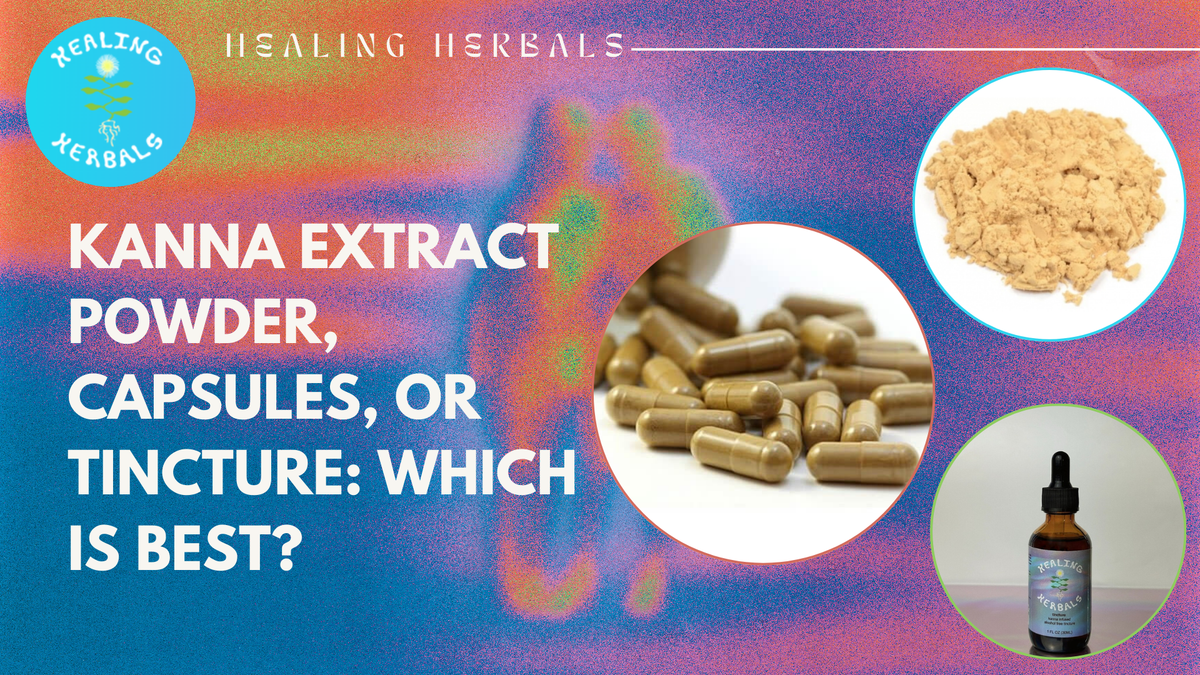
Kanna comes in a few forms, and each one fits a different routine:
- Kanna extract powder: versatile and easy to adjust, good for tea or sublingual use.
- Kanna tincture: absorbs quickly, handy when you want to feel it sooner.
- Kanna capsules: convenient and pre-measured, the simplest option if you don't want to weigh anything.
Whatever you choose, start at the low end of the label's range, wait to see how it sits, and only then think about taking more. We'd also suggest not using it every single day, since some regular users report the effect fading with constant use.
Safety and interactions
Kanna is generally considered safe at recommended doses, but there's one rule we don't bend on. Because it interacts with serotonin, it should not be combined with SSRIs or any other antidepressant medication. Stacking serotonin-active substances can cause real problems. Pregnant or nursing women should also avoid kanna unless a healthcare professional has said otherwise. If you take any prescription medication, check with your doctor or pharmacist first.
Common questions
Which alkaloid is the most important?
Mesembrine gets the most attention, but mesembrenone and mesembrenol matter too. The mix changes from product to product, which is why two kanna products can feel different.
Can I take kanna with my antidepressant?
No. Kanna acts on serotonin, so don't combine it with SSRIs or other antidepressants.
What's the easiest form for a beginner?
Capsules are the simplest because the dose is already measured. Tinctures are a good second choice if you want to adjust the amount a little at a time.
Kanna has a long history and some genuinely interesting chemistry. Go slow, respect the serotonin rule, and come ask us if you're not sure which form fits you.

Leave a comment
This site is protected by hCaptcha and the hCaptcha Privacy Policy and Terms of Service apply.