
Kanna and Drug Tests: The False Positive Risk Isn't the Plant
TL;DR: Kanna isn't on any standard drug panel, and its main alkaloid, mesembrine, looks nothing like amphetamine, though no one has published a cross-reactivity study to confirm it. The real false-positive risk comes from adulterants like ephedrine and hordenine that have turned up in some commercial kanna products. Buy from a source with per-batch alkaloid testing, keep the COA, disclose what you take before the test, and ask for GC-MS or LC-MS/MS confirmation if a screen comes back positive.
The most common cause of a failed drug test after taking kanna is not kanna. Researchers using direct analysis in real time high resolution mass spectrometry examined five commercially available kanna products bought from online retailers and found ephedrine in one of them. Ephedrine is a well documented cross-reactant on amphetamine immunoassays. The Operation Supplement Safety program run for US service members has also flagged reports of kanna supplements adulterated with both hordenine and ephedrine.
So the risk is real. It just has nothing to do with the plant's own chemistry.
Mesembrine looks nothing like amphetamine
Mesembrine is C17H23NO3, a tricyclic alkaloid built on a 3a-aryl-cis-octahydroindole core with two bridgehead chiral carbons sitting between a five membered and a six membered ring. It is a rigid, fused, three ring cage.
Amphetamine is a flat, flexible phenethylamine with a free primary amine hanging off a two carbon chain. Immunoassay antibodies for the amphetamine class are raised against that phenethylamine shape, which is exactly why the known false positive list is stuffed with compounds that share it: pseudoephedrine, ephedrine, phenylephrine, various designer phenethylamines.
Mesembrine has no free side chain amine, no phenethylamine backbone, and a locked ring system an amphetamine antibody has no reason to bind. Mesembrenone, mesembrenol and mesembranol are variations on the same cage. Tortuosamine belongs to a different structural family again, a ring opened alkaloid built around a disubstituted pyridine.
And now the caveat. There is no published cross-reactivity study putting mesembrine or any Sceletium alkaloid against a commercial amphetamine or MDMA immunoassay. Nobody has run it. The structural argument is strong and it is the argument a toxicologist would make, but it is a prediction from chemistry, not a measured result.
What a standard panel actually looks for
A SAMHSA 5 panel screens marijuana metabolite, cocaine as benzoylecgonine, opiates, amphetamines including MDMA, and PCP. A 10 panel adds barbiturates, benzodiazepines, methadone and propoxyphene. Twelve panel configurations vary by provider and usually add things like oxycodone, buprenorphine or fentanyl.
Kanna is on none of them. There is no kanna assay. There is no mesembrine antibody in commercial production.
Detecting it requires a targeted chromatographic method. A 2014 study in Analytical and Bioanalytical Chemistry mapped mesembrine and mesembrenone metabolism using GC-MS and LC high resolution multi-stage MS. The alkaloids undergo O-demethylation, N-demethylation, hydroxylation and dihydro reduction, with phenolic metabolites partly excreted as glucuronides and sulfates. Mesembrine mainly produced O- and N-demethyl-dihydro, hydroxy and bis-demethyl-dihydro metabolites. Mesembrenone produced far fewer, essentially the N-demethyl and N-demethyl-dihydro forms.
Those metabolites were detectable by standard urine screening approaches, but read that term carefully. It means the lab's general chromatographic screening workflow, not a dipstick or an analyzer immunoassay. A lab still needs a mesembrine reference standard in its library to call the peak. Almost no routine workplace lab stocks one.
The tricyclic antidepressant panel question
This one deserves a serious answer because mesembrine really is a tricyclic, and TCA immunoassays really are among the least specific screens in the building. Quetiapine cross-reacts strongly enough that it has been studied as a quantitative adherence proxy. Carbamazepine has produced false TCA positives severe enough to change a diagnosis. Cyclobenzaprine and diphenhydramine are also on the list.
But those compounds share something specific with amitriptyline and imipramine: a dibenzazepine or dibenzocycloheptene skeleton, two aromatic rings bridged by a seven membered ring with a propylamine tail. Mesembrine's tricycle is a fused octahydroindole with a single aromatic ring and a tertiary amine inside the ring system. Different shape entirely.
Again, no one has published a cross-reactivity panel for it. If you are on a clinical monitoring program that runs a TCA screen, the useful move is to disclose what you take before the sample is collected, not after the result comes back.
The MAOI and serotonin syndrome warnings
Every kanna page on the internet carries a caution about combining with SSRIs or MAOIs. The pharmacology underneath is thinner than the confidence of the warning suggests.
Mesembrine is a potent serotonin reuptake inhibitor, with a reported SERT Ki of 1.4 nM. Its PDE4 inhibition is weak by comparison, around 7,800 nM, roughly 5,500 fold less potent. A study of a high mesembrine extract found it behaved as a monoamine releasing agent rather than purely as a reuptake blocker, which is a more interesting finding than the marketing usually admits. What is missing is human MAO inhibition data and any documented serotonin syndrome case attributable to Sceletium. The caution is mechanistically reasonable. It is not evidence based in the way people assume. Talk to a clinician if you take serotonergic medication.
The 5-HIAA question
5-HIAA is the urinary serotonin metabolite used in carcinoid screening, and the interference list is long. Bananas, avocado, pineapple, walnuts, plums, tomato and eggplant push it up. So do caffeine, nicotine, acetaminophen, guaifenesin, ephedrine and methamphetamine. Antidepressants including imipramine and MAOIs push it down.
Nobody has tested kanna against a 5-HIAA assay. If you reason purely from the reuptake inhibitor class, the direction you would expect is the same downward one listed for other serotonergic agents. That is inference, not data, and if you are being screened for carcinoid syndrome it is a conversation for your physician, not a blog.
Half-life and detection window
Human pharmacokinetic data for mesembrine is not established in a form that supports a detection window estimate. Plasma quantification work exists in mice. Extrapolating a clearance window from mouse plasma to a human urine screen would be guessing, so we are not going to give you a number.
The labeling problem is the real story
Total alkaloid content in Sceletium tortuosum plant material ranges roughly 0.3 to 2.3 percent of dry weight, with cultivated average material near 0.8 percent. That is an eight fold spread in the raw input before anyone extracts anything.
Now consider what "55x" or "MT55" means on a label. A ratio claim describes how many parts raw plant allegedly went into one part extract. It says nothing about final alkaloid percentage, and since the starting material varies that widely, two products with identical ratio claims can differ enormously. A ratio is a marketing number. A percentage backed by a batch certificate of analysis is a measurement.
If you cannot see a per batch COA with a stated total alkaloid percentage, you do not know what is in the jar. That is the gap the ephedrine got through.
What to do before a test
- Buy from a source that publishes per batch alkaloid testing, not just an extract ratio
- Keep the product and its COA so a Medical Review Officer has something to look at
- Disclose supplement use before the sample is collected
- If a screen comes back positive, request confirmatory GC-MS or LC-MS/MS, which identifies the actual molecule instead of guessing at a shape
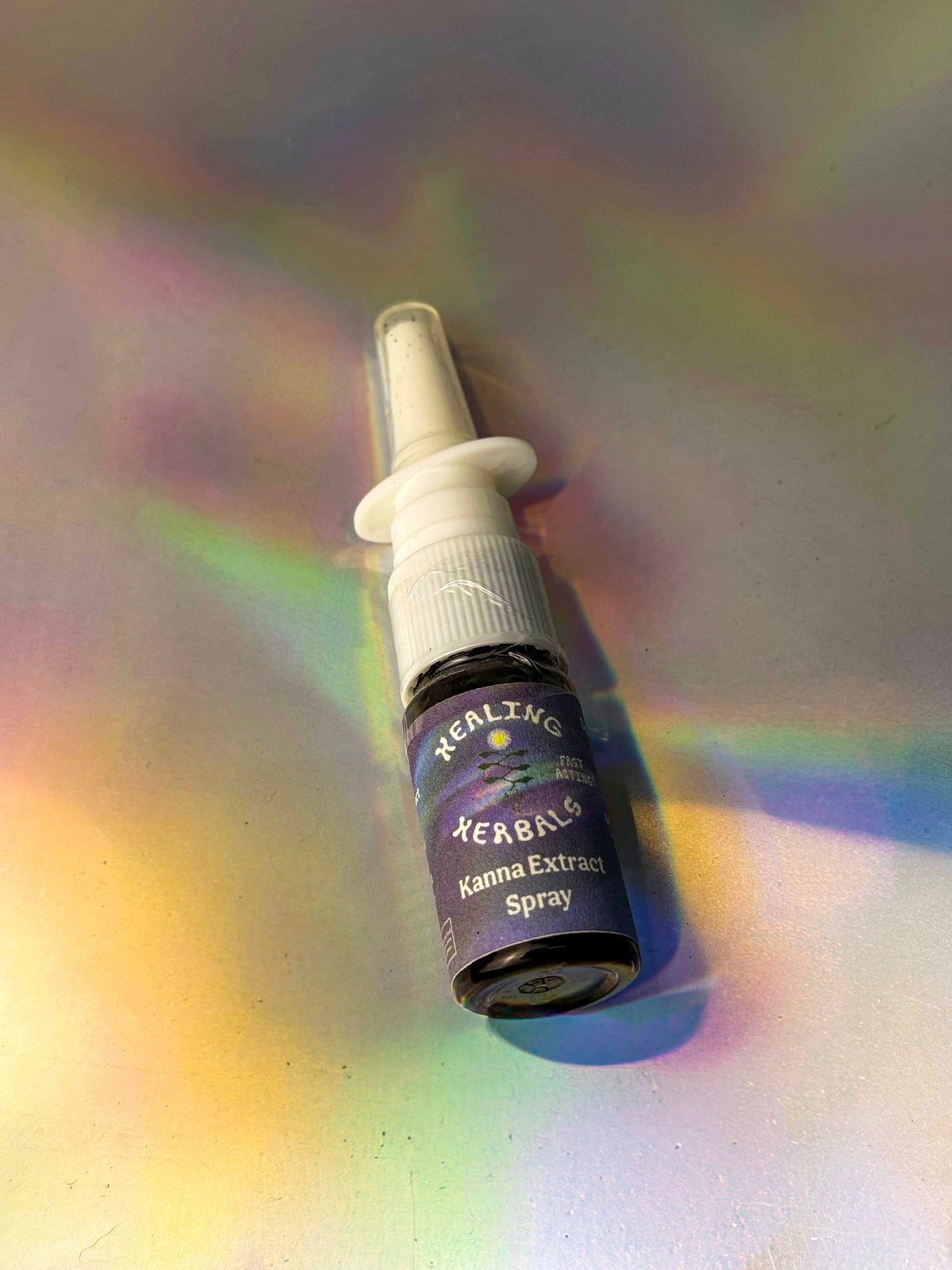
Verified alkaloid content is the whole ballgame here, which is why Healing Herbals publishes tested kanna extract specifications rather than leaning on ratio claims. Knowing the number is what separates a botanical from a mystery powder.
The short version: the plant is not on the panel and does not look like anything on the panel. The adulterants people have found in cheap kanna are, and do.
This article is for informational purposes and is not medical advice. Consult a qualified healthcare provider about supplements, medications and any drug testing program you are subject to.
Keep reading: Mesembrine Alkaloid: The Key Psychoactive Compound in Kanna and Is Kanna Illegal Anywhere? Your Sceletium Travel Guide.


Leave a comment
This site is protected by hCaptcha and the hCaptcha Privacy Policy and Terms of Service apply.