True Egyptian Blue Lotus vs What's Sold Online: What the UC Berkeley Study Found
TL;DR: A lot of "Egyptian blue lotus" sold online is a hybrid or a different water lily, and 2025 UC Berkeley work found verified Nymphaea caerulea had far higher nuciferine than flowers bought from online sellers. Look for big heads, pale sky-blue petals fading to white, an intact yellow center, a sweet floral smell, and a seller who can tell you where it was grown. Steep a few grams for 10 to 15 minutes, start low, and check local laws.
Blue lotus is everywhere right now. Tea shops, vape juice, smoke shop jars, Etsy listings with 40 sellers all calling their flower "Egyptian." Most of it is not the plant people think they are buying. This post is about what true Egyptian blue lotus actually is, what the 2025 UC Berkeley work found, and how to tell the difference yourself.
What "Egyptian blue lotus" actually refers to
The plant is Nymphaea caerulea, a water lily native to the Nile, not a true lotus at all (true lotus is Nelumbo, a different family). It shows up all over ancient Egyptian art: temple columns, tomb paintings, funeral bouquets. The flower opens in the morning and closes by early afternoon, which is a big part of why the Egyptians tied it to the sun and to rebirth.
Over the last century Nymphaea caerulea has been crossed with other water lilies so much in the nursery and pond trade that a lot of what gets sold as "blue lotus" today is a hybrid or a completely different Nymphaea species. It looks the part. It is not the same plant.
What the UC Berkeley study found
In March 2025 UC Berkeley published work on the blue lotus of Egypt. The team used mass spectrometry to compare verified Nymphaea caerulea against dried flowers bought from online sellers, including Etsy. The verified Egyptian plant had far higher levels of nuciferine, the aporphine alkaloid most associated with blue lotus, than the flowers bought online. Several of the online samples looked like a common, visually striking water lily rather than the real thing.
You can read the Berkeley write up here: Investigating the psychedelic blue lotus of Egypt.
That study did not test our flower. What it shows is that the genetic matters, and that "blue lotus" on a label tells you very little on its own. That's the reason we list our true Egyptian blue lotus separately from our standard blue lotus instead of calling everything Egyptian.
How to tell true Egyptian blue lotus apart
You can't lab test a jar by eye, but there are things we look at on every lot:
Flower head size. The true genetic we carry dries into noticeably bigger heads than the hybrid.
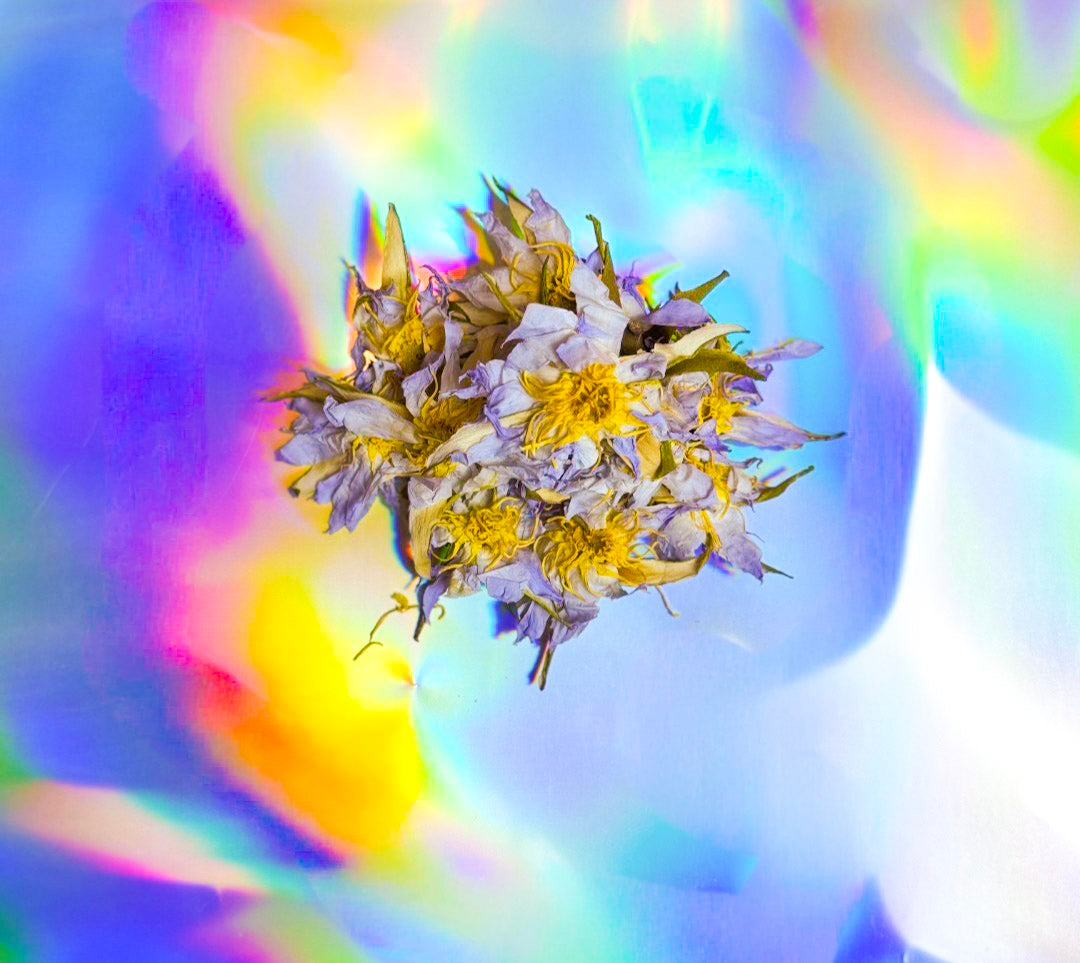
Petal color. Pale sky blue fading to white toward the center, with more white and blue showing in the petals. A lot of hybrid flower dries darker, purple, or pinkish.
Center. A yellow center with the stamens intact. Heavily broken, dusty flower is harder to judge and usually older.
Smell. Sweet and floral, a little like hay and honey. Flat or musty flower has either been sitting or was never the right plant.
Where it came from. Ask the seller where it was grown and whether they can speak to the genetic. If the answer is "it's blue lotus," that's your answer.
How people use it
Traditionally the flower was steeped, and that's still the most common way we see customers use it. A typical tea is a few grams of dried flower steeped in hot water for 10 to 15 minutes. Some people steep it in wine, which is closer to how it shows up in historical accounts. It's also used in tinctures and aromatherapy blends, and we pair it with kanna and kava in a few of our own products.
Start low, talk to your doctor before combining it with any medication, and skip it if you're pregnant or nursing. Blue lotus is sold for botanical and aromatic use and is not evaluated by the FDA. It's also restricted in a few places (Louisiana, for one), so check your local laws.
What we carry
True Egyptian blue lotus is the original genetic: bigger heads, more white and blue in the petals, and the flower we'd reach for ourselves. We still carry standard blue lotus for people who want an everyday tea flower at a lower price. They're different products at different prices, and we label them that way on purpose.
Right now everything on the site, true Egyptian blue lotus included, is 18% off with code SUMMEREND, and every order comes with our high potency instant kava.
✌ Robbie, owner/founder, Healing Herbals
Related guides: spotting sprayed or synthetic blue lotus, flower grades, tea and wine prep, price guide.