Blue Lotus: Understanding Its Safety and Effects on Dependency
TL;DR: Blue lotus (Nymphaea caerulea) is a water lily with thousands of years of history along the Nile, traditionally steeped in water or wine, added to baths or enjoyed for its scent. Its alkaloids, aporphine and nuciferine, are still being studied, and there's very little formal research on long-term use or dependency. Use it occasionally, buy from a seller who names the species and lab-tests, and check local rules and your doctor if you take anything that acts on the nervous system.
People ask us two things about blue lotus more than anything else. Is it safe? And can you get hooked on it? Fair questions for any plant that affects how you feel. We'd rather give you a straight answer, including the parts where the honest answer is "we don't fully know yet," than a sales pitch.
A flower with a long track record
Few flowers carry as much history as blue lotus (Nymphaea caerulea). It was beloved along the Nile in ancient Egypt, and it shows up all through classical art, pottery and ceremony. Today it's still one of the most recognizable botanicals in the world.
In Egyptian culture it was tied to the sun, rebirth and beauty, and you'll find it on temple walls and in artwork spanning centuries. The way people actually used it was pretty simple. The blossoms were steeped in water or wine, added to baths, or just enjoyed for their fragrance. That long, fairly gentle history of use is part of why people see it as a mild plant. It's not the same thing as proof of safety, though, and we won't pretend it is.
What's actually in it
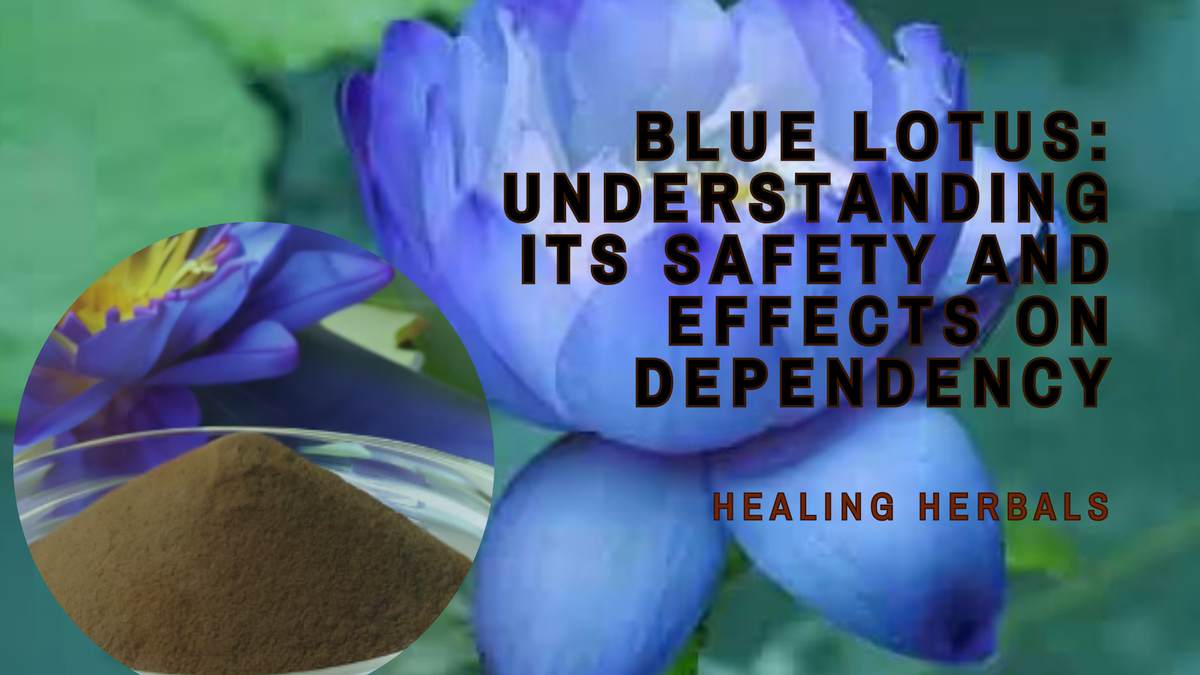
Despite the name, blue lotus is a water lily, not a true lotus. It grows in ponds and slow-moving water and opens its blue petals with the morning sun.
Botanists have studied its naturally occurring compounds for a long time, especially the alkaloids aporphine and nuciferine. They're still the subject of academic research. That's the key point for anyone asking about safety: the research is ongoing and fairly limited, and most of what people say about how blue lotus feels comes from tradition and personal reports.
The dependency question
Here's the honest version. There's very little formal research on long-term blue lotus use, so nobody can hand you a clean, study-backed answer on dependency. Anyone who tells you it's been proven one way or the other is getting ahead of the science.
What we can offer is practical sense from years of selling it. Most of our customers use it the way it's been used for centuries: a tea in the evening, a bath, some incense. Occasionally, not all day every day. If you notice you're reaching for anything, blue lotus included, every single day to feel normal, that's a good signal to take a break and pay attention. That's our advice with any botanical, not just this one.
Using it responsibly
Start small and see how it sits with you before you take more. Don't mix it with alcohol or with sedating products until you know how you respond, and don't drive after using it the first few times. Blue lotus could interact with other drugs that act on the nervous system, so if you take any prescription medication, talk to your doctor first.
It's also worth checking your local rules. Blue lotus is legal in most of the US, but not everywhere, and laws change. We cover the details in our state-by-state legal guide.
Choosing a quality source
As blue lotus has gotten popular, the quality on the market has gotten all over the place. Look for suppliers who name the species (Nymphaea caerulea), share where it came from, and lab-test their botanicals. At Healing Herbals we source authentic whole flowers and prepare them carefully to keep their color and fragrance. Faded, dusty, brown material is a good sign to shop somewhere else.
Common questions
Is blue lotus addictive?
There isn't solid research either way. Traditionally it's been used occasionally and gently, and that's how we'd suggest using it.
Is blue lotus safe to take with medication?
Talk to your doctor first, especially if your medication acts on the nervous system.
What's the gentlest way to try it?
A simple tea from the whole flowers, on a quiet evening.
As with any botanical, research your local regulations and check with a qualified healthcare professional before adding something new to your routine.
This article is for informational purposes only and is not medical advice. These statements have not been evaluated by the Food and Drug Administration. Our products are not intended to diagnose, treat, cure, or prevent any disease.
Related guides: spotting sprayed or synthetic blue lotus, flower grades, tea and wine prep, price guide.

Written by Herbal Healings
%20is%20a%20water%20lily%20with%20thousands%20of%20years%20of%20history%20along%20the%20Nile,%20traditionally%20steeped%20in%20water%20or%20wine,%20added%20to%20baths%20or%20enjoyed%20for%20its%20scent.%20Its%20alkaloi...)
Leave a comment
This site is protected by hCaptcha and the hCaptcha Privacy Policy and Terms of Service apply.