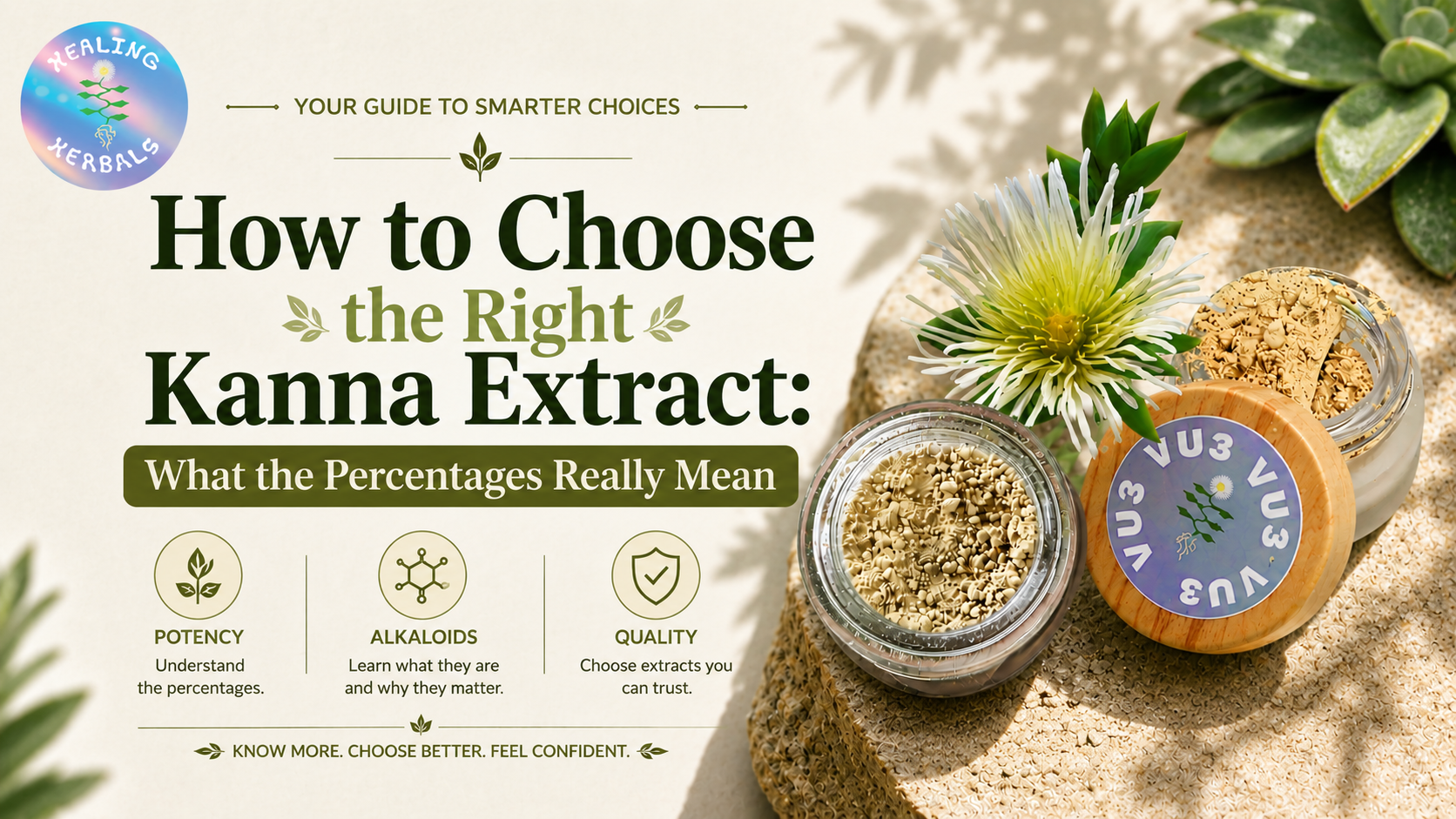
How to Choose the Right Kanna Extract: What the Percentages really mean
TL;DR: The percentage on a kanna extract label can mean different things, like an extract spec, total alkaloids or a single alkaloid, so a bigger number isn't automatically better. Look at which alkaloids are there, like mesembrine versus mesembrenone, the format and the testing info.
If you've ever looked at Kanna extracts and thought, “Wait… what does 15% actually mean?” you're not alone
Kanna products can be surprisingly confusing. You'll see extracts labeled with percentages, total alkaloids, mesembrine, mesembrenone, resin, powder, high potency, and all sorts of other terminology. Two products can even have similar numbers on the label while referring to completely different things.
And that's where it gets easy to make assumptions.
A higher percentage doesn't automatically mean a better extract. A resin isn't automatically more concentrated than a powder. And seeing “high mesembrine” on one product doesn't necessarily mean it's superior to a product emphasizing mesembrenone.
So, how do you actually compare them?
The first step is simply understanding what you're looking at.
What Is Kanna?
Kanna is commonly associated with Sceletium tortuosum, a succulent plant native to Southern Africa.
The plant has a long history of traditional use in Southern Africa, where it was prepared and used as a botanical material long before the modern extract market existed.
Today, you'll find Kanna in many different forms, including dried plant material, powder, concentrated extracts, resins, tinctures, and other preparations.
One reason Kanna is particularly interesting is its natural alkaloid profile.
Researchers have identified a number of alkaloids in Sceletium, including mesembrine, mesembrenone, mesembrenol, and related compounds.
These compounds aren't necessarily present in identical amounts from one preparation to another. The plant material itself, harvesting, processing, extraction, and standardization can all influence the final chemical profile.
That's why an extract shouldn't simply be thought of as “stronger Kanna.”
It's a concentrated preparation, and what's important is understanding what has actually been concentrated and how the product is characterized.
Don't Just Pick the Biggest Number
This is probably the most common mistake people make when comparing extracts.
You might see:
- 5% Kanna extract
- 10% Kanna extract
- 15% Kanna extract
- 20% Kanna extract
- 10% total alkaloids
- High Mesembrine
- High Mesembrenone
It's tempting to look at those numbers and immediately assume that the highest one must be the strongest or best.
But there's a problem.
Those numbers may not be measuring the same thing.
Before comparing the percentage on one product with the percentage on another, ask a very simple question:
What does the percentage represent?
That matters much more than how impressive the number looks.
So, What Does “15% Kanna Extract” Mean?
This is where things can get a little technical, but it doesn't have to be complicated.
A label saying 15% Kanna extract isn't necessarily saying the same thing as a label saying 15% total alkaloids.
And neither one necessarily means the same thing as 15% mesembrine.
For example, imagine three products:
|
Product |
Label |
What It Means |
|
Extract A |
15% Kanna extract |
An extract specification |
|
Extract B |
15% total alkaloids |
Measured total alkaloid content |
|
Extract C |
15% mesembrine |
Measured amount of one specific alkaloid |
All three contain the number 15%, but the number is telling you something different in each case.
That's why comparing Kanna based only on the percentage can be misleading.
If a manufacturer gives you a percentage, you should be able to find an explanation of what that percentage actually represents.
Without that context, the number doesn't tell you very much.
Understanding Kanna's Alkaloids
Kanna contains several naturally occurring alkaloids, rather than one single compound.
Some of the better-known ones include:
- Mesembrine
- Mesembrenone
- Mesembrenol
- Tortuosamine
These compounds have been studied in scientific research, both individually and as part of Kanna preparations.
For someone shopping for an extract, though, you don't need to become a phytochemistry expert.
The useful thing to understand is that two Kanna extracts can come from the same plant species and still have different alkaloid profiles.
There are several reasons for this. Plant material can vary. Growing conditions can vary. Harvest timing and plant parts can differ. Then there are differences in processing, extraction, concentration, standardization, and storage.
So when you see something described as “high mesembrine” or “high mesembrenone,” think of that as a description of the extract's composition.
It isn't necessarily a scorecard where one is automatically better.
Mesembrine vs. Mesembrenone
Mesembrine and mesembrenone are two of the most familiar Kanna alkaloids, and you'll often see them mentioned when shopping for concentrated extracts.
Researchers have studied both compounds and have found that different Kanna alkaloids can have different pharmacological properties. That's one reason the alkaloid profile of an extract can be worth paying attention to.
But it's important not to turn that information into an overly simple “this one is better” comparison.
A high-mesembrine extract and a high-mesembrenone extract are highlighting different characteristics of their chemistry.
Neither label, by itself, tells you which product is right for everyone.
What it does tell you is that the manufacturer is giving you more information about the composition of the extract.
And honestly, that's what you want to see.
The more clearly a product is described, the easier it is to make a meaningful comparison.
Kanna Powder, Extract, or Resin?
Another thing that can throw people off is the form the Kanna comes in.
Kanna isn't sold in just one format. You'll find whole dried material, powder, extract powder, resin, tinctures, and other preparations.
They aren't interchangeable simply because they all come from Kanna.
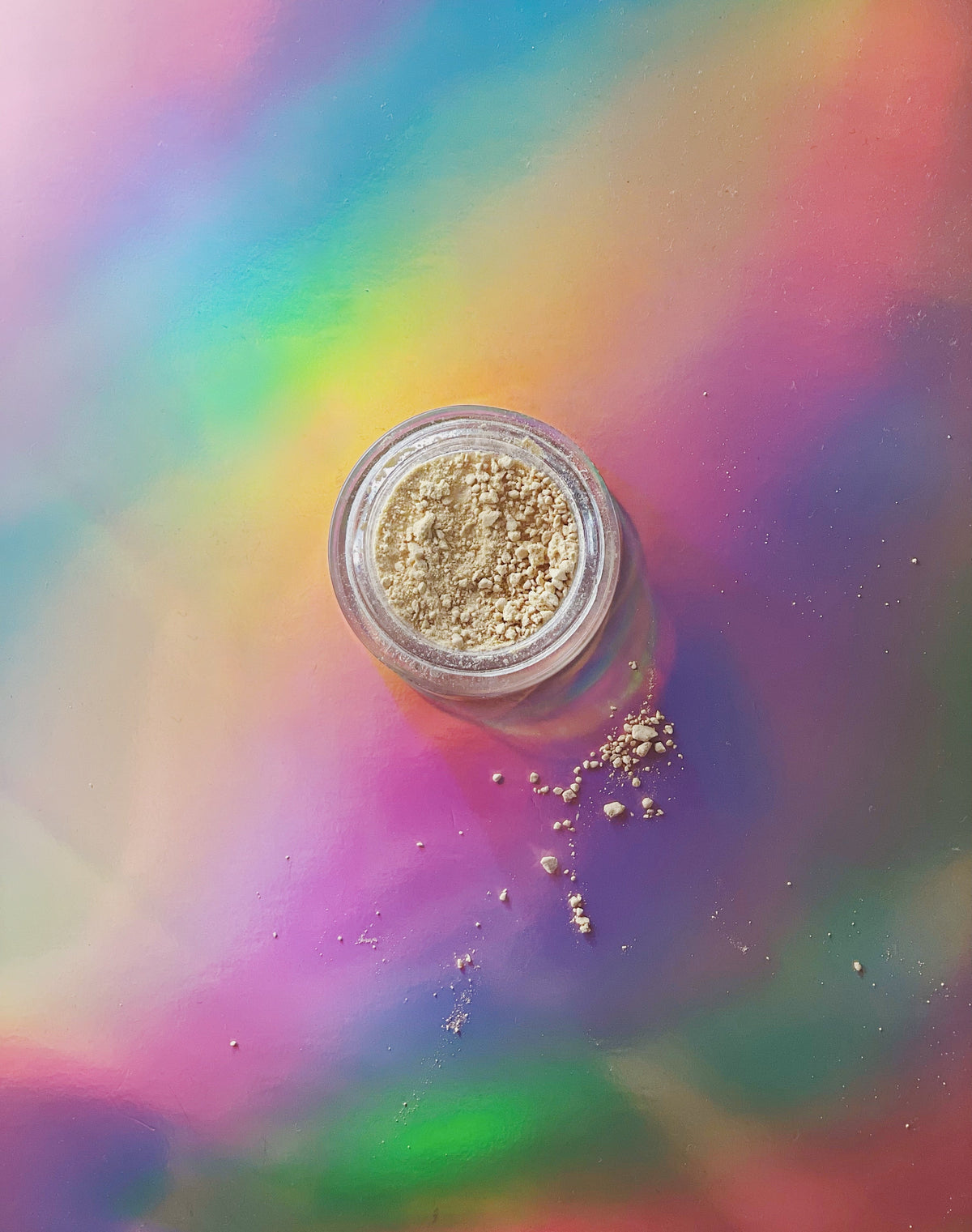
Kanna Powder
Powder is generally much closer to the original plant material.
The plant has been dried and mechanically processed into a smaller particle size, but it hasn't necessarily undergone the same concentration process used to produce an extract.
An extract is made by processing plant material in a way that concentrates certain constituents.
Because of that, the chemical composition per gram can be quite different from the original plant material.
This is also why simply seeing the word “extract” isn't enough to tell you how concentrated something is.
Kanna Resin
Resin is typically a dense or sticky concentrated preparation.
But here's something worth remembering:
“Resin” isn't a potency measurement.
The word describes the form or type of preparation. It doesn't automatically tell you how much of a particular alkaloid is present.
So if you're comparing a resin with an extract powder, look at the actual product specifications rather than judging by texture, appearance, or the word “resin” on the label.
What Should You Look For When Comparing Extracts?
When I'm looking at a botanical extract, I don't like to base the decision on one number.
First, look at the botanical identity. You want to know exactly what plant you're dealing with.
Then look at the product itself. Is it whole plant material, powder, extract, resin, or a liquid preparation?
After that, look closely at the percentage. What is it actually measuring?
If alkaloid information is provided, that's useful too. It gives you a better idea of the chemical profile rather than leaving you with a vague “high potency” description.
It's also worth paying attention to how the extract was produced and whether the manufacturer provides meaningful testing or batch information.
You don't need every detail to be complicated.
You just want enough information to understand what you're buying.
What About the Extraction Method?
Depending on the product, you may come across different extraction methods, including water-based, alcohol-based, hydroalcoholic, or other specialized approaches.
The extraction process can influence which compounds are pulled from the plant and how the final extract is concentrated.
But I wouldn't automatically call one extraction method “the best.”
It's not quite that simple.
The quality of a finished extract depends on the entire process, from the starting plant material through processing, extraction, concentration, standardization, testing, and storage.
A fancy-sounding extraction method doesn't tell you everything about the final product.
I'd much rather see clear specifications and useful testing information than rely on impressive terminology alone.
Why Testing Matters
Testing is one of the more useful things to look for when you're evaluating a concentrated botanical product.
A label can tell you what a manufacturer says about an extract, but laboratory testing can provide additional information about a particular batch.
Depending on the product and testing program, relevant testing may include things such as alkaloid content, identity, microbial quality, heavy metals, pesticides, residual solvents when applicable, and other quality parameters.
Batch information is helpful too because it connects the results to a specific production lot.
There's an important difference between saying “lab tested” and actually explaining what was tested.
For a customer, transparency is much more valuable than a vague quality statement.
A Higher Percentage Isn't Always the Better Choice
This is probably the biggest takeaway from the entire article.
It's easy to see a 20% extract and assume it must be better than a 15% extract.
But unless you know what those percentages represent, you may be comparing apples to oranges.
The same goes for terms like “ultra strength,” “maximum potency,” or “premium extract.”
Those phrases might sound impressive, but they don't tell you nearly as much as a clear specification does.
When you understand what you're looking at, the label becomes much more useful.
Making Sense of Kanna Extracts
You don't need a degree in chemistry to compare Kanna extracts.
Start with the basics.
Look at the botanical identity. Pay attention to the form of the product. Find out what the percentage means. If an alkaloid profile is provided, take a look at that as well. And when available, consider the testing and batch information behind the product.
Most importantly, don't let the biggest number on the package make the decision for you.
A well-described extract gives you something much more useful than a flashy label: a clearer picture of what you're actually buying.
That's ultimately what makes comparing Kanna products easier.
Don't chase the biggest number. Look for the clearest information.

Written by Herbal Healings

Leave a comment
This site is protected by hCaptcha and the hCaptcha Privacy Policy and Terms of Service apply.