St. John’s Wort: Traditional Use and Known Interactions
TL;DR: St. John's Wort (Hypericum perforatum) is a yellow-flowered perennial with roots in Greek and European herbalism, named for blooming around the feast of St. John in late June. It's also the herb with the most serious drug interaction list on our shelves, because it changes how your liver and gut process many medications, birth control included. Buy flowering tops with the botanical name on the label, and talk to your doctor or pharmacist before you take it if you're on any prescription.
St. John's Wort is one of the oldest and best-known herbs in Western herbalism. Its history goes back to classical Greece, its bright yellow flowers show up all over European folk tradition, and today it's one of the most studied plants out there. It's also the herb we're most careful about at the counter. Here's where it comes from, what it is, and why we always ask what else you're taking.
Where the name comes from
The plant gets its name from its habit of blooming around the feast of St. John the Baptist in late June. Early herbalists valued it, and it appears in centuries of European herbal texts.
Traditional preparations were simple. People infused the flowers in oil, made tea from the flowering tops, and used it topically. The oil turns a deep red as it steeps, which is one of the neat things about working with this plant. Fresh flowering tops sitting in olive oil on a sunny windowsill for a few weeks is a very old-school European herbal project.
How to recognize it
Hypericum perforatum is a hardy perennial. It has yellow, five-petaled flowers and small oil glands that look like tiny see-through dots when you hold a leaf up to the light. That's where the "perforatum" in the name comes from. It looks like the leaf has pinholes in it.
It grows across Europe, western Asia and North Africa, and it's naturalized in North America. You've probably walked past it on a roadside or in a sunny field without knowing it. Researchers have studied its naturally occurring compounds for a long time, especially hypericin and hyperforin.
The interaction issue
This is the part that matters most. St. John's Wort is well known for interacting with a lot of prescription medications. It speeds up the way your body clears certain drugs, which can make them work less well. Birth control, blood thinners, some heart medications, transplant drugs and HIV medications are the classic examples.
It also affects serotonin, so it shouldn't be combined with antidepressants or other serotonin-affecting substances, including kanna. And some people get more sensitive to sunlight while taking it, so go easy on long days outdoors.
If you take any prescription medication at all, talk to your doctor or pharmacist before adding St. John's Wort or any other botanical to your routine. We'd rather lose a sale than have somebody's birth control stop working.
Choosing a quality source
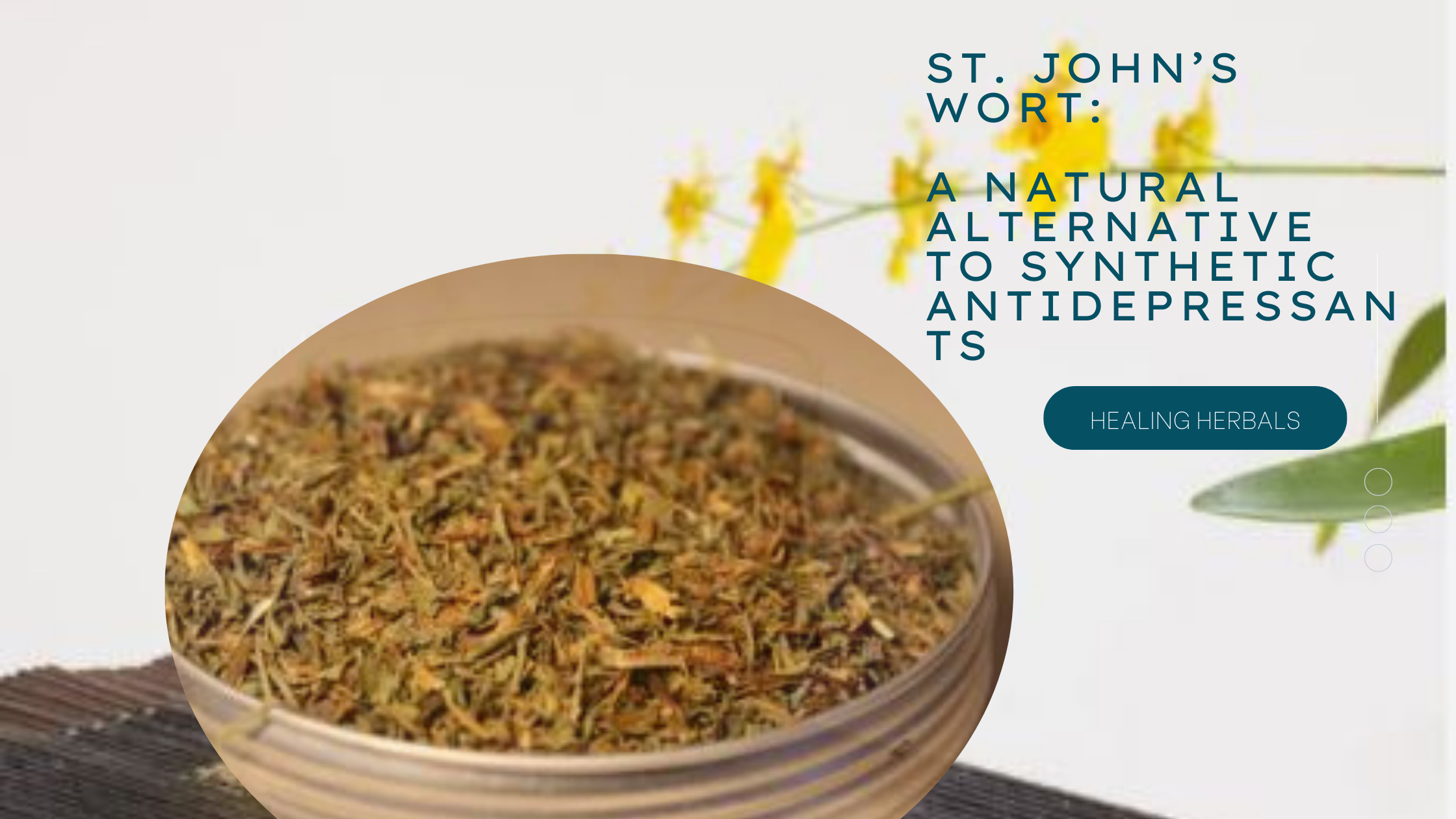
Quality varies a lot with dried St. John's Wort. Look for a supplier that lists the botanical name, Hypericum perforatum, on the label. Look for flowering tops, not just leaf and stem, since the flowers are the traditional part. And look for a supplier that's open about where it comes from.
Good material should have plenty of yellow flower bits in it and a fresh, slightly resinous smell. If it's mostly brown stems, pass. At Healing Herbals we source authentic St. John's Wort and handle it carefully, and we keep it in sealed containers away from light.
Common questions
Why is it called St. John's Wort?
Because it blooms around the feast of St. John the Baptist in late June. "Wort" is an old word for plant.
Does St. John's Wort interact with birth control?
Yes. It's known to make hormonal birth control less effective. Talk to your doctor before using it.
Which part of the plant is used?
The flowering tops, traditionally made into tea or infused in oil.
It's a beautiful plant with a long history. Just treat it with more respect than your average cup of chamomile, and always check your medications first.
This article is for informational purposes only and is not medical advice. These statements have not been evaluated by the Food and Drug Administration. Our products are not intended to diagnose, treat, cure, or prevent any disease.

Written by Herbal Healings
%20is%20a%20yellow-flowered%20perennial%20with%20roots%20in%20Greek%20and%20European%20herbalism,%20named%20for%20blooming%20around%20the%20feast%20of%20St.%20John%20in%20late%20June.%20It's%20also%20the%20...)
Leave a comment
This site is protected by hCaptcha and the hCaptcha Privacy Policy and Terms of Service apply.