True Egyptian Blue Lotus Flower (Authentic Egyptian Genetic)
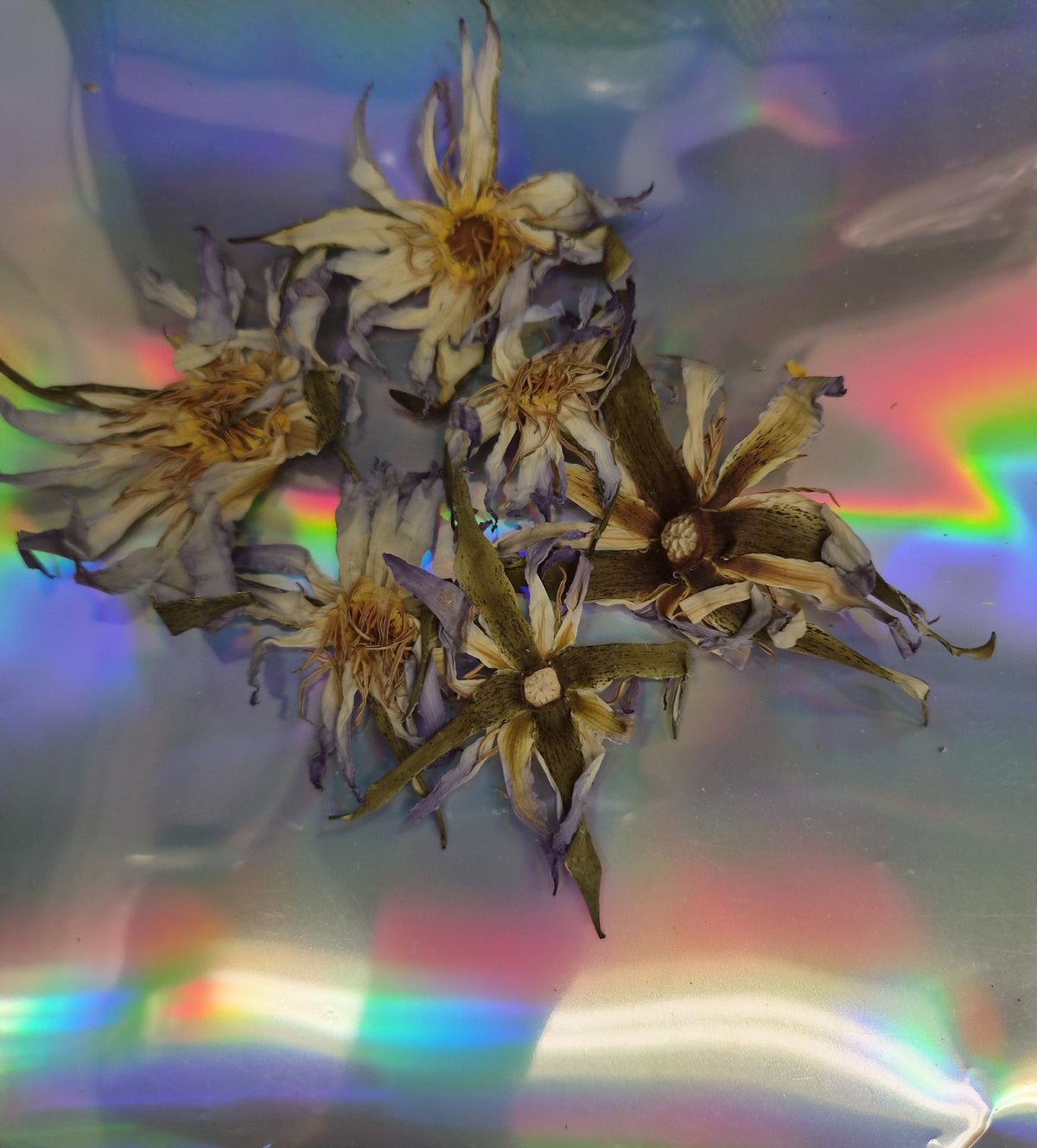
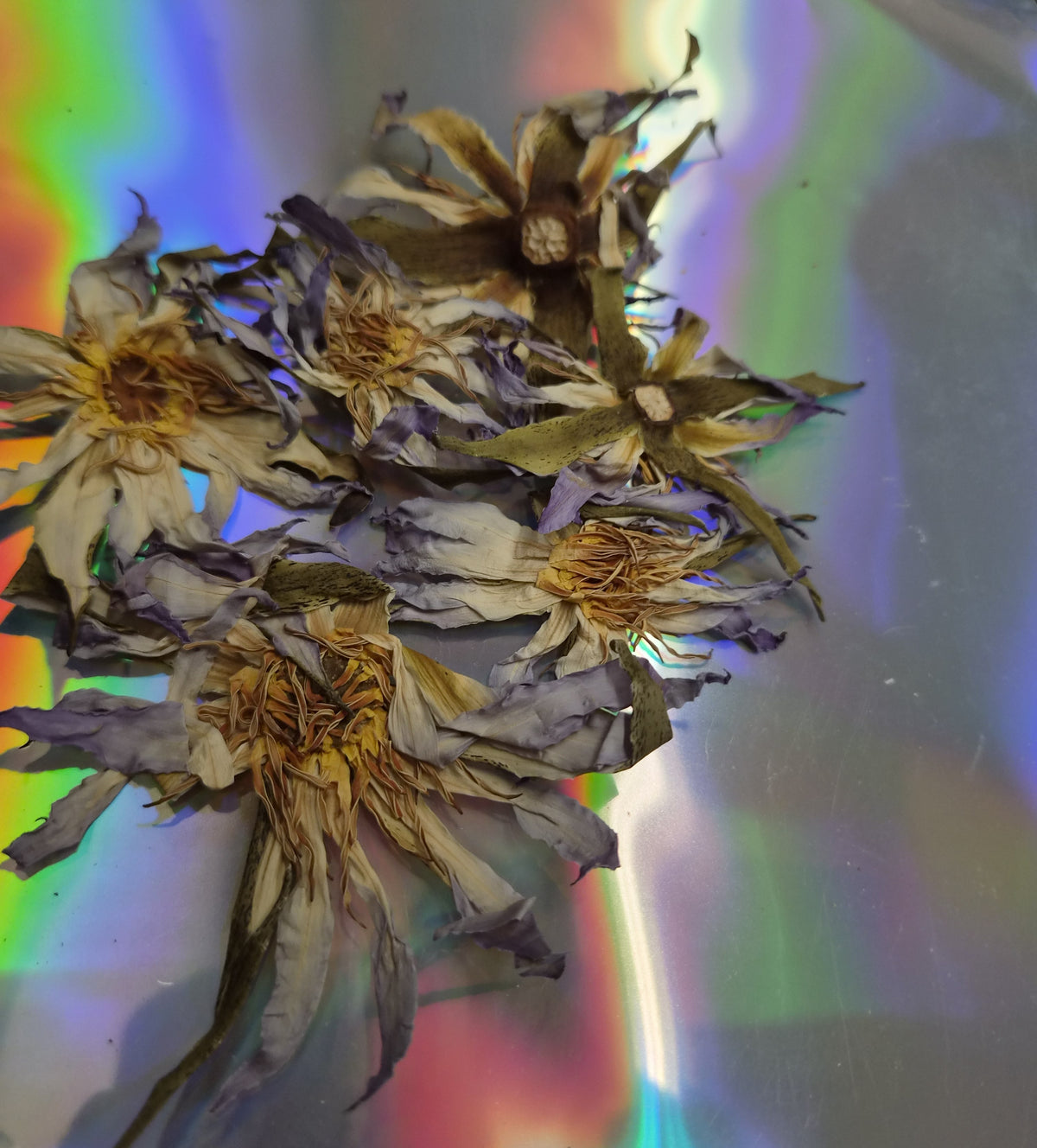
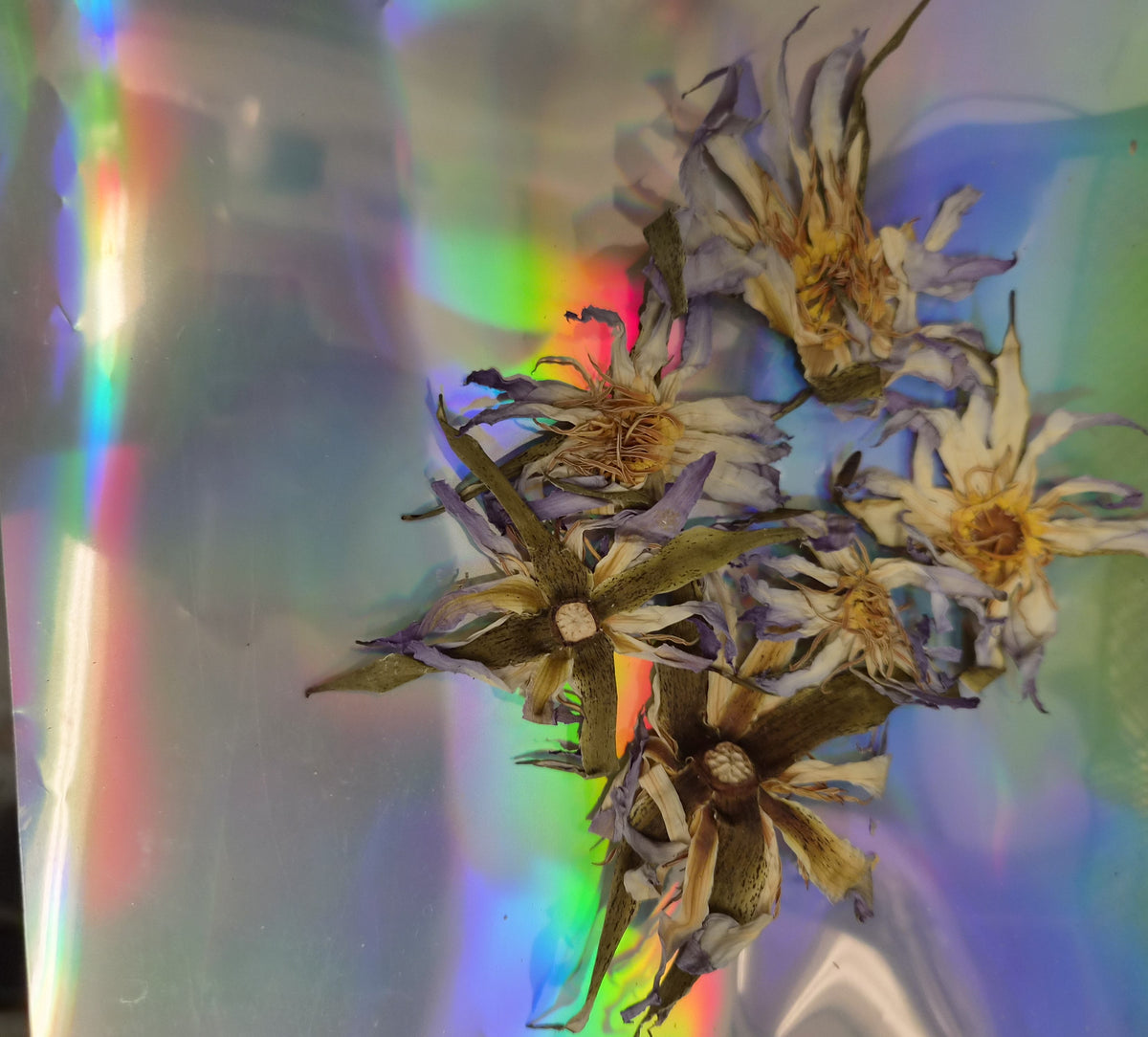
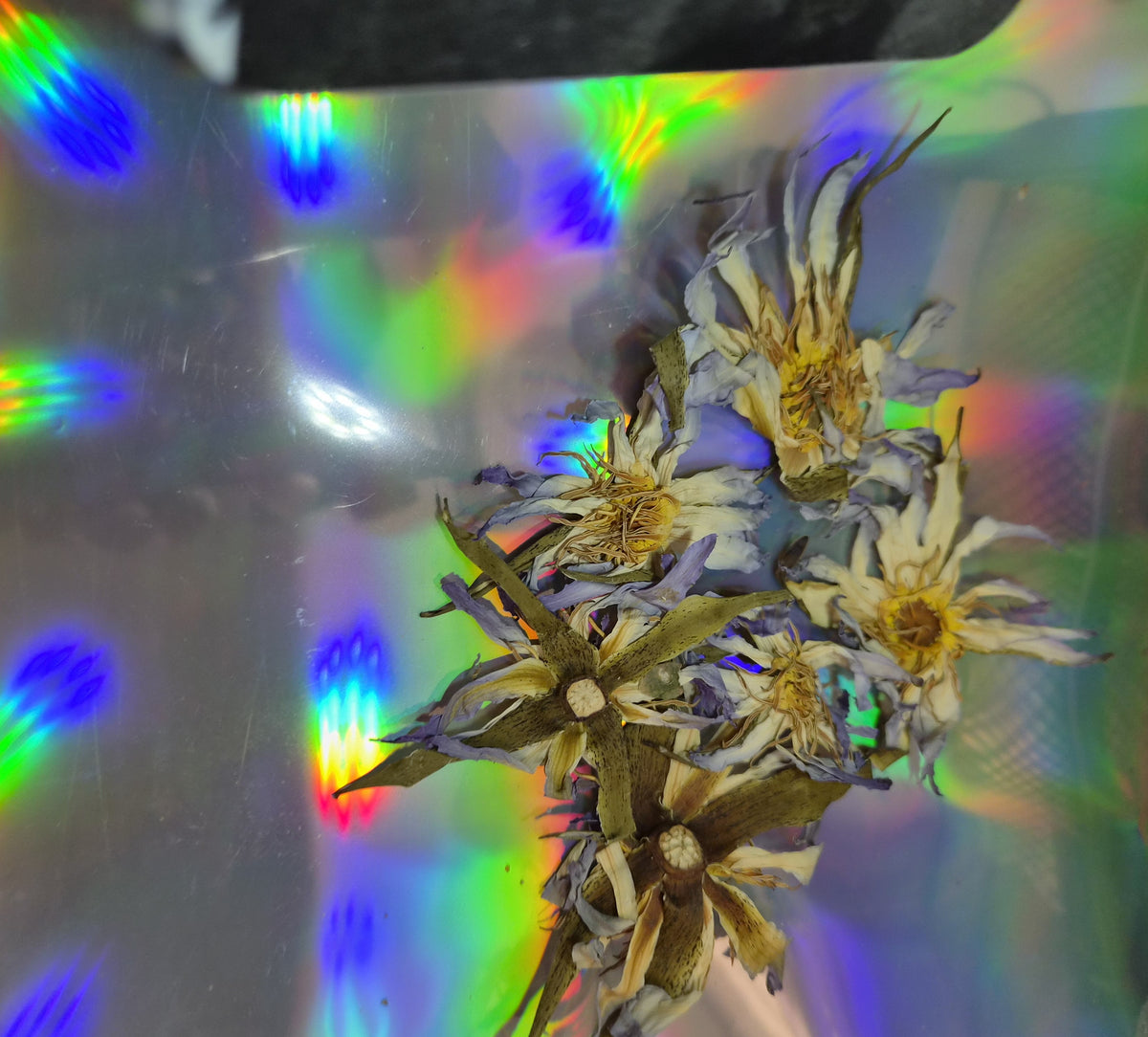
True Egyptian Blue Lotus Flower (Authentic Egyptian Genetic) is the African line of Nymphaea caerulea, the water lily painted on tomb walls along the Nile, and the heads run noticeably larger than the Asian-range lotus filling this market. Petals run white at the center and wash to sky blue at the tip, around blue-tipped golden stamens. A small first release, whole dried flowers, hand sorted.
At a glance
- African genetic line of Nymphaea caerulea, not the Asian star lotus most sellers carry
- Whole dried flowers, petals and stamens intact
- Larger heads and broader petals than our Hybrid Egyptian grade
- Two-tone petals: white at the base, sky blue at the tip
- Limited batch, in 2 gram, 5 gram, 14 gram, 28 gram and 56 gram allotments
- Adults 21 and over
The plant. Nymphaea caerulea is a day-blooming water lily native to the Nile and the lakes of east and southern Africa. It opens early, stands clear of the water on a stiff stalk, and closes by mid afternoon, holding that rhythm about four days. Egypt read that rhythm as rebirth and the rising sun, and painted it on temple columns.
What makes this the Egyptian line. Botanists still argue over its rank. Most floras file it as Nymphaea nouchali var. caerulea, a variety in a complex that also holds the Asian star lotus, while recent genetic work argues it is its own species. Either way the difference is geography and form, readable in a dried flower:
- Origin: this line traces to Africa and the Nile. The star lotus sold as blue lotus runs from India through Sri Lanka and Thailand
- Head size: the African flower opens 15 to 20 cm across on a well grown plant. Asian material runs smaller
- Petal shape: broad petals in a full round head, against the 13 to 15 angular petals that give the Asian flower its star outline
- Color: white at the base washing to sky blue, against a more even violet blue base to tip
What we are not claiming. We are not telling you this flower is stronger than our Hybrid Egyptian grade. Published testing on commercial blue lotus is all over the map, and the Asian lotus carries the same nuciferine and aporphine. What you are buying is the genetic line and a flower that looks like the one on the temple wall.
How to use. Whole flowers work anywhere you would use loose lotus, and one large head goes further than you expect.
- Tea: steep 1 to 2 grams in hot, not boiling, water for 10 to 15 minutes. Tear the head open first to pull more from the petals
- Infusion: warm whole flowers gently in oil or glycerin, or steep in alcohol for a tincture
- Bath: float two or three flowers in a hot bath and let them open back up
Regular use. Once you know how you like it, keep to the same amount. Weigh it rather than counting flowers, because heads on this line vary and two large ones are easily double what you meant.
What to expect. People describe blue lotus as calm, softly lifted and a little dreamy, an evening flower rather than a morning one. For the everyday grade in sizes up to the kilo, see our Hybrid Egyptian Blue Lotus Flower, and for the concentrated resin see our Hybrid Egyptian Waterlily Extract.
Side effects. Drowsiness is the usual report, and the reason to keep it to the evening rather than before driving. A large cup can also leave a dry mouth or a foggy feeling; steep less next time. Stop use if anything feels off.
Interactions and cautions.
- Do not combine with alcohol or sedative medications, which add to the drowsiness
- Not for use during pregnancy or nursing
- Do not drive until you know how it affects you
- For adults 21 and over; keep out of reach of children and pets
Ingredients and storage. 100% Nymphaea caerulea flower, African genetic line. No fillers, sprays or additives. Store sealed somewhere cool, dry and dark. Light fades the blue faster than anything else, and these broad petals are fragile once dry.
Common questions
- Is the True Egyptian a different species from your Hybrid Egyptian? Not a settled one. Botanists disagree over whether the Egyptian flower is a species or a variety of Nymphaea caerulea. What separates the two grades here is the genetic line.
- How do I tell the two apart once they arrive? Look at the base of a petal. True Egyptian petals run white at the center and blue toward the tip, on a broader head. Hybrid petals read as one deeper blue on a smaller flower.
- Is the True Egyptian stronger than the hybrid? We do not claim that. Buy this one for the genetics, the flower size and the limited batch, not for strength.
Disclaimer. These statements have not been evaluated by the Food and Drug Administration. This product is not intended to diagnose, treat, cure, or prevent any disease. Blue lotus is a traditional botanical, and traditional use does not establish that it will produce any particular result. Consult your healthcare provider before use if you take any medication or have a medical condition. Use at your own risk and keep out of reach of children. For adults 21 and over. Formulated by Healing Herbals, run by a practicing herbalist of 13+ years.
Choose options