
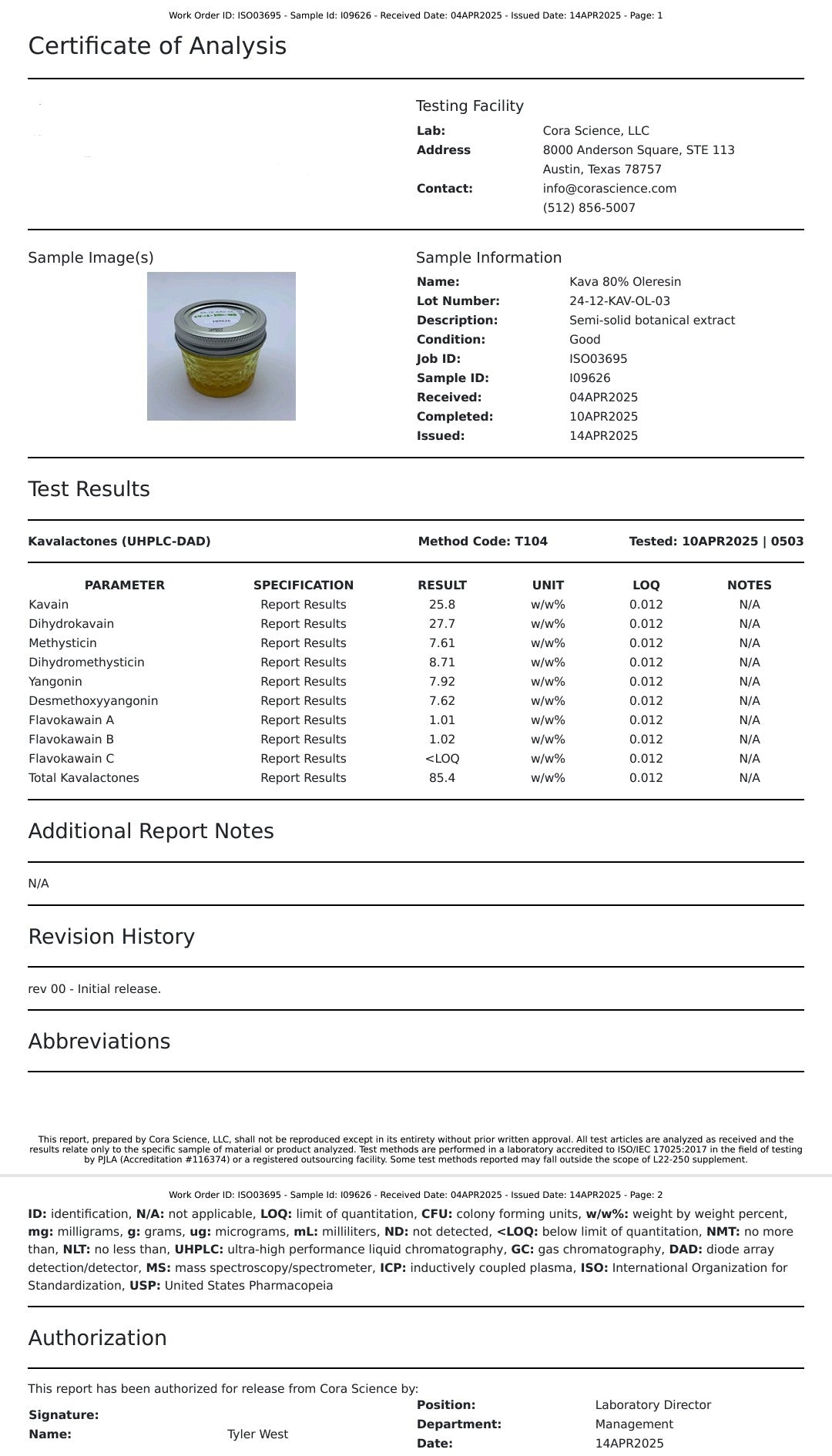
Lab Results: Kava Resin 85% Kavalactone, Lot 24-12-KAV-OL-03 (85.4% Total Kavalactones)
Last time we went through a 21.38% kava extract powder. This report is the same plant and a very different material: a resin reported at 85.4% total kavalactones. One report per post, plain language, no numbers we cannot point at.

The report at a glance
- Product: Kava Resin 85% Kavalactone
- Lab: Cora Science
- Lot: 24-12-KAV-OL-03
- Issued: April 14, 2025
- Result: total kavalactones 85.4%
What was tested, and in what form
The sample was the resin, a thick concentrated paste, not root powder and not an instant. The card lists the lab, the lot and the issue date. It does not list an analytical method, so we are not naming one. What it gives you is the figure a resin buyer is actually checking.
Note the word on the card is Lot, not Report. Different labs key their work differently. Some assign a report number and a separate sample ID, the way Phytodex does on our kanna reports. Others, like this one, tie the certificate to the production lot code. Either way the number on the certificate has to match the number on your container, and that is the only thing it is there to let you do.
Reading 85.4% on a resin
Kavalactones are the compound group a lab quantifies in kava. Six show up on most reports: kavain, dihydrokavain, methysticin, dihydromethysticin, yangonin and desmethoxyyangonin. Each is measured separately against a reference standard, then the six are added. That sum is total kavalactones.
85.4% by weight is 85.4 grams of kavalactones per 100 grams of resin, or 854 mg per gram. Compare that against the 213.8 mg per gram on the extract powder we covered last time and you can see what a resin is: the same compound group concentrated about four times further. Fifteen percent of the mass is everything else, which on a resin is largely plant lipids and residual material from the root.
That is also why a resin number and a root-powder number should never be read side by side as if they were competing. Traditional medium grind kava runs in the single digits by percent. A resin running in the eighties is not a better version of the same thing, it is a different material with a different unit of use, and every gram of it carries roughly what a very large amount of root would.
ND and below LOQ
Two phrases worth knowing, because they are not the same. ND means not detected: the instrument saw nothing on that line. Below LOQ means below the limit of quantitation: there may be something there, but not enough for the lab to put a reliable number on it. Neither is a mathematical zero. Both are the lab saying it will not report a figure. On a high-concentration resin like this one, the kavalactone lines are nowhere near either threshold, which is exactly what you would expect at 85.4%.
About the date on this one
This certificate was issued April 14, 2025. That is the date the lab released the report for this lot, and it does not expire. A potency figure describes the material that was sampled, and the material does not get more or less potent because the calendar moved. What a date does tell you is which production run you are looking at. If you have a container of our resin from a later run, its lot code will be different and so will its certificate.
Matching your container to this report
Check your label or packing slip for a lot code. If it reads 24-12-KAV-OL-03, this report is yours. A different code means a different run. Email the code to herbalhealingsmarketing@gmail.com and we will send the matching certificate.
Verify it yourself
Cora Science does not publish a public share page for this report, so there is no verification link to hand you. Compare the certificate image above against the lot code, issue date and total listed on the card. Those four things should agree. Ask us and we will send the original file.
Product page: Kava Resin 85% Kavalactone. Every report we have posted lives on the Lab Results page. New to reading these? Start with How to read a botanical lab report.
Healing Herbals (Holistic Plant Remedies LLC) grows and extracts its own kanna in South Africa and tests finished products with independent US labs. Our kava is sourced rather than grown by us, and it goes to independent labs the same way. Every report we post lists a batch, lot or sample number so you can match it to what is in your hands.
Lab results are provided for information only and apply to the tested lot. For adults 21 and over. These statements have not been evaluated by the Food and Drug Administration. This product is not intended to diagnose, treat, cure, or prevent any disease.

Written by Herbal Healings
Leave a comment
This site is protected by hCaptcha and the hCaptcha Privacy Policy and Terms of Service apply.